Visual Concept Map · A Grain as Big as a Hen’s Egg
ଏହି ସଚିତ୍ର ଧାରଣା ମାନଚିତ୍ର (Visual Concept Map) ରେ “A Grain as Big as a Hen’s Egg” ଅଧ୍ୟାୟର ମୁଖ୍ୟ ବିଷୟବସ୍ତୁ ଓ ନିୟମଗୁଡ଼ିକୁ ଏକାଠି ସହଜରେ ବୁଝିବା ପାଇଁ ସଜାଯାଇଛି।
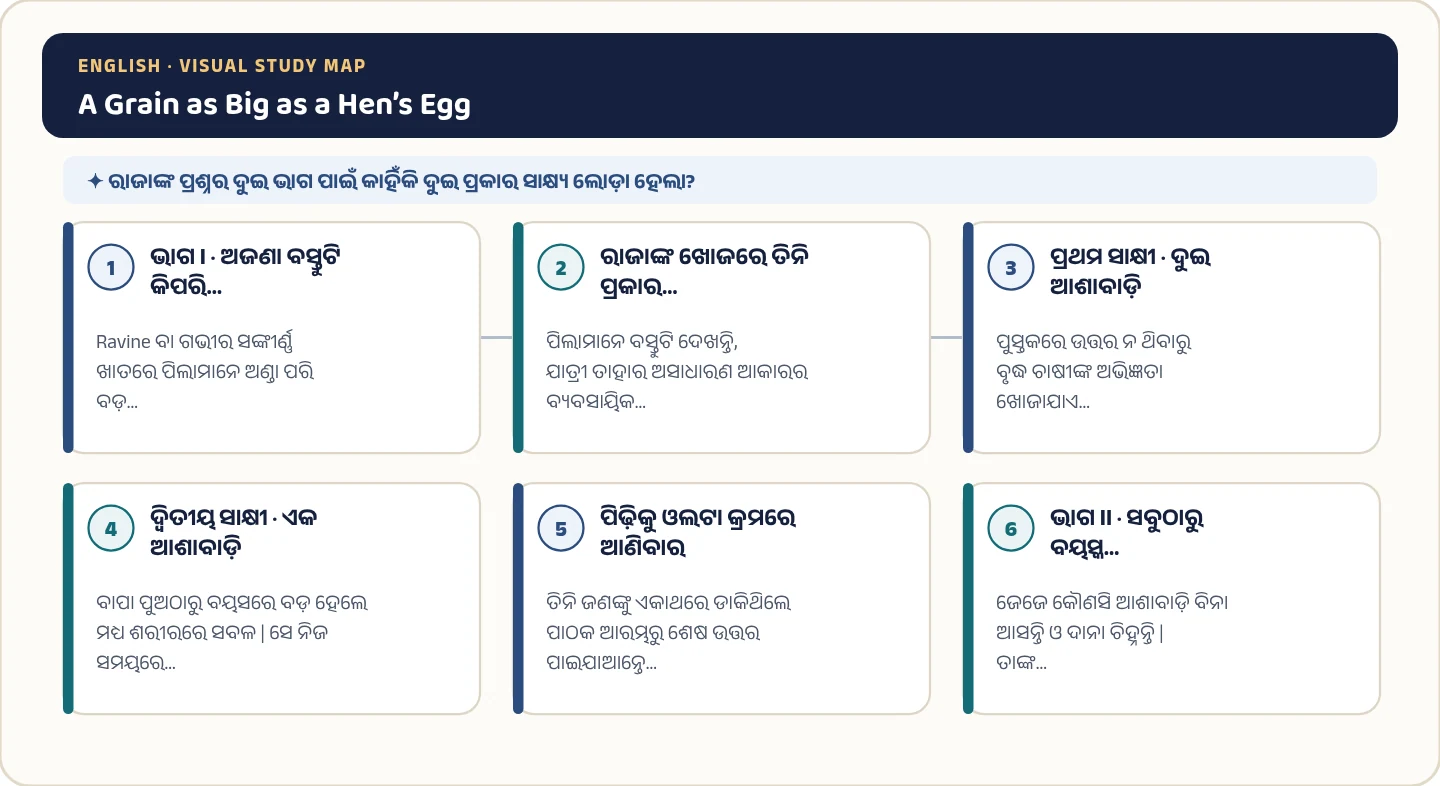
Ravine discovery, hen pecking, peasant → father → grandfather (2→1→0 crutches) & honest labour
ଏହି ସଚିତ୍ର ଧାରଣା ମାନଚିତ୍ର (Visual Concept Map) ରେ “A Grain as Big as a Hen’s Egg” ଅଧ୍ୟାୟର ମୁଖ୍ୟ ବିଷୟବସ୍ତୁ ଓ ନିୟମଗୁଡ଼ିକୁ ଏକାଠି ସହଜରେ ବୁଝିବା ପାଇଁ ସଜାଯାଇଛି।
ଲିଓ ଟଲ୍ଷ୍ଟୟଙ୍କ (Leo Tolstoy) ନୀତିକଥା ‘A Grain as Big as a Hen’s Egg’ରେ Ravine ବା ଗଭୀର ସଙ୍କୀର୍ଣ୍ଣ ଖାତରେ ପିଲାମାନେ ଅଣ୍ଡା ପରି ବଡ଼ ବସ୍ତୁ ପାଆନ୍ତି। ଜଣେ ଯାତ୍ରୀ କିଣି ରାଜାଙ୍କୁ ବିକେ।
ପଣ୍ଡିତମାନେ ବସ୍ତୁଟିକୁ ଚିହ୍ନି ପାରନ୍ତି ନାହିଁ, କିନ୍ତୁ କୁକୁଡ଼ାଟି ତାକୁ ଖୁଣ୍ଟିବାରୁ ଏହା ଏକ ଶସ୍ୟ ବୋଲି ଜଣାପଡ଼େ। ଏବେ ପ୍ରଶ୍ନ ବଦଳି “ଏହା କ’ଣ”ରୁ “ଏହା କେଉଁଠି ଓ କେବେ ଫଳୁଥିଲା” ହୁଏ।
ଦାନାର ମଝିରେ ଥିବା ସରୁ ଲମ୍ବା ଗାରକୁ ଗଳ୍ପରେ groove କୁହାଯାଇଛି। ଗାରଟି ଶସ୍ୟ ସହ ମେଳ ଖାଉଛି, ଆକାର ଖାଉନାହିଁ।
ଯାତ୍ରୀ ପିଲାଙ୍କୁ ଗୋଟିଏ ପେନି ଦେଇ ଏହାକୁ ସହରକୁ ନିଏ। ରାଜାଙ୍କୁ ସେ ଏହାକୁ ଏକ curiosity, ଅର୍ଥାତ୍ ଦୁର୍ଲଭ ଦର୍ଶନୀୟ ବସ୍ତୁ ଭାବେ ବିକେ।
କୁକୁଡ଼ାଟି ଝରକା ତଳପଟିରେ ଥିବା ବସ୍ତୁକୁ ଖୁଣ୍ଟି ଛିଦ୍ର କରିବା ପରେ ଭିତରଟି ଦେଖାଯାଏ।
ପିଲାମାନେ ବସ୍ତୁଟି ଦେଖନ୍ତି, ଯାତ୍ରୀ ତାହାର ଅସାଧାରଣ ଆକାରର ବ୍ୟବସାୟିକ ମୂଲ୍ୟ ଦେଖେ, ରାଜା ତାହାର ପରିଚୟ ଜାଣିବାକୁ ଚାହାନ୍ତି। ପଣ୍ଡିତମାନେ ପ୍ରଥମେ ବସ୍ତୁଟି କ’ଣ ବୋଲି ଭାବିଚାଲନ୍ତି।
କୁକୁଡ଼ାଟି ଖୁଣ୍ଟିବା ଏକ ଅନିଚ୍ଛାକୃତ ପରୀକ୍ଷା ପରି କାମ କରେ। କେବେ ଓ କେଉଁଠି ଏହା ଫଳୁଥିଲା ବୋଲି ରାଜାଙ୍କ ପରବର୍ତ୍ତୀ ପ୍ରଶ୍ନର ଉତ୍ତର ସେମାନେ ବହିରେ ଖୋଜନ୍ତି।
ଏହାକୁ ଆଗେ କିଏ ଚାଷ କରିଥିଲା ତାହା ଜାଣିବା ପାଇଁ ଜଣେ ଚାଷୀଙ୍କ ନିଜ ଅଭିଜ୍ଞତା ବା ତାଙ୍କ ପୂର୍ବଜଙ୍କ ସ୍ମୃତି ଆବଶ୍ୟକ। ଏକା ପୁସ୍ତକରେ ନ ମିଳିଲେ ସମସ୍ତ ଉତ୍ତର ଅଜଣା ରହେନାହିଁ—ତଥ୍ୟର ଉତ୍ସ ବଦଳାଇବା ଦରକାର ହୁଏ।
ପୁସ୍ତକରେ ଉତ୍ତର ନ ଥିବାରୁ ବୃଦ୍ଧ ଚାଷୀଙ୍କ ଅଭିଜ୍ଞତା ଖୋଜାଯାଏ। ପ୍ରଥମେ ଆସୁଥିବା ଚାଷୀ ଦୁଇଟି crutches ନେଇ ଚାଲେ, ତା’ର ଶ୍ରବଣ ଓ ଦୃଷ୍ଟି ଦୁର୍ବଳ।
ସେ ଏତେ ବଡ଼ ଦାନା କେବେ ବୁଣିନି ବା କିଣିନି। ବାପାଙ୍କୁ ପଚାରିବା ତା’ର ପ୍ରସ୍ତାବ।
ବର୍ଣ୍ଣନାରେ ashy pale ତାଙ୍କ ମୁହଁର ରକ୍ତହୀନ ଦିଶୁଥିବା ରଙ୍ଗ ଓ totter ତାଙ୍କ ଟଳମଳ ଚାଲିକୁ ବୁଝାଏ। ସେ ଦାନାଟିକୁ ପ୍ରାୟ ଦେଖିପାରନ୍ତି ନାହିଁ, ତେଣୁ ହାତରେ ଛୁଇଁ ଦେଖନ୍ତି।
ପ୍ରଶ୍ନ ଶୁଣିବାକୁ ତାଙ୍କୁ ସମୟ ଲାଗେ। ସେ ନିଜେ କିଣିଥିବା ଦାନାଗୁଡ଼ିକ ବର୍ତ୍ତମାନର ଦାନା ପରି ଛୋଟ ଥିଲା ବୋଲି କହିପାରନ୍ତି।
ତାଙ୍କ ଅଜ୍ଞତାରୁ ଏପରି ଶସ୍ୟ ଆଗେ କେବେ ନଥିଲା ବୋଲି ସିଦ୍ଧାନ୍ତ ବାହାରେ ନାହିଁ।
ବାପା ପୁଅଠାରୁ ବୟସରେ ବଡ଼ ହେଲେ ମଧ୍ୟ ଶରୀରରେ ସବଳ। ସେ ନିଜ ସମୟରେ ଅଧିକ ବଡ଼ ଓ ଅଧିକ ଅଟା ଦେଉଥିବା ଶସ୍ୟ ଦେଖିଛି।
ମୁଦ୍ରାର ବ୍ୟବହାର ନ ଥିଲା, ଲୋକେ ନିଜେ ଚାଷ କରି ଦରକାରବେଳେ ପରସ୍ପର ସହ ବାଣ୍ଟୁଥିଲେ। ତଥାପି ଏହି ଦାନାର ଆକାର ତା’ର ଅଭିଜ୍ଞତା ବାହାରେ।
ଏଠାରେ ଚାଷୀ ଯାହା ଦେଖିଛନ୍ତି ଓ ଯାହା ଶୁଣିଛନ୍ତି ତାହା ଅଲଗା କର। ନିଜ ସମୟର ଦାନା ଏବେକାର ଦାନାଠାରୁ ଅଧିକ ଅଟା ଦେଉଥିଲା ବୋଲି ସେ ଜାଣନ୍ତି।
ତାଙ୍କ ପିତାଙ୍କ ସମୟରେ ଆହୁରି ବଡ଼ ଦାନା ଥିବା ଖବରଟି ପିତାଙ୍କଠାରୁ ଶୁଣିଛନ୍ତି। ତେଣୁ ରାଜାଙ୍କୁ ତୃତୀୟ ସାକ୍ଷୀଙ୍କ ପାଖକୁ ପଠାଇବାର ନିର୍ଦ୍ଦିଷ୍ଟ କାରଣ ଅଛି।
ତିନି ଜଣଙ୍କୁ ଏକାଥରେ ଡାକିଥିଲେ ପାଠକ ଆରମ୍ଭରୁ ଶେଷ ଉତ୍ତର ପାଇଯାଆନ୍ତେ। ଗଳ୍ପ ପ୍ରଥମେ ସବୁଠାରୁ କମ୍ ବୟସ୍କ ବୃଦ୍ଧଙ୍କୁ ଆଣେ।
ଦୁଇ ଆଶାବାଡ଼ି, ତା’ ପରେ ଗୋଟିଏ, ଶେଷରେ ଆଶାବାଡ଼ି ବିନା ସିଧା ଚାଲିଆସିବା ଆଖିରେ ଧରାପଡ଼ୁଥିବା କ୍ରମ। ଶ୍ରବଣ, ଦୃଷ୍ଟି ଓ କଥା କହିବାର ଢାଞ୍ଚା ମଧ୍ୟ ସେହି କ୍ରମକୁ ସମର୍ଥନ କରେ।
ପରିବାରର ସବୁଠାରୁ ବୟସ୍କ ଲୋକ ସବୁଠାରୁ ସବଳ ଥିବାରୁ ରାଜାଙ୍କ ଶେଷ ପ୍ରଶ୍ନ ସ୍ୱାଭାବିକ ହୁଏ। ଦାନାଟି ଯେପରି ଅପ୍ରତ୍ୟାଶିତ ସାକ୍ଷ୍ୟ, ତିନି ଦେହର ଅବସ୍ଥା ମଧ୍ୟ ସେପରି ଆଉ ଏକ ରହସ୍ୟ।
ଜେଜେ କୌଣସି ଆଶାବାଡ଼ି ବିନା ଆସନ୍ତି ଓ ଦାନା ଚିହ୍ନନ୍ତି। ତାଙ୍କ ସମୟରେ ଜମି ସମସ୍ତଙ୍କ ପାଇଁ ମୁକ୍ତ ଓ ନିଜ ଶ୍ରମ ହିଁ ନିଜର ଥିଲା।
ରାଜା ଶସ୍ୟର ଆକାର ଓ ତିନି ପିଢ଼ିର ସ୍ୱାସ୍ଥ୍ୟ ସମ୍ପର୍କରେ ପଚାରନ୍ତି। ଜେଜେ ଅନ୍ୟର ପରିଶ୍ରମ ଓ ସମ୍ପତ୍ତି ପ୍ରତି ଲୋଭ ସହ ବର୍ତ୍ତମାନର ଅବସ୍ଥାକୁ ଯୋଡ଼ନ୍ତି।
ସେ ଶସ୍ୟଟିକୁ ବୁଲାଇ ଦେଖନ୍ତି, ଖଣ୍ଡେ କାମୁଡ଼ି ସ୍ୱାଦ ଚାଖନ୍ତି ଓ ନିଜ ଯୁବାବସ୍ଥାର ଦାନା ସହ ମେଳାନ୍ତି। Sow, reap ଓ thrash ତିନି ପର୍ଯ୍ୟାୟକୁ ଦର୍ଶାଏ।
ସେ ଏପରି ଶସ୍ୟ ବୁଣୁଥିଲେ, ପାଚିଲେ କାଟୁଥିଲେ, ଶସ୍ୟ ବାହାର କରିବା ପାଇଁ ପିଟୁଥିଲେ। ନିଜେ ଖାଇବା ସହ ଅନ୍ୟକୁ ମଧ୍ୟ ଖୁଆଇଥିଲେ।
ତାଙ୍କ ପାଖରେ ଦାନାଟିର ପରିଚୟ ଜୀବନର ଏହି କାମରେ ଗଢ଼ିଛି।
ରାଜା ପ୍ରଥମେ ଶସ୍ୟ କେଉଁଠୁ କିଣିଲେ ବା କେଉଁ ଜମିରେ ଫଳୁଥିଲା ପଚାରନ୍ତି। ତାଙ୍କ ପ୍ରଶ୍ନ ନିଜ ସମୟର ପ୍ରଥା ଉପରେ ତିଆରି।
ଜେଜେଙ୍କ ବର୍ଣ୍ଣନାରେ ନିଜେ ସୃଷ୍ଟି କରୁଥିବା ଖାଦ୍ୟ ଓ ମୁକ୍ତ ଜମି ମୁଖ୍ୟ, ତେଣୁ କେବଳ ଏକ ହାଟ ଓ ଏକ ମାଲିକର ନାମ ଦେବା ପର୍ଯ୍ୟାପ୍ତ ନୁହେଁ। ନିଜ ଭାଷାରେ ଏକ ଇଂରାଜୀ ସାରାଂଶ ହେବ “The youngest witness remembers buying grain. His father remembers sharing it. The oldest man explains why labour mattered more than ownership.” ଏହି ତିନି ବାକ୍ୟ ଦ୍ୱାରା ପିଢ଼ିଭେଦ ସ୍ପଷ୍ଟ ହୁଏ।
Coveted କହିଲେ ଦରକାରୀ ଜିନିଷ ତିଆରି ପାଇଁ ଇଚ୍ଛା ନୁହେଁ, ପରର ଜିନିଷ ଅଧିକାର କରିବାର ଲୋଭ।
ଆରମ୍ଭରେ ପିଲାଙ୍କ ପାଇଁ ଅଜଣା ଶସ୍ୟଟିର ଦାମ ଗୋଟିଏ ପେନି। ଶେଷରେ ସେହି ଶସ୍ୟ ଦେଖି ଜେଜେ ଏମିତି କାଳର କଥା କହନ୍ତି ଯେତେବେଳେ ରୁଟି କିଣିବା ବା ବିକିବାକୁ ସେମାନେ ପାପ ମନେ କରୁଥିଲେ।
ହଳ କରିଥିବା ସ୍ଥାନରେ ଚାଷ ହେଉଥିଲା, ଜମିକୁ କେହି ନିଜ ସମ୍ପତ୍ତି କହୁନଥିଲେ। ତେଣୁ ପାଠର ଶେଷର ନୀତି ଆରମ୍ଭର ଘଟଣାକୁ ନୂଆ ଅର୍ଥ ଦିଏ।
ଦାନା ଛୋଟ ହେବା ଓ ନାତି ଦୁର୍ବଳ ହେବା ପାଇଁ ଜେଜେ ଗୋଟିଏ ନୈତିକ କାରଣ ଦିଅନ୍ତି। ତାଙ୍କ ମତରେ ନିଜ ଶ୍ରମରେ ଚଳୁଥିବା ଓ ପରର ଉତ୍ପାଦ ପ୍ରତି ଲୋଭ ଛାଡ଼ିଥିବା ଜୀବନ ଶ୍ରେୟ।
ସାକ୍ଷୀଙ୍କ କ୍ରମ ରାଜାଙ୍କ ତଦନ୍ତ ସହ ନୈତିକ କାହାଣୀର ଅର୍ଥକୁ ଗଢ଼େ। ତିନି ପିଢ଼ି ପାଇଁ ଶରୀରର ସ୍ଥିତି, ଜଣାଥିବା ଶସ୍ୟ ଓ ଶ୍ରମ–ବିନିମୟର ରୀତି ମିଳାଇ ପଢ଼।
ଶସ୍ୟ ଓ ସ୍ୱାସ୍ଥ୍ୟର କାରଣ ବିଷୟରେ ଏହା ଗଳ୍ପର ଜେଜେଙ୍କ ବ୍ୟାଖ୍ୟା। ନିଜ ପରିବାରର ଅଭିଜ୍ଞତା ପଚାରିବାର କାମରେ ପ୍ରକୃତ ଉତ୍ତର ଲିପିବଦ୍ଧ କର।
ରାଜାଙ୍କ ଅନୁସନ୍ଧାନକୁ ତିନି ପାହାଚରେ ପଢ଼। ଆକାରରୁ ସନ୍ଦେହ ଉଠେ, ଭିତର ଦେଖି ପ୍ରକାର ଜଣାଯାଏ, ପୁରୁଣା ଚାଷୀଙ୍କ ସ୍ମୃତିରୁ ସେ ସମୟର ଜୀବନର ଖବର ମିଳେ।
| ସୂତ୍ର | କ’ଣ ଜାଣିହୁଏ |
|---|---|
| ଆକାର ଓ ମଝିର ଖାଜ | ବାହାରୁ ଦାନା ପରି, କିନ୍ତୁ ଅସାଧାରଣ ବଡ଼। |
| ଖୋଳରେ ଥଣ୍ଟର ଆଘାତ | ଭିତର ଦେଖି ବସ୍ତୁଟି ଶସ୍ୟ ବୋଲି ଚିହ୍ନିହୁଏ। |
| ବୟସ୍କ ଚାଷୀଙ୍କ ସ୍ମୃତି | ସେ ନିଜେ ସେଭଳି ଦାନା ବୁଣିଥିଲେ ଓ ଖାଇଥିଲେ। |
ଅଫ୍ଲାଇନ୍ ଡାଉନଲୋଡ୍:HTML ପୃଷ୍ଠାJavaScript ତଥ୍ୟ
ପୁସ୍ତକରେ ଉତ୍ତର ମିଳିଲାନି → ଚାଷୀମାନଙ୍କ ଅନୁଭବ ନିଆଗଲା → ଦାନାର ଆକାରରୁ ଶ୍ରମର ମୂଲ୍ୟକୁ ଆଲୋଚନା ଗଲା।
english/skills-of-communicative-english/source.pdf · ପୃଷ୍ଠା ୧୧୭–୧୨୧ଅଫ୍ଲାଇନ୍ ଡାଉନଲୋଡ୍:HTML ପୃଷ୍ଠାJavaScript ତଥ୍ୟ
ଗଭୀର ଓ ସଙ୍କୀର୍ଣ୍ଣ ଖାତ।
english/skills-of-communicative-english/source.pdf · ପୃଷ୍ଠା ୧୧୭–୧୨୧ପରର ଜିନିଷ ପାଇବାକୁ ଲୋଭ କଲେ।
english/skills-of-communicative-english/source.pdf · ପୃଷ୍ଠା ୧୧୭–୧୨୧ଅଫ୍ଲାଇନ୍ ଡାଉନଲୋଡ୍:HTML ପୃଷ୍ଠାJavaScript ତଥ୍ୟ
ଆଦର୍ଶ ପ୍ରଶ୍ନପତ୍ର · ସେଟ୍ ୧, ଭାଗ ୧, ପ୍ରଶ୍ନ ୨୯ (୧ ନମ୍ବର)
C. A hen pecks into it
କୁକୁଡ଼ା ଖୁଣ୍ଟି କଣା କରିବା ପରେ ପରିଚୟ ଜଣାପଡ଼େ।
ଆଦର୍ଶ ପ୍ରଶ୍ନପତ୍ର · ସେଟ୍ ୧, ଭାଗ ୧, ପ୍ରଶ୍ନ ୩୦ (୧ ନମ୍ବର)
D. The oldest of the three
ସବୁଠାରୁ ବୟସ୍କ ବ୍ୟକ୍ତି ସେପରି ଦାନା ବୁଣି ଓ ଖାଇଥିଲେ।
ଆଦର୍ଶ ପ୍ରଶ୍ନପତ୍ର · ସେଟ୍ ୨, ଭାଗ ୧, ପ୍ରଶ୍ନ ୨୭ (୧ ନମ୍ବର)
C. The king
ପିଲାଙ୍କୁ କିଣି ସେ ସହରରେ ରାଜାଙ୍କୁ ବିକିଲେ।
ଆଦର୍ଶ ପ୍ରଶ୍ନପତ୍ର · ସେଟ୍ ୨, ଭାଗ ୧, ପ୍ରଶ୍ନ ୨୮ (୧ ନମ୍ବର)
B. The first peasant’s father
ଆଶାବାଡ଼ି ସଂଖ୍ୟା ଦୁଇ, ଏକ, ଶୂନ୍ୟ କ୍ରମରେ କମିଲା।
ଆଦର୍ଶ ପ୍ରଶ୍ନପତ୍ର · ସେଟ୍ ୨, ଭାଗ ୧, ପ୍ରଶ୍ନ ୩୦ (୧ ନମ୍ବର)
A. He remembers that his father described much larger grain
ତାଙ୍କ ମନେ ଥିଲା ଯେ ତାଙ୍କ ବାପା ବଡ଼ ଦାନା କଥା କହୁଥିଲେ।
ଆଦର୍ଶ ପ୍ରଶ୍ନପତ୍ର · ସେଟ୍ ୩, ଭାଗ ୧, ପ୍ରଶ୍ନ ୨୯ (୧ ନମ୍ବର)
D. Their books gave no answer
କୃଷକଙ୍କ ପୂର୍ବପିଢ଼ିର ଅନୁଭବ ଜାଣିବା ଆଶା ଥିଲା।
ଆଦର୍ଶ ପ୍ରଶ୍ନପତ୍ର · ସେଟ୍ ୩, ଭାଗ ୧, ପ୍ରଶ୍ନ ୩୦ (୧ ନମ୍ବର)
C. He examined and tasted it
ସେ ନିଜ ଯୁବାବସ୍ଥାର ଦାନା ସହିତ ମେଳାଇଲେ।
ଆଦର୍ଶ ପ୍ରଶ୍ନପତ୍ର · ସେଟ୍ ୪, ଭାଗ ୧, ପ୍ରଶ୍ନ ୨୭ (୧ ନମ୍ବର)
A. He felt it with his hands
ତାଙ୍କ ଦୃଷ୍ଟି ଅତି ଦୁର୍ବଳ ଥିଲା।
ଆଦର୍ଶ ପ୍ରଶ୍ନପତ୍ର · ସେଟ୍ ୪, ଭାଗ ୧, ପ୍ରଶ୍ନ ୨୮ (୧ ନମ୍ବର)
D. Their labour
ଜମି ଖୋଲା ଥିଲା; ନିଜର କଥା ଥିଲା ନିଜ ଶ୍ରମ।
ଆଦର୍ଶ ପ୍ରଶ୍ନପତ୍ର · ସେଟ୍ ୫, ଭାଗ ୧, ପ୍ରଶ୍ନ ୨୮ (୧ ନମ୍ବର)
B. It was larger and yielded more flour
ଦ୍ୱିତୀୟ ପିଢ଼ି ବଡ଼ ଦାନା ଜାଣିଥିଲେ, କିନ୍ତୁ ରାଜାଙ୍କଟି ପରି ନୁହେଁ।
ଆଦର୍ଶ ପ୍ରଶ୍ନପତ୍ର · ସେଟ୍ ୫, ଭାଗ ୧, ପ୍ରଶ୍ନ ୨୯ (୧ ନମ୍ବର)
A. Depending on other people’s labour
ଅନ୍ୟର ପରିଶ୍ରମ ଉପରେ ଚଳିବା ଓ ଲୋଭ କରିବା ତାଙ୍କ ଆପତ୍ତି।
ଅଫ୍ଲାଇନ୍ ଡାଉନଲୋଡ୍:HTML ପୃଷ୍ଠାJavaScript ତଥ୍ୟ
Each older man is physically stronger and has a closer memory of the earlier way of living. Only the oldest can identify the grain. His experience leads from the king’s curiosity to the story’s lesson on labour and sharing. କ୍ରମଟି ନୈତିକ ଉତ୍ତର ପାଇଁ ଭୂମି ପ୍ରସ୍ତୁତ କରେ।
ଅଫ୍ଲାଇନ୍ ଡାଉନଲୋଡ୍:HTML ପୃଷ୍ଠାJavaScript ତଥ୍ୟ
1. A single grain of rice or wheat is much smaller than an egg. 2. Ask a relative what they remember and record their own reply. 3. An egg-sized grain could belong to an older generation in a tale. The story later offers a moral explanation for the change. 4. A group note could distinguish observation, a relative’s recollection and an imagined answer. ନମୁନା ପ୍ରଶ୍ନ: Were the grains you grew larger than the ones you see today?
ପରିବାରର ଉତ୍ତର ସେମାନଙ୍କଠାରୁ ହିଁ ନିଅ।
ଆଜିର ଅନୁଭବକୁ “I have seen …” ଓ ଗଳ୍ପ ଆରମ୍ଭ ପୂର୍ବର ଅନୁମାନକୁ “I think …” କହି ଅଲଗା ରଖ। ଶେଷରେ ଜେଜେବାପାଙ୍କ ବର୍ଣ୍ଣନା ସହ ଅନୁମାନ ମିଳାଇଲେ ଆଲୋଚନାର ଉତ୍ତର ବଦଳିପାରେ।
1. The children found a grain-shaped object as large as a hen’s egg. 2. A hen pecked into it and exposed its nature. 3. The king asked his wise men and then summoned old peasants. 4. The scholars could not find its history in books and suggested asking peasants. ବସ୍ତୁଟି କ’ଣ ଓ କେବେ ଉତ୍ପାଦିତ ହୋଇଥିଲା—ଏହି ଦୁଇ ପ୍ରଶ୍ନର ଉତ୍ତର ଭିନ୍ନ ଉପାୟରେ ମିଳିଲା।
ଆକାରଟି ପିଲାଙ୍କୁ ଆଶ୍ଚର୍ଯ୍ୟ କରେ, ଥଣ୍ଟର ଆଘାତ ଜିନିଷର ପ୍ରକୃତି ଦେଖାଏ। ଶସ୍ୟ କେବେ ଓ କେଉଁଠି ଫଳିଥିଲା ବୋଲି ରାଜାଙ୍କ ପର ପ୍ରଶ୍ନ ଏକ ଜୀବନ୍ତ ଇତିହାସ ଚାହେ।
ସେଥିପାଇଁ ପଣ୍ଡିତମାନେ ଚାଷୀଙ୍କ କଥା କହିଲେ।
5. The king asked where such corn grew and whether the first peasant had bought or sown it. 6. His sight and hearing were poor, and he remembered no such corn. 7. His father used one crutch and could see better. 8. He remembered larger grain than people grew later but could not recognise this specimen. ପ୍ରଥମ ଚାଷୀଙ୍କ ବାପା ନିଜ ଅନୁଭବର ସୀମା କହି ତାଙ୍କ ବାପାଙ୍କୁ ପଚାରିବାକୁ କହିଲେ।
ପ୍ରଥମ ଲୋକ ଛୋଟ ଦାନା କିଣନ୍ତି। ବାପା ନିଜେ ଚାଷ କରୁଥିବାରୁ ନିଜ ସମୟର ଫସଲ ସହ ତୁଳନା କରିପାରନ୍ତି।
ତଥାପି ନମୁନାଟି ସେ ଦେଖିଥିବା ଶସ୍ୟଠାରୁ ବଡ଼। ଏହି ସୀମା ସ୍ୱୀକାର କରି ସେ ନିଜ ବାପାଙ୍କ କଥା କହନ୍ତି।
1. The father’s corn was bigger than the present corn but smaller than the specimen. 2. The grandfather walked easily, saw clearly and heard well. 3. He recognised corn he had grown and eaten in his youth. 4. People grew their own food and did not buy or sell bread. 5. Land was open to those who ploughed it. ପିଢ଼ି ଯେତେ ପୁରୁଣା, ସ୍ମୃତି ତେତେ ସେହି ଦାନାର ସମୟ ନିକଟର।
ଜେଜେବାପାଙ୍କ ଉତ୍ତର “I grew it” ପ୍ରକାରର ପ୍ରତ୍ୟକ୍ଷ ସାକ୍ଷ୍ୟ। ସେ ସମୟରେ ଲୋକ ନିଜେ ଚାଷ କରି ଖାଉଥିଲେ।
ତେଣୁ ରାଜା ପଚାରିଥିବା ଦାମ ଓ କିଣା ଜମି ସେହି ପ୍ରଥାକୁ ବୁଝାଇବାରେ ଲାଗେନାହିଁ।
6. He asked why grain had become smaller and why the oldest man was fitter than his descendants. 7. The grandfather spoke of living by one’s own labour, sharing and not coveting another person’s produce. ଗଳ୍ପ ନୈତିକ ଶିକ୍ଷା ଦେବାକୁ ଏହି ତୁଳନା କରିଛି।
ରାଜାଙ୍କ ଗୋଟିଏ ତୁଳନା ଶସ୍ୟର, ଅନ୍ୟଟି ଶରୀରର। ଜେଜେବାପା ଉଭୟକୁ ଏକ ଜୀବନନୀତି ସହ ଯୋଡ଼ନ୍ତି।
“In the grandfather’s view” ଲେଖିଲେ ଏହା ଗଳ୍ପର ପାତ୍ରର ମତ ତାହା ସ୍ପଷ୍ଟ ହୁଏ।
Children found an unusual object in a ravine. It had the shape and groove of a grain but was as large as a hen’s egg. A traveller bought it from them for a penny. He then carried it into town and sold it to the king as a curiosity. ଘଟଣାରେ ବିନିମୟର ଦୁଇ ପଦକ୍ଷେପ ଅଛି।
ଲେଖିବାବେଳେ subject ବଦଳିବା ଧ୍ୟାନ କର। Children found it, a traveller bought it, the king received it. ପ୍ରତ୍ୟେକ କ୍ରିୟାର କର୍ତ୍ତା ଭିନ୍ନ, ତେଣୁ ଯାତ୍ରୀ ନିଜେ ଦାନା ଖୋଜିଥିଲେ ବୋଲି ଭୁଲ୍ ହେବନାହିଁ।
The king’s wise men examined the strange object but could not identify it at first. While it was lying on a windowsill, a hen flew in and pecked a hole in it. The opening revealed its nature. The men could now recognise it as a grain of corn and tell the king. ପରିଚୟ ମିଳିବାରେ କୁକୁଡ଼ାର ଭୂମିକା ଅଛି।
ଖାଜ ଥିବା ଦେଖି ପ୍ରଥମେ ଶସ୍ୟ ବୋଲି ଅନୁମାନ କରାଯାଇପାରେ। ଭିତର ଦେଖିବାର ସୁଯୋଗ ନିଶ୍ଚୟତା ଦିଏ।
କୁକୁଡ଼ାର ଆକସ୍ମିକ କାମ କାହିଁକି ଗଳ୍ପକୁ ଆଗକୁ ନିଏ ଏହି ଫରକରୁ ବୁଝାପଡ଼େ।
Learning what the object was did not explain when and where corn of that size had grown. The wise men searched their books without discovering an answer. They therefore suggested consulting elderly peasants. People who worked the land might remember such grain or have heard about it from their fathers. ଲିଖିତ ତଥ୍ୟ ନ ମିଳିବାରୁ ମୌଖିକ ସ୍ମୃତି ଖୋଜାଗଲା।
ପୁସ୍ତକରେ ଉତ୍ତର ନ ମିଳିବାକୁ ପଣ୍ଡିତଙ୍କ ଅଳସୁଆପଣ ବୋଲି ଲେଖିବାର ଆଧାର ନାହିଁ। ଦାନା ଚିହ୍ନଟ ପରେ ତାହାର ଅତୀତ ସମ୍ପର୍କରେ ସେମାନଙ୍କ ଜ୍ଞାନ ସରିଗଲା।
ଦୀର୍ଘ ଅଭିଜ୍ଞତା ଥିବା ଚାଷୀଙ୍କ ସ୍ମୃତି ହିଁ ପରର ସମ୍ଭାବ୍ୟ ସୂତ୍ର।
The first peasant said he had neither sown nor harvested such corn, and the grains he bought were small. His father had grown his own corn instead of buying it. His grain was bigger than present-day corn, but never as large as the specimen. He advised the king to ask his father. ଦାନା କିଣିବା ଓ ନିଜେ ଉତ୍ପାଦନ କରିବାର ଫରକ ଦିଅ।
ଉତ୍ତରକୁ ଦୁଇ ଅକ୍ଷରେ ସଜାଇହୁଏ। ଗୋଟିଏରେ bought ଓ grew, ଅନ୍ୟଟିରେ small ଓ bigger than our present grain ରହିବ।
ତଥାପି ଦୁଇଜଣଙ୍କ ମଧ୍ୟରୁ କେହି ସେହି ଅତିବଡ଼ ଦାନାକୁ ନିଜ ସମୟର ବୋଲି କହିନାହାନ୍ତି।
The first peasant was bent, pale, toothless and dependent on two crutches. He could hardly see or hear. His father managed with one crutch and could see and hear better. The grandfather, the eldest of the three, walked without support. His sight and hearing were clear and he spoke distinctly. ଦୁଇ, ଏକ ଓ ଶୂନ୍ୟ ଆଶାବାଡ଼ି ତିନି ପିଢ଼ିର ସ୍ୱାସ୍ଥ୍ୟ ସୂଚାଏ।
ଦୁଇଟି, ଗୋଟିଏ, କିଛି ନାହିଁ—ଆଶାବାଡ଼ିର ଏହି କ୍ରମ ସ୍ମରଣରେ ରଖ। ବୟସ ବଢ଼ୁଥିବା କ୍ରମରେ ଭରସାର ଆବଶ୍ୟକତା କମୁଛି।
ଏହି ଓଲଟା ଚିତ୍ର ରାଜାଙ୍କ ଶେଷ ପ୍ରଶ୍ନକୁ ପ୍ରସ୍ତୁତ କରେ।
The grandfather described a time when land was freely available. A person ploughed the ground and lived by the labour of his own hands. Corn was plentiful enough to feed oneself and others. People had no use for money to buy bread and did not covet the produce of another person’s work. ଶ୍ରମ, ଜମି ଓ ବିନିମୟ ତିନୋଟି ଦିଗ ଅଛି।
ନିଜ ହାତର ଶ୍ରମ ମଣିଷକୁ ଖାଦ୍ୟ ଦେଉଥିଲା। ଜମି ଅବାଧ ଓ ଶସ୍ୟ ପ୍ରଚୁର ଥିବାରୁ ଅନ୍ୟକୁ ଦେବା ସମ୍ଭବ ଥିଲା।
ଉତ୍ତରରେ ଏହି ଯୋଗଟି ଲେଖିଲେ ଜମି, ରୁଟି ଓ ଟଙ୍କାର ବିବରଣୀ ଏକାଠି ଅର୍ଥ ଦିଏ।
In the grandfather’s view, people had turned from the rule by which earlier generations lived. They desired what others produced and relied on other people’s labour. He offered that change as his moral explanation both for the poorer grain and for the weakness of his younger descendants. These are the character’s conclusions in the story. ଏହା କାହାଣୀର ନୈତିକ ବ୍ୟାଖ୍ୟା।
‘Covet’ ଅର୍ଥ ଅନ୍ୟର ଜିନିଷ ନିଜର କରିବାକୁ ଲୋଭ କରିବା। ଜେଜେବାପା ନିଜ ଶ୍ରମରେ ଜୀବନ ଚଳାଇବା ସହ ଏହାକୁ ତୁଳନା କରନ୍ତି।
ତାଙ୍କ ବିଚାରରେ ଆଚରଣ ବଦଳିବା ଫସଲ ଓ ଶରୀରର ଅବନତିର ଏକ କାରଣ।
Family tree from eldest to youngest: grandfather → his son (the second visitor) → his grandson (the first visitor). Word boxes in story order: first visitor — toothless, old and bent, ashy pale, two crutches; second — one crutch, still able to see, heard better; third — without crutches, eyes clear, hearing good, spoke distinctly. Sentences: The first visitor leaned on two crutches and struggled to see. His father walked with one and could still inspect the corn. The grandfather walked freely, heard the king and spoke clearly. ଗଛରେ ବଂଶକ୍ରମ ଓ ବର୍ଣ୍ଣନାରେ ଆସିବାର କ୍ରମ ଓଲଟା।
Family tree ପିଢ଼ି ଅନୁସାରେ ଉପରୁ ତଳକୁ ପଢ଼ାଯାଏ, କିନ୍ତୁ ରାଜାଙ୍କ ସମ୍ମୁଖରେ ନାତି ଆଗେ ଆସେ। ସେଥିପାଇଁ family treeର ପ୍ରଥମ ନାମକୁ ବର୍ଣ୍ଣନା ତାଲିକାର ପ୍ରଥମ ଘରେ ରଖିବା ଭୁଲ୍।
ଅଫ୍ଲାଇନ୍ ଡାଉନଲୋଡ୍:HTML ପୃଷ୍ଠାJavaScript ତଥ୍ୟ