ନମୁନା ଇଂରାଜୀ ବାକ୍ୟ — “Changing fuel, spreading smoke and trapping particles act at different stages of the same problem.” ଇଂରାଜୀ ଉତ୍ତରରେ ଏହି ତିନି କ୍ରିୟା ସହ ଗୋଟିଏ ଲେଖାଏଁ ଉଦାହରଣ ଦେଇହୁଏ।
୧Explain how acid rain can affect an entire habitat.
ଉତ୍ତର ଦେଖନ୍ତୁ
It makes lake water acidic and harms aquatic life. It also removes nutrients from the soil, weakening trees. When forests die, animals and birds lose their habitat. ପାଣି ଓ ମାଟିର ପରିବର୍ତ୍ତନରୁ ଜୀବଜଗତ ଉପରେ ପରୋକ୍ଷ କ୍ଷତି ମଧ୍ୟ ହୁଏ।
Prevention changes what goes into production: a cleaner fuel can reduce pollution at its source. Dispersal spreads an emission, for instance through a higher chimney. Collection uses equipment to catch a pollutant before it reaches the open air. Each acts at a different stage. Since wind can carry emissions across borders, these controls also need cooperation beyond a single factory or country. ତିନି ପଦ୍ଧତି କେଉଁ ସ୍ତରରେ କାମ କରେ ଦେଖାନ୍ତୁ।
Wind may carry pollutants for great distances before they fall in precipitation. The pollution that acidifies a lake may therefore have begun beyond the country’s border. ସମସ୍ୟାର ଉତ୍ସ ଓ ପ୍ରଭାବର ସ୍ଥାନ ଭିନ୍ନ ହୋଇପାରେ।
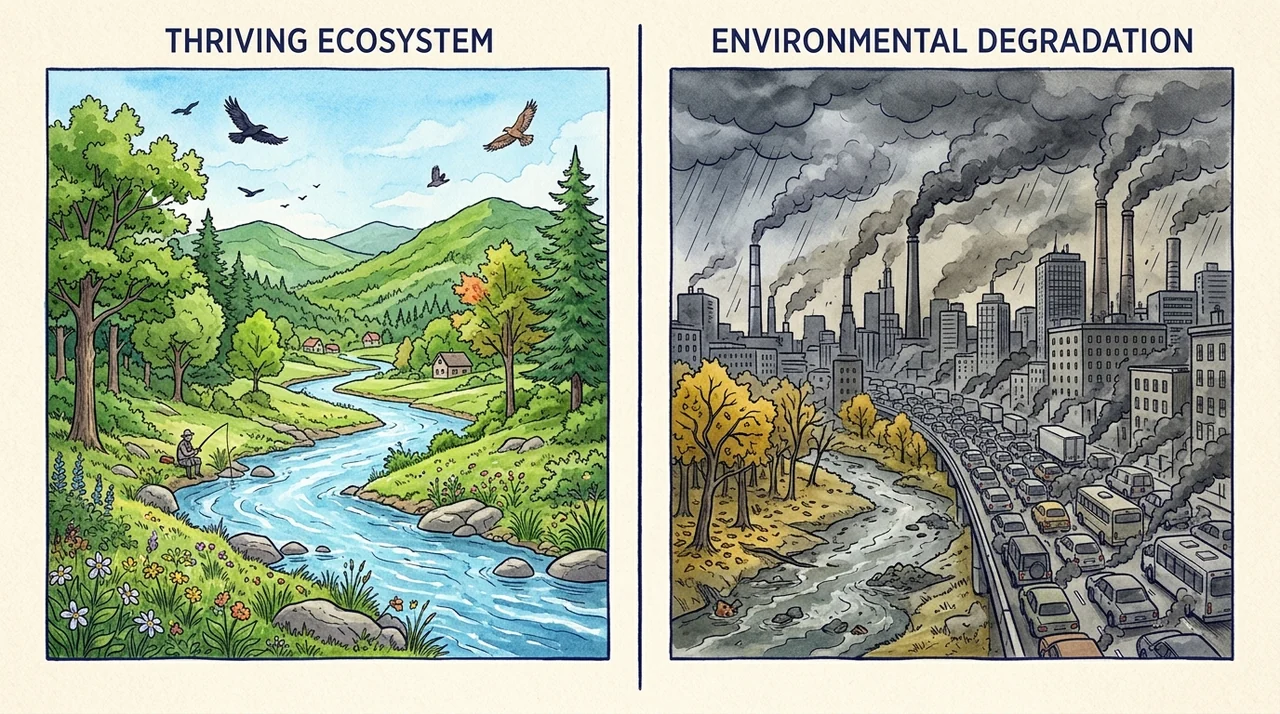
Smoke and exhaust harm people, but their effects spread further. Pollutants injure flower and vegetable crops. Soot darkens buildings and polluted air can damage their surfaces. Acid rain affects lakes and removes nutrients from soil, weakening forests and the creatures that depend on them. Wind can take pollution beyond the country where it began. The passage thus connects local emissions with wider environmental harm. ଜୀବ ଓ ଜଡ଼ ପଦାର୍ଥ ଉଭୟର ଉଦାହରଣ ଦିଅନ୍ତୁ।
An industrial disaster first shows how dangerous contaminated air can be. The writer then describes less visible exposure in ordinary life, links it with factories and traffic and traces damage to people, plants, water and buildings. Possible controls follow the account of damage. The movement of pollutants across frontiers finally explains why research, spending and cooperation all matter.
Collection traps a pollutant before it enters the open air. Dispersal spreads an emission, for example by releasing it from a taller stack. Only the first of these methods catches the pollutant at discharge. ଧରି ରଖିବା ଓ ବିକ୍ଷିପ୍ତ କରିବାର ଭେଦ ଦେଖାନ୍ତୁ।
A · Lead-inDiscuss the opening questions about air and use the examples to predict the topic.
ଉତ୍ତର ଦେଖନ୍ତୁ
A pupil might say, “Smoke on a busy road makes me cough.” Another may never have had that experience. The questions prepare us to connect what we breathe with health and to ask what makes rainfall acidic. ନିଜ ଅନୁଭବ ଥିଲେ ଲେଖ; ପାଠର ପ୍ରଶ୍ନ କୌଣସି ପଦାର୍ଥ ଚାଖି ଦେଖିବାକୁ କହୁନାହିଁ।
D. 1–5Explain the opening example and the importance of inhaled air.
ଉତ୍ତର ଦେଖନ୍ତୁ
1. Gas escaped from a chemical plant at Bhopal in 1984. 2. The escape occurred at an industrial plant. 3. Many people died and others were injured or lost their eyesight. 4. Breathing is essential for life. 5. Polluted air is an important route by which contaminants enter the body.
D. 6–7Give the composition of dry air stated in the lesson and explain when air is polluted.
ଉତ୍ତର ଦେଖନ୍ତୁ
6. The text gives 78% nitrogen, 21% oxygen, a little under 1% argon and 0.03% carbon dioxide. 7. A change such as a lower oxygen level or the entry of irritating gases makes air polluted. ଶତକଡ଼ା ସଂଖ୍ୟା ଏହି ପାଠରେ ଦିଆଯାଇଥିବା ମୂଲ୍ୟ।
D. 8–13Connect industry and traffic with emissions.
ଉତ୍ତର ଦେଖନ୍ତୁ
8. Coal, coke and furnace oil are named. 9. Dust, ash and gases are inhaled. 10. Thermal stations release large quantities of smoke and ash. 11. Cement, steel, ore-processing and chemical industries also contribute. 12. A growing population needs transport. 13. Vehicle exhaust adds harmful gases, including carbon monoxide.
D. 14–16Describe the effects on plants, buildings and people.
ଉତ୍ତର ଦେଖନ୍ତୁ
14. Vehicle exhaust harms flower and vegetable crops, and pollution from power plants has killed trees. 15. Soot blackens walls and polluted air damages building surfaces. 16. People may suffer irritated eyes, scratchy throats and respiratory illness. ପ୍ରଶ୍ନକୁ ମେଳାଇ କ୍ଷତିଗ୍ରସ୍ତ ବସ୍ତୁ ବା ବ୍ୟକ୍ତି ଅନୁସାରେ ଉଦାହରଣ ଦିଅ।
D. 17–18Distinguish the warming effect from the harm due to refrigerants.
ଉତ୍ତର ଦେଖନ୍ତୁ
17. More carbon dioxide, methane and nitrous oxide can trap radiation and warm the atmosphere. 18. The lesson describes chlorofluorocarbons used in refrigeration as a threat to the layer that protects us from harmful solar energy. ତାପମାତ୍ରା ବଢ଼ିବା ଓ ସୁରକ୍ଷାଦାୟୀ ସ୍ତର ନଷ୍ଟ ହେବା ଦୁଇଟି ଭିନ୍ନ ପ୍ରଭାବ।
D. 19–22Explain acid rain, its effects and the three controls.
ଉତ୍ତର ଦେଖନ୍ତୁ
19. The passage links acidic precipitation to sulphur and nitrogen compounds. 20. Rivers and lakes become acidic, harming aquatic life. 21. Useful soil nutrients are washed away. 22. Use preventive, dispersal and collection measures.
D. 23–25Why do standards, technology and research all matter?
ଉତ୍ତର ଦେଖନ୍ତୁ
23. Countries pass laws and set air-quality standards. 24. Low-sulphur fuels and redesigned engines have reduced pollution. 25. Pollutants cross boundaries and effective control remains costly, so better ways are needed.
E (i). 1–3Explain changes to the atmosphere, the risk from a chemical plant and the formation of acid rain.
ଉତ୍ତର ଦେଖନ୍ତୁ
1. Burning fuels uses oxygen and releases other substances. The lesson warns that altered air can lead to respiratory disorders. 2. Chemical plants may release toxic fumes. A gas escape can kill or injure many people, as at Bhopal. 3. Sulphur and nitrogen compounds enter the air; rain or other precipitation containing these pollutants falls as acid rain. ପ୍ରତି ଉତ୍ତରରେ ପ୍ରଥମେ କାରଣ ଓ ପରେ ପରିଣାମକୁ ରଖ।
E (i). 4–5How do pollutants cross borders and how can pollution from vehicles be reduced?
ଉତ୍ତର ଦେଖନ୍ତୁ
4. Winds can carry pollutants over very long distances. The lesson links damage to lakes in eastern Canada with pollution originating in the United States. 5. Engines can be redesigned and fitted with catalytic converters. Pollution affects places far from the source, making it an international problem. ବାୟୁ ପ୍ରବାହର କୌଣସି ରାଜନୈତିକ ସୀମା ନାହିଁ।
F. 1–2Prepare and present ideas for the group discussion.
ଉତ୍ତର ଦେଖନ୍ତୁ
Sample presentation: Our group suggests using low-sulphur fuel, collecting pollutants at factory outlets and fitting suitable devices to vehicle exhausts. Which of these would prevent pollution at its source? ବାକି ଦଳ ପ୍ରତିକ୍ରିୟା ଜଣାଇବେ।
ଶ୍ରେଣୀର ସହମତି ଆଲୋଚନା ପରେ ଲେଖିବେ।
ଉପସ୍ଥାପନାର ପ୍ରତି ମତ ସହ ତାହା କିପରି କାମ କରେ କୁହ। “Use cleaner fuel because less sulphur enters the air” କହିଲେ କେବଳ ବ୍ୟବସ୍ଥାର ନାମ କହିବା ଅପେକ୍ଷା ଦଳକୁ ଯୁକ୍ତି ମିଳେ।
F. 3Write a letter to an editor about keeping air clean.
ଉତ୍ତର ଦେଖନ୍ତୁ
[Your address], [Date]. To the Editor, [Newspaper]. Subject — Clean air for our community. Sir/Madam, People breathe the same air throughout the day. Factory smoke and vehicle exhaust can harm our lungs and damage crops. Please draw attention to the use of low-sulphur fuels and equipment that captures pollutants. Local authorities can also check that vehicle emission devices work. These measures deserve public support because clean air affects everyone. Yours faithfully, [Name]. ଚିଠିରେ ସମସ୍ୟା, ପ୍ରଭାବ ଓ କାର୍ଯ୍ୟକାରୀ ପ୍ରସ୍ତାବ କ୍ରମରେ ଲେଖ।
i. For a ban: fewer private vehicles would release less exhaust. Against: redesigned engines and catalytic converters can reduce emissions while vehicles remain available. ii. For closing polluting industries: smoke, ash and toxic fumes harm people and crops. Against: cleaner fuel and collection equipment can reduce pollution within existing plants. ଶ୍ରେଣୀର ବକ୍ତା ନିଜ ପକ୍ଷ ପାଇଁ ପାଠରୁ ଉଦାହରଣ ବାଛିବେ।
H (b)Restore the capitals and punctuation in the passage about United States law.
ଉତ୍ତର ଦେଖନ୍ତୁ
In the United States, control of air pollution is chiefly the responsibility of the state and local governments. All the states have air quality management programmes which are patterned after federal laws. The basic federal law dealing with air pollution is the Clean Air Act of 1970, amended in 1990. Under this law, the federal Environment Protection Agency sets standards for air quality. What are the standards?
I. Local projectPlan your survey and write the conclusion after collecting evidence.
ଉତ୍ତର ଦେଖନ୍ତୁ
Worked illustration using fictional observations. Title: Air near our school gate. Question: When is smoke most noticeable? Observation sheet: Monday morning, gate, two buses leaving, exhaust visible; Monday midday, gate, no vehicles passing, no exhaust visible. Interpretation: smoke was observed at the busier visit, but two observations are insufficient to establish the usual pattern. Proposed control: check vehicle emissions and compare several days at the same times. ଏହି ତଥ୍ୟ କଳ୍ପିତ।