୧୨୦୨୬–୨୭ ପାଠ୍ୟକ୍ରମ
ଅପଲୋଡ୍ ହୋଇଥିବା ପାଠ୍ୟପୁସ୍ତକରେ ଏହି ପାଠ ଅଛି। ବୋର୍ଡର ୨୦୨୬–୨୭ English (SLE) ତାଲିକାରେ ଏହାର ଶୀର୍ଷକ ନାହିଁ। ଏଠାରେ ଥିବା ପ୍ରଶ୍ନ ପଠନ ଅଭ୍ୟାସ ପାଇଁ।
english/skills-of-communicative-english/source.pdf · ପୃଷ୍ଠା ୫୮Coot & hern to brimming river, 'Men may come and men may go' refrain & sound words
ଅପଲୋଡ୍ ହୋଇଥିବା ପାଠ୍ୟପୁସ୍ତକରେ ଏହି ପାଠ ଅଛି। ବୋର୍ଡର ୨୦୨୬–୨୭ English (SLE) ତାଲିକାରେ ଏହାର ଶୀର୍ଷକ ନାହିଁ। ଏଠାରେ ଥିବା ପ୍ରଶ୍ନ ପଠନ ଅଭ୍ୟାସ ପାଇଁ।
english/skills-of-communicative-english/source.pdf · ପୃଷ୍ଠା ୫୮ଅଫ୍ଲାଇନ୍ ଡାଉନଲୋଡ୍:HTML ପୃଷ୍ଠାJavaScript ତଥ୍ୟ
ଏହି ସଚିତ୍ର ଧାରଣା ମାନଚିତ୍ର (Visual Concept Map) ରେ “The Brook” ଅଧ୍ୟାୟର ମୁଖ୍ୟ ବିଷୟବସ୍ତୁ ଓ ନିୟମଗୁଡ଼ିକୁ ଏକାଠି ସହଜରେ ବୁଝିବା ପାଇଁ ସଜାଯାଇଛି।
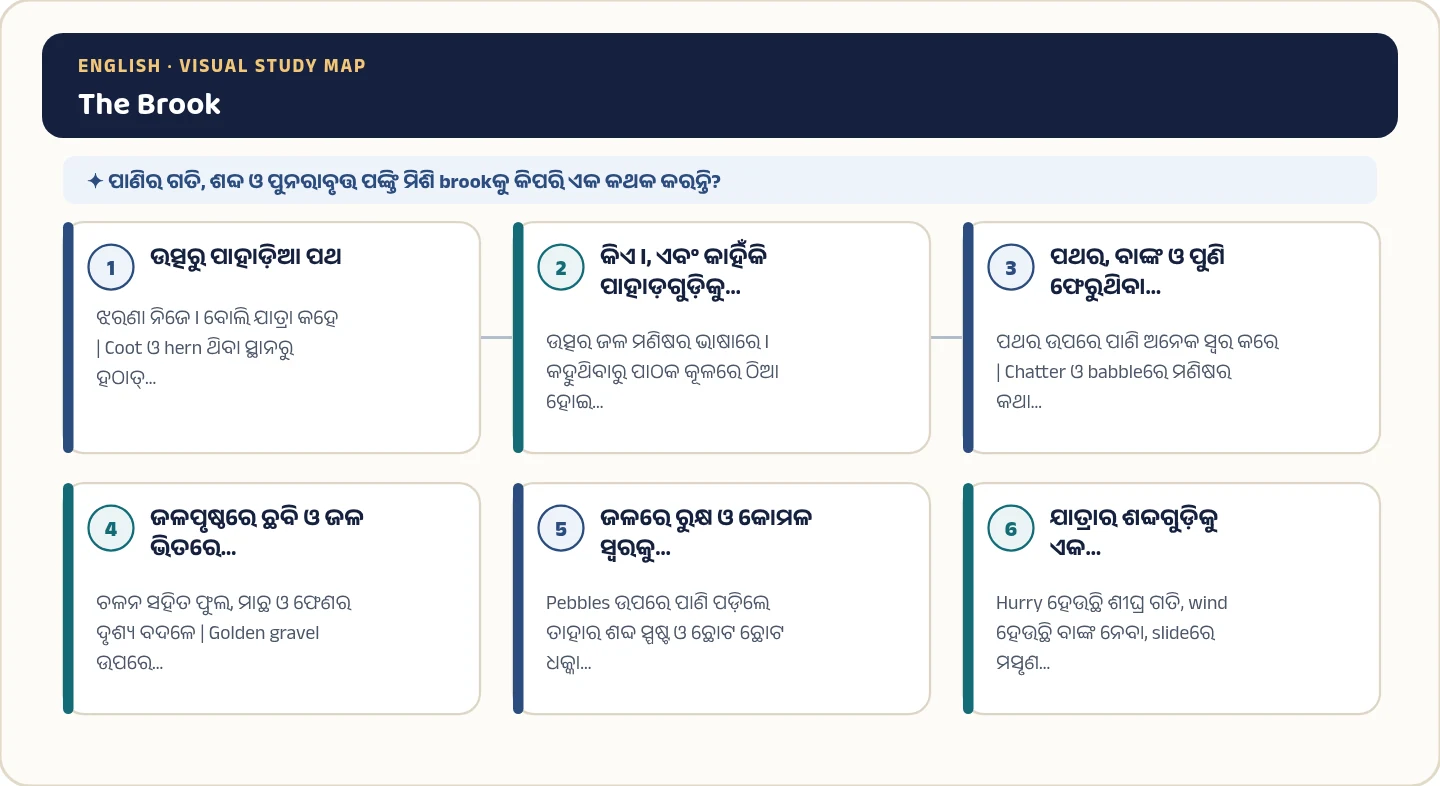
ଆଲ୍ଫ୍ରେଡ୍ ଲର୍ଡ ଟେନିସନ୍ଙ୍କ (Alfred, Lord Tennyson) କବିତା ‘The Brook’ରେ ଝରଣା ନିଜେ I ବୋଲି ଯାତ୍ରା କହେ। Coot ଓ hern ଥିବା ସ୍ଥାନରୁ ହଠାତ୍ ଆଗକୁ ବାହାରି ସେ fern ମଧ୍ୟରେ ଝଲମଲ କରେ।
ପାହାଡ଼, ପର୍ବତଶିରା, ଗାଁ, ସହର ଓ ପୋଲ ଅତିକ୍ରମ କରିବାର ତାଲିକାରେ ଗତିର ତେଜ ଓ ପଥର ବିସ୍ତାର ପ୍ରକାଶ ପାଏ।
ଉତ୍ସର ଜଳ ମଣିଷର ଭାଷାରେ I କହୁଥିବାରୁ ପାଠକ କୂଳରେ ଠିଆ ହୋଇ ଦେଖିବା ଅପେକ୍ଷା ପାଣି ସହ ଗତି କରନ୍ତି। ଏକ ପାଖରେ ଜଳପକ୍ଷୀ ଓ fern, ଅନ୍ୟ ପାଖରେ ସହର ଓ ପୋଲ।
Thorp ଅର୍ଥ ଛୋଟ ଜନବସତି। ପୋଲ ତିଆରି କରୁଥିବା ମଣିଷ ବଦଳିପାରନ୍ତି, କିନ୍ତୁ ପାଣିର ପଥ ଚାଲିଥାଏ।
Thirty, twenty, half a hundred ପରି ଗଣନା ଦ୍ୱାରା ଦ୍ରୁତ ଅତିକ୍ରମଣର ଛବି ଆସେ। ସମସ୍ତ ଦୃଶ୍ୟ ଏକା ସ୍ଥାନରେ ଅଛି ବୋଲି ଭାବିଲେ ଯାତ୍ରାର ଏହି ଗୁଣ ହଜିଯାଏ।
ପଥର ଉପରେ ପାଣି ଅନେକ ସ୍ୱର କରେ। Chatter ଓ babbleରେ ମଣିଷର କଥା ଓ ପାଣିର ଧ୍ୱନି ଏକାଠି ଶୁଣାଯାଏ।
ପାଣି କୂଳକୁ ବାରମ୍ବାର ଛୁଇଁଥିବାରୁ fret ଶବ୍ଦଟି ମଧ୍ୟ ଅର୍ଥବହ। Philipଙ୍କ ଚାଷଜମି ପାଖ ଦେଇ ପୂର୍ଣ୍ଣ ନଦୀ ସହ ମିଶିବା ଲକ୍ଷ୍ୟ refrainରେ ବାରମ୍ବାର ଫେରେ।
ଚଳନ ସହିତ ଫୁଲ, ମାଛ ଓ ଫେଣର ଦୃଶ୍ୟ ବଦଳେ। Golden gravel ଉପରେ ରୂପା ଭଳି ଚମକୁଥିବା ଜଳର ଛୋଟ ତରଙ୍ଗ ଦିଶେ।
ଝରଣା ନିଜ ସହ କିଛି ବହି ନେଉଥିବାରୁ ଏଠାରେ ଭୂଦୃଶ୍ୟକୁ ଗୋଟିଏ ସ୍ଥିର ଛବି ଭାବେ ପଢ଼ିହେବ ନାହିଁ।
Pebbles ଉପରେ ପାଣି ପଡ଼ିଲେ ତାହାର ଶବ୍ଦ ସ୍ପଷ୍ଟ ଓ ଛୋଟ ଛୋଟ ଧକ୍କା ପରି। Eddying baysରେ ସେହି ପାଣି ଘୂରି ଫେଣାଏ।
ମାଛ ଓ ଫୁଲ ଦେଖାଯାଉଥିବା ଅଂଶରେ ପାଣିର ଶକ୍ତି ସହ ତା’ର ବହନ କରିବା କାମ ମଧ୍ୟ ଗୁରୁତ୍ୱ ପାଏ। ପରେ ଘାସ, ଗଛ ଓ ଛାୟା ପାଖରେ ସ୍ୱର ଶାନ୍ତ ହୁଏ।
“The brook chatters when it crosses stones and murmurs as the scene grows quiet.” ଏହି ବାକ୍ୟରେ ଦୁଇଟି verb ସହ ଦୁଇଟି ପରିବେଶ ରହିଛି। କେବଳ ‘the poet uses sound words’ ଲେଖିଲେ ଧ୍ୱନିର ଏହି ବିକାଶ ଧରାପଡ଼େ ନାହିଁ।
Hurry ହେଉଛି ଶୀଘ୍ର ଗତି, wind ହେଉଛି ବାଙ୍କ ନେବା, slideରେ ମସୃଣ ଗତି, murmurରେ ଶବ୍ଦ ଅତି ମୃଦୁ। ଏହି କ୍ରିୟାଗୁଡ଼ିକ ସବୁ ଜଳସ୍ରୋତର ହେଲେ ମଧ୍ୟ ତାହାର ଗୋଟିଏ ଅଂଶକୁ ଅନ୍ୟ ଅଂଶଠାରୁ ଅଲଗା କରନ୍ତି।
ଶବ୍ଦଚିତ୍ର ସହ ରଙ୍ଗର ଉଦାହରଣ ମଧ୍ୟ ମିଶାଇପାର। Golden gravel ଉପରେ ରୂପେଲି ଜଳର ଚମକ ଏକା ସମୟରେ ତଳର ପଥର ଓ ଉପରର ପାଣିକୁ ଦେଖାଏ।
ଏକ ଯାତ୍ରାର ମୌଳିକ ବର୍ଣ୍ଣନା ଏଭଳି ହୋଇପାରେ। “When the channel is rough the brook makes itself heard. Farther on, the eye follows a flash of light, a flower or a fish. By the time the stream moves through the quiet landscape, the speaker’s verbs have become softer, yet the destination remains the same.” ଏପରି ଉତ୍ତରରେ personification, ଧ୍ୱନି ଓ refrainକୁ ତିନିଟି ବିଚ୍ଛିନ୍ନ ସଂଜ୍ଞା ଭାବେ ରଖିବାକୁ ହୁଏ ନାହିଁ।
Lawns ଓ hazel ଗଛ ନିକଟରେ steal ଓ slide ଧୀର ନିଃଶବ୍ଦ ଗତିକୁ ଆଣେ। ଅଗଭୀର ପାଣିରେ ଆଲୋକର ଜାଲ ପରି ଛାୟା ନାଚେ।
ରାତିରେ murmur ଏକ ମୃଦୁ ଶବ୍ଦ। ଶେଷରେ ନଦୀରେ ମିଶିବା କଥା ପୁଣି ଆସି ମଣିଷର ଅଳ୍ପ ଜୀବନ ଓ ପ୍ରକୃତିର ଦୀର୍ଘ ଧାରାର ତୁଳନାକୁ ପୂରଣ କରେ।
Netted sunbeamରେ ସୂର୍ଯ୍ୟ ନିଜେ ନାଚୁନାହିଁ। ତରଙ୍ଗ ସହ ଅଗଭୀର ଜଳରେ ଆଲୋକର ଛବି ଭାଙ୍ଗେ ଓ ହଲେ, ତେଣୁ ଜାଲ ପରି ଏକ ନାଚୁଥିବା ନକ୍ସା ଦିଶେ।
ରାତି ଓ ନିରବତା ଆସିଲେ ମଧ୍ୟ ଜଳ ତା’ର ପଥରେ ରହେ। ପ୍ରତିଥର ନଦୀରେ ମିଶିବାର ପୁନରୁକ୍ତି ପୂର୍ବର ଏକ ନୂଆ ପରିବେଶକୁ ଏକା ଦୀର୍ଘ ଯାତ୍ରା ସହ ଯୋଡ଼େ।
ମଣିଷର ଆସିବା ଓ ଯିବାର ବର୍ଣ୍ଣନାର ଅର୍ଥ ପ୍ରତ୍ୟେକ ବୁନ୍ଦା ସର୍ବଦା ସେଠାରେ ରହେ ନୁହେଁ। କବିତାରେ ପ୍ରବାହର ସାତତ୍ୟକୁ ଜୀବନର ଅଳ୍ପ ସମୟ ସହ ତୁଳନା କରାଯାଇଛି।
ଝରଣାର କଣ୍ଠ ଦେବା personification। ପଥରରେ ଝରଣାର ଶବ୍ଦ ବିଷୟରେ କହିଲେ ଶବ୍ଦାନୁକରଣ କରୁଥିବା ଗୋଟିଏ କ୍ରିୟା ଓ ତାହା ମେଳୁଥିବା ସ୍ଥାନ ବାଛ।
ଝରଣାକୁ ସାକ୍ଷାତ୍କାର କଲେ ଉତ୍ସ, ଦେଖିଥିବା ସ୍ଥାନ ଓ ଗନ୍ତବ୍ୟ କ୍ରମରେ ପଚାରିବା ସ୍ୱାଭାବିକ।
ଉଚ୍ଚସ୍ୱରରେ ଶବ୍ଦ ଦୁଇଟି କହି ପ୍ରତିଟି ପାଖରେ ଝରଣାର ଯାତ୍ରାର ଏକ ସ୍ଥାନ ଲେଖ। କେବଳ “the brook makes a sound” କହିଲେ ଧ୍ୱନି ଓ ଭୂମିର ଯୋଗ ମିଳେନାହିଁ।
| ଧ୍ୱନି ସଙ୍କେତ | ପାଠକଙ୍କ ମନରେ ଚିତ୍ର |
|---|---|
| chatter, babble | ଜଳର ଛୋଟ ଛୋଟ ଧକ୍କାରେ ବ୍ୟସ୍ତ କଥାବାର୍ତ୍ତା ପରି ଶବ୍ଦ। |
| murmur | ଧୀର ଓ ମୃଦୁ ସ୍ୱରରେ ଚାଲିଥିବା ସ୍ରୋତ। |
ଅଫ୍ଲାଇନ୍ ଡାଉନଲୋଡ୍:HTML ପୃଷ୍ଠାJavaScript ତଥ୍ୟ
brook ନିଜେ ବକ୍ତା। chatter ଦ୍ରୁତ ଜଳର ଶବ୍ଦ ବୁଝାଏ; linger ଧୀର ହେବା ବୁଝାଏ।
english/skills-of-communicative-english/source.pdf · ପୃଷ୍ଠା ୫୮–୬୦ଅଫ୍ଲାଇନ୍ ଡାଉନଲୋଡ୍:HTML ପୃଷ୍ଠାJavaScript ତଥ୍ୟ
ଛୋଟ ଜଳସ୍ରୋତ।
english/skills-of-communicative-english/source.pdf · ପୃଷ୍ଠା ୫୮–୬୦ପାଣିରେ ଭରି ରହିଥିବା।
english/skills-of-communicative-english/source.pdf · ପୃଷ୍ଠା ୫୮–୬୦ଅଫ୍ଲାଇନ୍ ଡାଉନଲୋଡ୍:HTML ପୃଷ୍ଠାJavaScript ତଥ୍ୟ
D. Philip’s
ଯାତ୍ରାର ଶେଷ ଚିହ୍ନଟ ପାଇଁ Philip’s farm ଉଲ୍ଲେଖ ଅଛି।
A. The brook
କବି ଜଳସ୍ରୋତକୁ ମଣିଷ ପରି ନିଜର ଯାତ୍ରା ବର୍ଣ୍ଣନା କରାନ୍ତି।
ଅଫ୍ଲାଇନ୍ ଡାଉନଲୋଡ୍:HTML ପୃଷ୍ଠାJavaScript ତଥ୍ୟ
Over stones the water bubbles and chatters. Beside lawns it slides quietly, and under the stars it murmurs. The changing verbs let us hear the stream as its speed and surroundings change. ପରିବେଶ ସହିତ ଶବ୍ଦ ଓ ଗତି ବଦଳୁଛି।
ଅଫ୍ଲାଇନ୍ ଡାଉନଲୋଡ୍:HTML ପୃଷ୍ଠାJavaScript ତଥ୍ୟ
Bicker suggests a noisy downhill rush; chatter later makes stones and water sound like speech. Sally suggests a sudden start. Partner A can read the opening briskly, then slow down for linger and loiter later. ଆରମ୍ଭର ଗତି ଓ ଶେଷର ଧୀର ସ୍ୱରକୁ ମୁଖରେ ପଢ଼ି ତୁଳନା କର।
Bicker ଓ chatter ପଢ଼ିଲେ ଝରଣାର ଶବ୍ଦ ଶୁଣିହୁଏ। Sally ତାହାର ହଠାତ୍ ଆଗକୁ ବାହାରିବାକୁ ଦେଖାଏ।
ଶବ୍ଦ ଓ ଗତି ପାଇଁ ପୃଥକ ଉଦାହରଣ ଦିଅ।
1. It comes from the haunts of coot and hern. 2. It flashes into the light among the ferns. 3. It passes hills, ridges, villages, a town and bridges. 4. It joins the river by Philip’s farm.
Source ପାଇଁ ପକ୍ଷୀ ରହୁଥିବା ସ୍ଥାନ, route ପାଇଁ hills ଓ villages, destination ପାଇଁ river ରଖ। Brook riverରେ ମିଶିଲା ପରେ ଏହି ପଥବର୍ଣ୍ଣନା ସରେ।
5. Its winding current gradually wears away the banks. 6. Repetition imitates water making quick sounds over stones. 7. “Steal” and “slide” suggest its quiet, smooth movement.
ପାଣିରେ କୂଳ କ୍ଷୟ ଦୀର୍ଘ ସମୟର ଫଳ। Chatter ତତ୍କ୍ଷଣାତ୍ ଶୁଣାଯିବା ଶବ୍ଦ।
Steal by ଏଠି ଚୋରିର ଅର୍ଥ ଦିଏନାହିଁ; ଅଲକ୍ଷ୍ୟରେ ମୃଦୁ ଭାବରେ ଚାଲିବା ବୁଝାଏ।
8. Sunlight falls in a net-like pattern across the shallow water; ripples make its reflection appear to dance. 9(i) 4 → 1 → 3 → 2: murmuring under the stars, brambles, shingly bars, cresses. 9(ii) 2 → 1 → 4 → 3: the brook curves, joins the river, mentions passing people and then its own continuing flow. ସଂଖ୍ୟା ପ୍ରତ୍ୟେକ ଖଣ୍ଡର ଛପା ଧାଡ଼ିର କ୍ରମକୁ ସୂଚାଏ।
ସୂର୍ଯ୍ୟର ସ୍ଥାନ ଦ୍ରୁତ ନାଚୁନାହିଁ। ଚଳନ୍ତା ଜଳର ପ୍ରତିଫଳନରୁ dance ଚିତ୍ର ହୁଏ।
ସଜାଣି ଅଂଶରେ ଗୋଟିଏ ପଙ୍କ୍ତିର subject ପର ପଙ୍କ୍ତିର verb ସହ ମିଳୁଛି କି ପରଖ।
1. Here bicker describes the noisy descent; it makes us hear the water. 2. The stream winds in bends instead of taking a straight course. 3. Its ripples over stones and pebbles sound like quick speech. 4. Brimming suggests a river full of water. 5. I picture a narrow, lively brook entering a broad, full channel. 6. The refrain brings us back to the difference between a human lifetime and the brook’s continuing course. ପ୍ରଶ୍ନ ୫ର ଚିତ୍ର ନିଜର ହୋଇପାରେ; ଶବ୍ଦରୁ ପ୍ରମାଣ ଦିଅ।
ପ୍ରତ୍ୟେକ motion word ସହ ପଥର ପ୍ରକୃତି ଯୋଡ଼: ଢାଲରେ bicker, ବକ୍ରପଥରେ wind। ପୁନରୁକ୍ତ refrain ଉତ୍ତରରେ ଏକ ପିଢ଼ିର ମଣିଷ ଆସି ଚାଲିଗଲେ ବି ଜଳପ୍ରବାହ ଚାଲିଥିବା ଲେଖ।
1 d, a human life; 2 i, the brook is full of life; 3 iv, the brook speaks; 4 iii, eternal, in the poem’s comparison. ଜୀବନ ସହ ଯାତ୍ରା ତୁଳନୀୟ ହେଲେ ମଧ୍ୟ ମନୁଷ୍ୟ ଓ ପ୍ରବାହର ସ୍ଥାୟିତ୍ୱ ଅଲଗା।
Fish ଉଲ୍ଲେଖ ଜଳ ଭିତର ଜୀବନର ପ୍ରମାଣ। “I” ଆମକୁ ବୁଝାଏ ଝରଣା ନିଜେ କହୁଛି।
Eternalକୁ ଏଠି କବିତାର ମାନବଜୀବନ ସହ ତୁଳନା ଭାବେ ପଢ଼।
hern/fern, sally/valley, down/town, ridges/bridges, flow/go, ways/bays, trebles/pebbles. A lamp speaks: I wait beside your chair at night. / You open books beneath my light. / I see the letters line by line. / Your pencil moves beside my shine. / At dawn you close the book with care. / I watch the sunrise from my chair. ଜଡ଼ବସ୍ତୁ ନିଜେ କହୁଛି ବୋଲି I ବ୍ୟବହାର କରାଯାଇଛି।
ଏକ ବସ୍ତୁ ପ୍ରଥମ ପୁରୁଷରେ କଥା କହିଲେ personification ହୁଏ। ନିଜ ଛଅ ପଙ୍କ୍ତିରେ ସେ ବସ୍ତୁ କ’ଣ କରେ ଓ କ’ଣ ଦେଖେ ତାହା ଲେଖି ଶେଷ ଶବ୍ଦଗୁଡ଼ିକୁ ଯୋଡ଼ାରେ ଶୁଣ।
Where do you rise? — stanza 1. What places do you pass? — stanza 2. What sounds do you make over stones? — stanza 4. Which fish swim with you? — stanza 7. What do you do under the moon? — stanza 12. Where are you going at the end? — stanza 13. ଉତ୍ତରଦାତା ନିଜ ପୁସ୍ତକର ସମ୍ପୃକ୍ତ ସ୍ତବକଟି ପଢ଼ିବେ।
Where ପାଇଁ ସ୍ଥାନ ଥିବା stanza, what sound ପାଇଁ chatter ଆଦି ଥିବା stanza ବାଛ। ପ୍ରଶ୍ନ ଓ ଉତ୍ତରର ପ୍ରଥମ ଶବ୍ଦ ଏକା ନଥିଲେ ମଧ୍ୟ ଏହି ସମ୍ପର୍କ ମିଳେ।
Child: Who are you? Brook: I am a small stream. Child: Where are you going?
Brook: To join the river. Child: Where will you meet it? Brook: Near Philip’s farm. Child: What do you see en route?
Brook: I pass hills, bridges, fields and flowers. Child: How long will you flow? Brook: In my song I flow for ever. ନିଜ ଭାଷାରେ କଥୋପକଥନ କରି ପ୍ରଥମ ପୁରୁଷର ସ୍ୱର ରଖ।
Child ପ୍ରଶ୍ନରେ you କହିବ, brook ଉତ୍ତରରେ I କହିବ। “I pass …” ପରେ ପଥର ସ୍ଥାନ ଓ “I join …” ପରେ river ରଖିଲେ ସଂଳାପ ଯାତ୍ରାର କ୍ରମ ଦେଖାଏ।
a. I am a blackboard. All day I carry questions and diagrams. At the end of the lesson someone wipes me clean, and the next class gives me a new beginning. b. I am a pen that leaves a trail, / I ride each line as boats might sail. / You rest my point when day is done, / I wake to greet the morning sun. ଶେଷ ଧ୍ୱନି trail/sail ଓ done/sun ମିଳିଛି।
Blackboard ନିଜ ପୃଷ୍ଠରେ ଲେଖା ଓ ପୋଛାଯିବା କହିପାରେ। ଏଭଳି ବସ୍ତୁ ସହ ମେଳ ଥିବା ଦୁଇ କାମ ବାଛ, ପରେ ଏକ ଯୋଡ଼ା rhyming end words ଖୋଜ।
କେବଳ rhyme ପାଇଁ ବସ୍ତୁର ଅର୍ଥ ବଦଳାଅନାହିଁ।
ଅଫ୍ଲାଇନ୍ ଡାଉନଲୋଡ୍:HTML ପୃଷ୍ଠାJavaScript ତଥ୍ୟ