Visual Concept Map · Direct and Indirect Speech
ଏହି ସଚିତ୍ର ଧାରଣା ମାନଚିତ୍ର (Visual Concept Map) ରେ “Direct and Indirect Speech” ଅଧ୍ୟାୟର ମୁଖ୍ୟ ବିଷୟବସ୍ତୁ ଓ ନିୟମଗୁଡ଼ିକୁ ଏକାଠି ସହଜରେ ବୁଝିବା ପାଇଁ ସଜାଯାଇଛି।
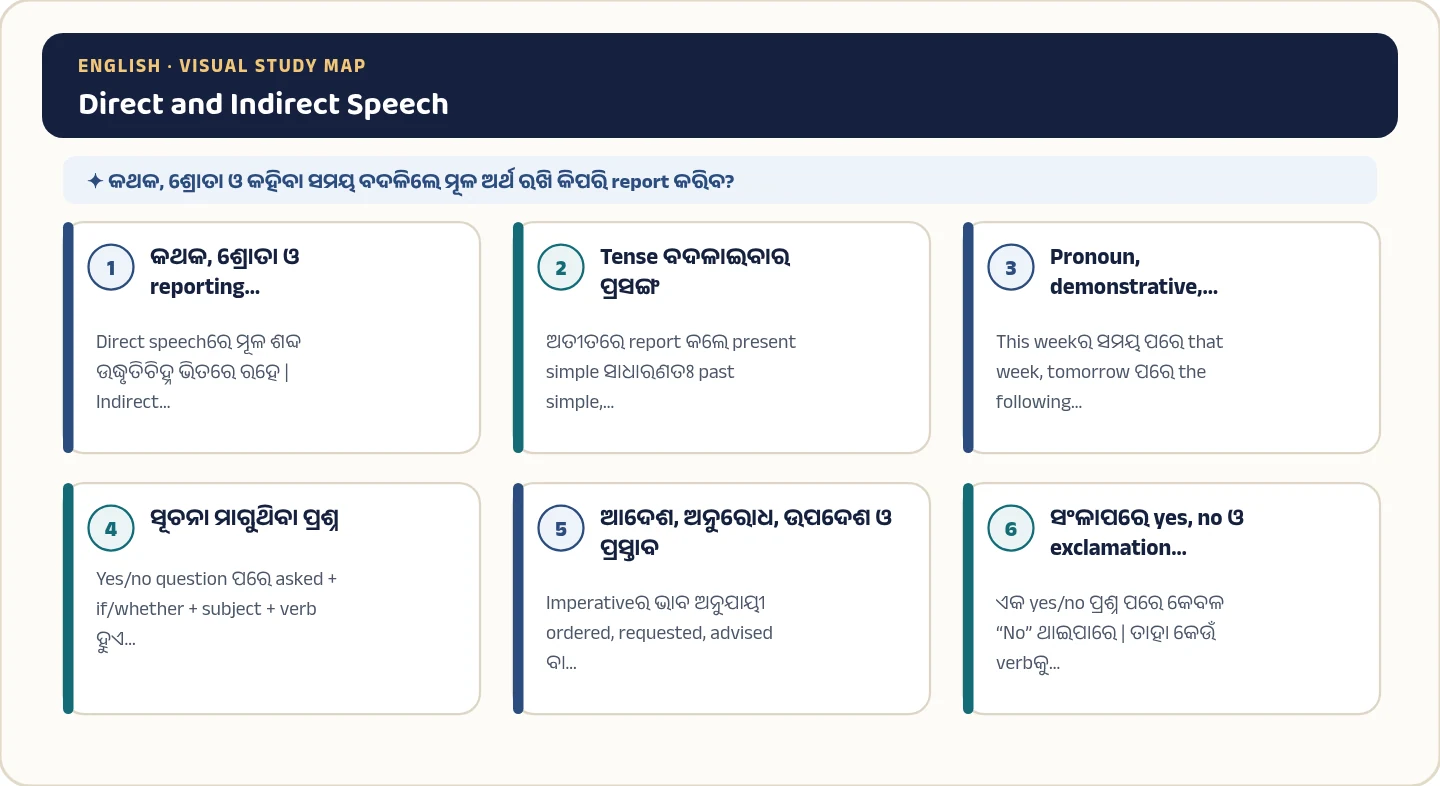
Pronoun/tense/adverbial shifts, universal truth & no-backshift exceptions, must/would & Odia contrast
ଏହି ସଚିତ୍ର ଧାରଣା ମାନଚିତ୍ର (Visual Concept Map) ରେ “Direct and Indirect Speech” ଅଧ୍ୟାୟର ମୁଖ୍ୟ ବିଷୟବସ୍ତୁ ଓ ନିୟମଗୁଡ଼ିକୁ ଏକାଠି ସହଜରେ ବୁଝିବା ପାଇଁ ସଜାଯାଇଛି।
Direct speechରେ ମୂଳ ଶବ୍ଦ ଉଦ୍ଧୃତିଚିହ୍ନ ଭିତରେ ରହେ। Indirect speechରେ କିଏ କାହାକୁ କ’ଣ କହିଲା ତାହା ନିଜ ବାକ୍ୟ ଭିତରେ ଜଣାଅ।
ବିବୃତି ପାଇଁ said that ବା told + listener + that ବ୍ୟବହାର ହୋଇପାରେ। Reporting ଏବେ କି ପରେ ହେଉଛି ତାହା ଅନୁସାରେ today ବା that day ବାଛ।
ଏକ ଚିରନ୍ତନ ସତ୍ୟ ରିପୋର୍ଟ କଲେ present ରୂପ ରହିପାରେ।
ଜଣେ ମା’ ନିଜ ପୁଅ ଫେରିଆସିବ ବୋଲି କହୁଥିବା ଉଦାହରଣରେ ପ୍ରଥମେ କଥକ ମା’, ଉଲ୍ଲେଖ ହେଉଥିବା ବ୍ୟକ୍ତି ପୁଅ ଓ ସମୟ ସେହି ସନ୍ଧ୍ୟା ବୋଲି ଚିହ୍ନ। ସେହି ଦିନ ରିପୋର୍ଟ ଓ କିଛି ଦିନ ପରେ ରିପୋର୍ଟରେ this eveningର ସମ୍ପର୍କ ସମାନ ରହିବ ନାହିଁ।
“My son” ମା’ଙ୍କ କଥାକୁ ଅନ୍ୟଜଣ କହିଲେ her son ହୁଏ। Was returning ହେଲେ ମଧ୍ୟ ପୁଅ ଫେରିବାଟି ମା’ଙ୍କ କଥା କହିବା ସମୟଠାରୁ ଆଗକୁ ହୋଇପାରେ।
Time of speaking, time of reporting ଓ time of actionକୁ ଭିନ୍ନ ଚିହ୍ନିଲେ ସମସ୍ତ past formକୁ ‘କାମ ସରିଗଲା’ ବୋଲି ବୁଝିବାରୁ ରକ୍ଷା ମିଳେ।
ଅତୀତରେ report କଲେ present simple ସାଧାରଣତଃ past simple, present progressive past progressive, present perfect past perfect ହୁଏ। Past simple ଆଉ ଆଗକୁ ଥିବା କାମ କହିବାକୁ past perfect ହୋଇପାରେ।
ମୂଳ past perfect ଓ past perfect progressive ସାଧାରଣତଃ ସେହିପରି ରହେ। ଏକାସମୟରେ ଘଟିଥିବା ଦୁଇ କାମ ଓ ଏବେ ବି ସତ୍ୟ ଥିବା ବିବୃତିରେ ସମ୍ପର୍କ ବଞ୍ଚାଅ।
“I posted the letter,” the peon said → The peon said that he had posted the letter. ଚିଠି ପକାଇବା ନିଜ କଥା କହିବା ଆଗରେ ହୋଇଛି। କିନ୍ତୁ ପାଠରେ ଶିକ୍ଷକ ପଶିବା ସମୟରେ ଛାତ୍ରମାନେ ଠିଆ ହେଲେ ବୋଲି ଦୁଇଟି ସଂଯୁକ୍ତ ଘଟଣା ଅଛି।
ଅନାବଶ୍ୟକ ଭାବରେ ଗୋଟିଏକୁ ବହୁ ପୂର୍ବର କାମ କଲେ ମୂଳ ସମୟସମ୍ପର୍କ ଭାଙ୍ଗିପାରେ। Past perfect ଆଗରୁ ଥିଲେ ଆଉ ଏକ had ଲଗାଅ ନାହିଁ।
Used to, ought to, should, would, might ଓ could ସାଧାରଣତଃ ନିଜ ରୂପ ରଖନ୍ତି। ଦିଆ ବାକ୍ୟର must ନିଶ୍ଚିତତା ସୂଚାଏ କି ଆବଶ୍ୟକତା କହେ, ନା ଆଗାମୀ obligation କହେ, ସେହି ଅର୍ଥରୁ must/had to/would have to ବାଛ।
This weekର ସମୟ ପରେ that week, tomorrow ପରେ the following day, here ସ୍ଥାନ ବଦଳିଲେ there ହୋଇପାରେ। I/my ମୂଳ କଥକ ଓ you/your ଶ୍ରୋତାଙ୍କୁ ସଠିକ୍ ଭାବେ ଦର୍ଶାଇବା ଦରକାର।
Can → could ଓ may → might ସାଧାରଣ ପରିବର୍ତ୍ତନ। Mustରେ ନିଶ୍ଚିତତା, ଆବଶ୍ୟକତା ନା ଭବିଷ୍ୟତର ଦାୟିତ୍ୱ ଅଛି ଦେଖି must, had to ବା would have to ବାଛ।
ଏକା ବ୍ୟକ୍ତି ଏକା ସ୍ଥାନରେ ସେହି ଦିନ କହୁଥିଲେ here ବା today ତଥାପି ଠିକ୍ ହୋଇପାରେ। ପରେ ଅନ୍ୟ ସ୍ଥାନକୁ ଯାଇ କହିଲେ there, that day ଓ the next day ଅଧିକ ସ୍ପଷ୍ଟ।
ହାତରେ ଧରି ଦେଖାଇଥିବା ଜିନିଷ ବିଷୟରେ କହିଲେ “this saree” reported ରୂପରେ “the saree” ମଧ୍ୟ ହୋଇପାରେ। ପ୍ରଶ୍ନରେ ସ୍ଥାନକାଳ ବଦଳିବା ସହ ଶବ୍ଦକ୍ରମ ମଧ୍ୟ ବଦଳେ।
“Where does he live?” → She asked where he lived. Does ଆଉ ନାହିଁ, he ଏବେ verb ଆଗରେ। “Does he live here?” → She asked whether he lived there, ଯଦି ସ୍ଥାନ ବଦଳିଛି।
Where ଓ whether ଦୁଇଟି ମଧ୍ୟରୁ କେଉଁଟି ବାଛିବ ତାହା ମୂଳ ଉତ୍ତର ସ୍ଥାନର ନାମ ନା ହଁ/ନା, ସେଥିରୁ ଜଣାପଡ଼େ।
Yes/no question ପରେ asked + if/whether + subject + verb ହୁଏ। Wh-questionରେ ମୂଳ wh-word ରଖି statementର ଶବ୍ଦକ୍ରମ ନିଅ।
ସହାୟକ do/does/didକୁ ସାଧାରଣ question ଭଳି ଆଗରେ ରଖନି। ନାମ, ପେଶା, ଦରମା କିମ୍ବା ଅଭିଜ୍ଞତା ପଚାରୁଥିବା ସାକ୍ଷାତ୍କାରରେ ପ୍ରଥମେ କେଉଁ ପ୍ରକାର ଉତ୍ତର ମାଗିଛି ତାହା ଚିହ୍ନ।
“Please help me” ବିନୟର ଅନୁରୋଧ। He requested the listener to help him ଲେଖିଲେ help ଚାହୁଁଥିବା ବ୍ୟକ୍ତି ଓ ଯାହାକୁ କହିଛନ୍ତି ଦୁଇଜଣଙ୍କ ସ୍ଥାନ ଭିନ୍ନ ରହେ।
“Don’t go to bed late”ରେ advised + object + not to go ଘଟଣାକୁ ନକାରାତ୍ମକ କରେ। “Let’s go on a picnic”ରେ କଥକ ନିଜେ ଯିବାକୁ ଚାହୁଁଛନ୍ତି।
Ordered them to go ଲେଖିଲେ ସମ୍ପର୍କ ବଦଳିଯିବ। Suggested going ବା suggested that they should go ଭାବଟି ରଖେ।
“Good luck!” ପାଇଁ wished, “Congratulations!” ପାଇଁ congratulated। ଏଠାରେ ପ୍ରତି ଉକ୍ତିର ଶବ୍ଦକୁ ଗୋଟିଗୋଟି ଫେରାଇବାଠାରୁ ଉକ୍ତି ଦ୍ୱାରା କେଉଁ କାମ ହେଲା—ଅନୁରୋଧ, ଉପଦେଶ, ପ୍ରସ୍ତାବ ବା ଅଭିନନ୍ଦନ—ତାହା ଚିହ୍ନିବା ମୁଖ୍ୟ।
Imperativeର ଭାବ ଅନୁଯାୟୀ ordered, requested, advised ବା reminded ବାଛ। ଶ୍ରୋତା ପରେ to + base verb ଓ ନକାରାତ୍ମକ ଆଦେଶରେ not to + base verb ଆସେ।
Let’sରେ ମିଳିତ ପ୍ରସ୍ତାବ ଥାଇପାରେ, ସେଥିପାଇଁ suggested that … ବା suggested + -ing ଉପଯୁକ୍ତ। ମିଠା ନେବାକୁ can ପଚାରିବା ଏଠାରେ କ୍ଷମତା ଅପେକ୍ଷା ଅନୁମତିର ଅନୁରୋଧ।
Alas ଦୁଃଖ, ଚମତ୍କାର sunsetରେ ଆନନ୍ଦ, Congratulations ଅଭିନନ୍ଦନ—ଏଗୁଡ଼ିକର reporting verb ସମାନ ହେବ ନାହିଁ। ମୂଳ ବାକ୍ୟର ଉଦ୍ଦେଶ୍ୟ ରଖି reported statementରେ ବିସ୍ମୟଚିହ୍ନ ଛାଡ଼।
ଶେଷର Maggie ସଂଳାପରେ ପ୍ରତି ଉକ୍ତି ପୂର୍ବରୁ କଥକ ବଦଳିଲେ I, you, my, your କାହାକୁ ସୂଚାଉଛି ପୁଣି ନିର୍ଣ୍ଣୟ କର।
ଏକ yes/no ପ୍ରଶ୍ନ ପରେ କେବଳ “No” ଥାଇପାରେ। ତାହା କେଉଁ verbକୁ ନା କହୁଛି ପୂର୍ବ ପ୍ରଶ୍ନରୁ ବାହାର କର।
କଷ୍ଟକର sum କରିପାରିବ କି ପଚାରିଲେ “No” ଅର୍ଥ I cannot work it out। Reportରେ I replied that I could not ତେଣୁ ଯଥେଷ୍ଟ।
ଦ୍ୱିତୀୟ ଉକ୍ତିରେ “Hello! Where do you live?” ଏକାଥରେ ଅଭିବାଦନ ଓ ଏକ ସ୍ଥାନ ସମ୍ପର୍କିତ ପ୍ରଶ୍ନ।
ଉଭୟ ରଖିବାକୁ He greeted me and asked where I lived ଲେଖିହୁଏ। Maggieଙ୍କ ଦୀର୍ଘ ସଂଳାପ ପରି ପାଠରେ ପ୍ରତି ଧାଡ଼ି ପାଇଁ କଥକ ଓ ଶ୍ରୋତାଙ୍କ ନାମ ପ୍ରଥମେ ଲେଖିନେଲେ me, him, her ଭୁଲ୍ ବ୍ୟକ୍ତିଙ୍କ ପାଖକୁ ଯାଏ ନାହିଁ।
ଆଗେ ଦେଖ ଉତ୍ତରଟି yes/no ହୋଇପାରେ କି ନିର୍ଦ୍ଦିଷ୍ଟ ଖବର ଲାଗେ। ତାହା ଅନୁସାରେ ଯୋଡ଼ିବା ଶବ୍ଦ ବାଛି ସିଧା ପ୍ରଶ୍ନର auxiliaryକୁ subject ଆଗରୁ ହଟାଅ।
| ପ୍ରତ୍ୟକ୍ଷ ଉକ୍ତିର ସୂତ୍ର | Reported clauseର ନିଷ୍ପତ୍ତି |
|---|---|
| Yes/no question | if ବା whether ସହ subject ଆଗରେ ରହେ। |
| Wh-question | ମୂଳ question word ବଜାୟ ରହେ, ତା’ପରେ statement word order। |
ଅଫ୍ଲାଇନ୍ ଡାଉନଲୋଡ୍:HTML ପୃଷ୍ଠାJavaScript ତଥ୍ୟ
କିଏ କହିଲେ? କାହାକୁ? କେବେ report କରାଗଲା? ପ୍ରଶ୍ନ କି ଆଦେଶ? ଏହି ଚାରି ସୂଚନାରୁ ରୂପ ବାଛନ୍ତୁ।
english/learn-and-practice-grammar/source.pdf · ପୃଷ୍ଠା ୧୧୨–୧୨୮ଅଫ୍ଲାଇନ୍ ଡାଉନଲୋଡ୍:HTML ପୃଷ୍ଠାJavaScript ତଥ୍ୟ
ମୂଳ ବକ୍ତବ୍ୟ କହିବା, ପଚାରିବା ବା ନିର୍ଦ୍ଦେଶ ଦେବା କଥା ଜଣାଉଥିବା verb।
english/learn-and-practice-grammar/source.pdf · ପୃଷ୍ଠା ୧୧୨–୧୨୮ଅନ୍ୟ କାହାର କଥାର ପରୋକ୍ଷ ବିବରଣୀ।
english/learn-and-practice-grammar/source.pdf · ପୃଷ୍ଠା ୧୧୨–୧୨୮ଅଫ୍ଲାଇନ୍ ଡାଉନଲୋଡ୍:HTML ପୃଷ୍ଠାJavaScript ତଥ୍ୟ
ଆଦର୍ଶ ପ୍ରଶ୍ନପତ୍ର · ସେଟ୍ ୧, ଭାଗ ୧, ପ୍ରଶ୍ନ ୪୯ (୧ ନମ୍ବର)
B. whether
asked ପରେ if କିମ୍ବା whether ଦେଇ ପ୍ରଶ୍ନର ଭାବ ରଖାଯାଏ।
ଆଦର୍ଶ ପ୍ରଶ୍ନପତ୍ର · ସେଟ୍ ୧, ଭାଗ ୧, ପ୍ରଶ୍ନ ୫୦ (୧ ନମ୍ବର)
C. He asked where she was.
ପରୋକ୍ଷ ପ୍ରଶ୍ନରେ subject she ପରେ verb was।
ଆଦର୍ଶ ପ୍ରଶ୍ନପତ୍ର · ସେଟ୍ ୨, ଭାଗ ୧, ପ୍ରଶ୍ନ ୪୯ (୧ ନମ୍ବର)
C. He says that he is tired.
reporting verb present; I ବକ୍ତାଙ୍କୁ ବୁଝାଉଥିବାରୁ he ହୁଏ।
ଆଦର୍ଶ ପ୍ରଶ୍ନପତ୍ର · ସେଟ୍ ୨, ଭାଗ ୧, ପ୍ରଶ୍ନ ୫୦ (୧ ନମ୍ବର)
B. She asked if the train had arrived.
if-clauseରେ subject + verb ଥାଏ।
ଆଦର୍ଶ ପ୍ରଶ୍ନପତ୍ର · ସେଟ୍ ୩, ଭାଗ ୧, ପ୍ରଶ୍ନ ୪୯ (୧ ନମ୍ବର)
D. that day
ସୂଚିତ ଦିନ ରିପୋର୍ଟ କରିବାର ଦିନଠାରୁ ଭିନ୍ନ।
ଆଦର୍ଶ ପ୍ରଶ୍ନପତ୍ର · ସେଟ୍ ୩, ଭାଗ ୧, ପ୍ରଶ୍ନ ୫୦ (୧ ନମ୍ବର)
C. She told me not to enter.
ନିଷେଧରେ told + object + not to ଲାଗେ।
ଆଦର୍ଶ ପ୍ରଶ୍ନପତ୍ର · ସେଟ୍ ୪, ଭାଗ ୧, ପ୍ରଶ୍ନ ୪୯ (୧ ନମ୍ବର)
A. She says that she does not like sweets.
ବର୍ତ୍ତମାନର reporting verbରେ tense ବଦଳ ଦରକାର ନାହିଁ।
ଆଦର୍ଶ ପ୍ରଶ୍ନପତ୍ର · ସେଟ୍ ୪, ଭାଗ ୧, ପ୍ରଶ୍ନ ୫୦ (୧ ନମ୍ବର)
D. there
ସ୍ଥାନ ବଦଳିଲେ here ବଦଳରେ there।
ଆଦର୍ଶ ପ୍ରଶ୍ନପତ୍ର · ସେଟ୍ ୫, ଭାଗ ୧, ପ୍ରଶ୍ନ ୪୯ (୧ ନମ୍ବର)
B. The guide said that Puri is famous for its temple.
ଏବେ ମଧ୍ୟ ସତ୍ୟ ଥିବା ବିଷୟକୁ presentରେ ରଖିହେବ।
ଆଦର୍ଶ ପ୍ରଶ୍ନପତ୍ର · ସେଟ୍ ୫, ଭାଗ ୧, ପ୍ରଶ୍ନ ୫୦ (୧ ନମ୍ବର)
A. They are removed
ପ୍ରତ୍ୟକ୍ଷ ଉଦ୍ଧୃତି ନଥିବାରୁ ଚିହ୍ନଗୁଡ଼ିକ ବାଦ ଯାଏ।
ଅଫ୍ଲାଇନ୍ ଡାଉନଲୋଡ୍:HTML ପୃଷ୍ଠାJavaScript ତଥ୍ୟ
The reporter considers whether the message still holds. A scientific truth remains valid at the reporting time, so the present form can be retained even after a past reporting verb. ଯାନ୍ତ୍ରିକ ଭାବେ ସବୁ presentକୁ past କରନ୍ତୁ ନାହିଁ।
ଅଫ୍ଲାଇନ୍ ଡାଉନଲୋଡ୍:HTML ପୃଷ୍ଠାJavaScript ତଥ୍ୟ
The woman’s statement begins with a capital inside quotation marks and ends with a full stop. The order to take Mr Gupta upstairs has a comma before the reporting clause. Sukumar’s question ends with a question mark and his wish with an exclamation mark. The reported versions remove quotation marks and report the senses with that, to, if and that respectively. ୩ରେ ପ୍ରଶ୍ନଚିହ୍ନ ଓ ୪ରେ ବିସ୍ମୟଚିହ୍ନରୁ ମୂଳ କଥାର ଭାବ ଜଣାଯାଏ।
ଉଭୟ ପରୋକ୍ଷ ରୂପ ଏଠାରେ ବିବୃତି ଭାବେ ଶେଷ ହୁଏ।
Statement, question ଓ order ପ୍ରତ୍ୟକ୍ଷରେ ମୂଳ speakerଙ୍କ ଶବ୍ଦ ଓ punctuation ଧରେ। Indirectରେ କଥକ ସୂଚନାକୁ ନିଜ sentenceରେ ଦିଅନ୍ତି।
Order ପାଇଁ told + person + to, question ପାଇଁ asked + clause ଦେଖ।
1. The Samaj reported that the show was brilliant. 2. The reporters from the Sambad said that it had made them jump up in delight. 3. The Dharitri said that they could not have a better show. 4. The Dinalipi told readers that they would love it. 5. The Prajatantra advised readers not to miss it. 6. The Matrubhasa said that his performance was outstanding. ପାଠକଙ୍କୁ କହିଥିବା youକୁ readers ବୋଲି ସ୍ପଷ୍ଟ କରାଯାଇଛି।
ପ୍ରଶଂସା ଓ ପରାମର୍ଶ ପାଇଁ ଅର୍ଥ ଅନୁଯାୟୀ reporting verb ବାଛ।
“The show is brilliant” ପୂର୍ବରୁ କୁହାଗଲେ was brilliant। ଯେଉଁ ଘଟଣା review ପୂର୍ବରୁ ଶେଷ ହେଲା ସେଠି had made।
“Us” ସାମ୍ବାଦିକମାନଙ୍କୁ ବୁଝାଉଥିଲା, ତେଣୁ ନୂଆ କଥକ ପାଇଁ them।
1. Makhan said he would like to go to a good college but his parents could not afford the fees. 2. He said he was living with a friend and working part-time. 3. He added that he was enjoying his work. 4. He said his friend had obtained a scholarship for his higher studies. 5. He said he would tell his mother about our meeting. 6. He said he wanted to have lunch with me. ତୁମେ କଥାଟି ମାଆଙ୍କୁ କହୁଛ।
ସେହିପାଇଁ Makhanଙ୍କ I → he, ତୁମକୁ ସୂଚାଉଥିବା you → me, ଏବଂ ତୁମ ଦୁହିଁଙ୍କ ସାକ୍ଷାତ our meeting।
“Next day” ପାଇଁ ସମୟ ଆଗକୁ ଗଲା ଓ I/myର କଥକ ଏବେ Makhan ଭାବେ ଚିହ୍ନା। My parents → his parents; cannot → could not।
ସେ ତଥାପି ସେହି ଅସୁବିଧା ବିଷୟରେ କହିଥିଲା ବୋଲି ଅର୍ଥ ରଖ।
1. Rakhal said that he would never forget his childhood days. 2. The children said that they play football every day (if the habit continues). 3. The man said that the house was on fire. 4. She says that she does not like sweets.
ଓଡ଼ିଆ ବୁଝାମଣା — କଥାଟି ଏବେ ମଧ୍ୟ ନିୟମିତ ଅଭ୍ୟାସ ହେଲେ present tense ରହିପାରେ। ନିର୍ଦ୍ଦିଷ୍ଟ ସମୟର ନିଆଁ ବିଷୟରେ ପରେ କହିଲେ ଅତୀତ କାଳ ହୁଏ।
Rakhalଙ୍କ କଥାର my childhood ଏବେ his childhood। ଏବେ ମଧ୍ୟ ପ୍ରତିଦିନ ଖେଳୁଥିବା ସତ ରହିଲେ play ସମ୍ଭବ।
ଯଦି କେବଳ ସେତେବେଳର habit କୁହ, played। ସମୟର ଅର୍ଥ ନିଜେ ସ୍ପଷ୍ଟ କର।
5. The guide said that Puri is famous for the temple of Lord Jagannath. 6. The teacher said that the earth moves round the sun. 7. Father said that spring comes after winter. 8. He has said that his son is going to hospital for treatment.
ଓଡ଼ିଆ ବୁଝାମଣା — ଭୌଗୋଳିକ ବା ପ୍ରାକୃତିକ ସତ୍ୟ ଜଣାଇଲେ present tense ରହେ। ଶେଷ ଉଦାହରଣର has said ମଧ୍ୟ past reporting verb ନୁହେଁ।
Puriର ପରିଚୟ ଓ ପୃଥିବୀର ଗତି report ଦିନ ମଧ୍ୟ ସତ। ସେଥିପାଇଁ is/moves ରହିପାରେ।
ସାଧାରଣ ସତ୍ୟକୁ ଗୋଟିଏ କେବଳ ପୂର୍ବ ଘଟଣା ପରି ନ କର।
Time examples include now → then, today → that day, yesterday → the previous day and tomorrow → the next day. Here can become there. Will generally becomes would, can becomes could and may becomes might. Must can stay must or become had to or would have to according to meaning. This week becomes that week and these days becomes those days. I/my and you/your must refer to the correct person in the report. ପ୍ରଥମେ କିଏ କାହାକୁ, କେବେ ଓ କେଉଁଠି କଥା କହିଥିଲେ ଚିହ୍ନଟ କର।
ସ୍ଥାନ ଓ ସମୟ ଏକ ରହିଲେ ତାହା ସହ ମେଳ ଖାଉଥିବା ଶବ୍ଦ ରହିପାରେ।
Time/place ଶବ୍ଦ କାହାର ‘ଏବେ’ ଓ ‘ଏଠି’ ଧରିଛି ଦେଖ। ଘଟଣା ସେହିଠି ସେହି ଦିନ report ହେଲେ here/today ରହିପାରେ।
ଜାଗା ଓ ଦିନ ବଦଳିଲେ there/that day ସଠିକ୍ ହୁଏ।
i. Rabi told me that he knew where I was born. ii. Father said that morning was at six that day. iii. She told me that she would help me in my hour of need. iv. He said he had collected those pebbles at the seashore. v. I told him that he had not kept fit the previous year. କାହାକୁ କୁହାଯାଇଛି ନିର୍ଦ୍ଦିଷ୍ଟ ନ ଥିଲେ ପ୍ରସଙ୍ଗ ଦରକାର।
(iii)ରେ ଶ୍ରୋତା ନିଜେ କଥାଟି ଜଣାଉଛନ୍ତି ବୋଲି ଧରାଯାଇଛି।
“Knew where I was born”ର ମଝିର where-clause ଏକ embedded statement, ତେଣୁ was I born ନୁହେଁ। Today ଥିବା କଥା ପର ଦିନ କହିଲେ that day।
ମୂଳ ସୂଚନା ଓ ସମୟ ଉଭୟ ରଖ।
vi. The teacher told me that I had to work hard for my examination. vii. The doctor warned me not to smoke. viii. Sushil said that we celebrate our Republic Day on 26 January every year. ix. He said that he had been playing the violin every morning the previous year. x. He said that they were his toys. (viii)ରେ ଛପା ପ୍ରଶ୍ନଚିହ୍ନ ଥିଲେ ମଧ୍ୟ ବାକ୍ୟଟି ଅଭ୍ୟାସ ସୂଚାଉଥିବା ବିବୃତି ରୂପରେ ଅଛି।
(x)ରେ these ଏକା ଠିଆ ହୋଇଥିବାରୁ they ବ୍ୟବହାର କରାଯାଏ।
Must work hard ପରାମର୍ଶ/ଆବଶ୍ୟକତା ହେଲେ had to work। Doctorଙ୍କ ନିଷେଧ warned me not to smoke ହୋଇଛି; ତାକୁ କେବଳ said that ... କହିଲେ ସତର୍କତାର ସ୍ୱର କ୍ଷୀଣ ହୁଏ।
i. Mahesh asked me what my sister’s husband’s name was. ii. He asked me what he was doing. iii. He asked where he was posted at that time. iv. He asked whether he had ever been abroad. ସାଧାରଣ ପ୍ରଶ୍ନରେ whether/if, ନିର୍ଦ୍ଦିଷ୍ଟ ତଥ୍ୟ ମାଗୁଥିବା ପ୍ରଶ୍ନରେ what ବା where ରହେ।
କର୍ତ୍ତା ପରେ କ୍ରିୟା ରଖ।
“What is his name?”ରେ is ପ୍ରଶ୍ନ ପାଇଁ subjectର ଆଗେ ଥିଲା। Reportରେ name was।
“What is he doing?” → what he was doing। Wh-word ରହେ କିନ୍ତୁ direct question order ଯାଏନାହିଁ।
v. He asked how long he had stayed there. vi. He asked whether he had ever gone to Australia. vii. He asked what salary he received. viii. He asked if his salary would increase the following year. (v)ରେ did ହଟେ ଓ ମୁଖ୍ୟ କ୍ରିୟା ସମୟ ଦର୍ଶାଏ।
(viii)ରେ will → would ଏବଂ next year → the following year।
How long ସମୟର ଅବଧି ମାଗିଥିବାରୁ ରହିବ। Australia ପ୍ରଶ୍ନଟି yes/noରେ ଉତ୍ତରଯୋଗ୍ୟ, ସେଥିପାଇଁ whether।
Salary ପାଇଁ ପଚାରିବାରେ what salaryର ମୂଳ ବିଷୟ ହଜାଅନାହିଁ।
i. The Programme Assistant asked my father why that day was observed throughout India. ii. The assistant asked what difference he saw between the education imparted then and that imparted in his time. iii. The assistant asked what his impression was of the teachers working then and those who had worked in his time. iv. The assistant asked whether he thought the education system had improved a great deal. ପ୍ରଶ୍ନଗୁଡ଼ିକୁ ପରଦିନ ଜଣାଯାଉଛି ବୋଲି ଧରି now ପାଇଁ then ନିଆଯାଇଛି।
ଶିକ୍ଷକଙ୍କ ପୁରୁଣା କାର୍ଯ୍ୟକାଳକୁ in his time ଦର୍ଶାଏ।
“Why is this day observed …?” reportରେ why that day was observed। This day → that day ଓ subject ପୂର୍ବରେ ନ ରହି auxiliary ତା’ ପରେ ଗଲା।
Observed passive ହେବାରୁ was ତଥାପି ଦରକାର।
v. The assistant asked whether the students had not become more knowledgeable than before. vi. The assistant asked whether their conduct had changed for the better. vii. The assistant asked if they would grow into good citizens of our country. viii. The assistant asked what message my father had for the students of our country. (v)ରେ ମୂଳ ପ୍ରଶ୍ନର negative ଅର୍ଥ ରଖାଯାଇଛି।
ଶେଷ ବାକ୍ୟରେ what message ପରେ subject + verb ରହେ।
ପ୍ରଶ୍ନଟି ନକାରାତ୍ମକ ‘have … not …?’ ହେଲେ whether … had not …ରେ not ରଖ। Teacherଙ୍କ ନିଜ message ବିଷୟରେ ଖବର ଚାହିଁଲେ what ପରେ statement order ବ୍ୟବହାର କର।
v must stays must in the proposed celebration. vi must go becomes had to go for necessity. vii must mend becomes would have to mend for a future obligation. viii can I have …?
is a request for permission: the child asked if he could have a sweet, or asked to have one. ix could I speak …? keeps could in the polite telephone request. ଅନୁମତି ମାଗିବା, ଆବଶ୍ୟକତା ଓ ଭବିଷ୍ୟତର କର୍ତ୍ତବ୍ୟକୁ ଏକା ଭାବେ ଅନୁବାଦ କରିବ ନାହିଁ।
Mustର ଅର୍ଥ ପ୍ରସ୍ତାବ, ବାଧ୍ୟତା ବା ଭବିଷ୍ୟତ ଆବଶ୍ୟକତା ହୋଇପାରେ। Journey ପାଇଁ ପୂର୍ବ ଆବଶ୍ୟକତା had to; roofର ପରର କାମ would have to।
ପ୍ରତି mustକୁ ଗୋଟିଏ ଯାନ୍ତ୍ରିକ ରୂପ ଦିଅନାହିଁ।
i exclaimed in joy, ii exclaimed in sorrow, iii wished me good luck, iv congratulated me, v called me a liar, vi exclaimed that it was very dreadful, vii greeted me and asked where I lived, viii wished me a good morning. In ix, can → could and No → I could not. In x, can → could and Yes → I could. Reporting the circus question later changes this evening to that evening. ବିସ୍ମୟଚିହ୍ନ ବଦଳରେ ଅର୍ଥ ଅନୁଯାୟୀ ଆନନ୍ଦ, ଦୁଃଖ, ଅଭିନନ୍ଦନ ବା ଶୁଭେଚ୍ଛାର reporting verb ବାଛ।
Good luck କହିଲେ wished, successର ପ୍ରତିକ୍ରିୟା congratulated, liar କହିଲେ called me a liar। Can you …?
ପ୍ରକୃତ କ୍ଷମତା ପଚାରୁଛି ନା ନିବେଦନ କରୁଛି ତାହା ମୂଳ replyରୁ ଚିହ୍ନ।
i. He advised me to consult a doctor immediately. ii. He urged me to hurry and warned that otherwise I would miss the train. iii. He advised me not to get addicted to tea. iv. He said my mouth smelt foul and told me not to open it. (iv)ରେ ଶ୍ରୋତା ନିଜେ ରିପୋର୍ଟ କରୁଛନ୍ତି ବୋଲି ଧରାଯାଇଛି।
Don’t ଥିବା ଆଦେଶରେ not to + verb।
Consult a doctor ପରାମର୍ଶ ହେତୁ advised + me + to consult। Hurry ନ କଲେ train ଛାଡ଼ିବାର ଦୁଇ ଅଂଶ ରଖ: urged ନିର୍ଦ୍ଦେଶର ଜୋର ଓ warned ପରିଣାମର ସତର୍କତା।
v. The captain exclaimed with joy that they had scored two goals. vi. The General applauded them and said that they had done wonders. vii. The teacher exclaimed that Nirmal was a very lazy boy. viii. My friend said that it was very kind of me to have come. Hurrah ଆନନ୍ଦ ଓ Bravo ପ୍ରଶଂସା ଦର୍ଶାଏ।
ସେହି ଅର୍ଥ reported sentenceରେ ରଖ।
ଦୁଇ goalର ଆନନ୍ଦ exclaimed with joyରେ ଦେଖାଯାଏ। Generalଙ୍କ ପ୍ରଶଂସାରେ applauded ଦରକାର।
ମୂଳ exclamation markକୁ reportର ଶେଷରେ ରଖିଲେ ମାତ୍ର ବିଶେଷ ଭାବ ଜଣାଯାଏନାହିଁ।
ix. The traveller bade his friends farewell. x. The beggar longed for a morsel of food. xi. He wished he had the wings of a dove. ଶେଷ ବାକ୍ୟରେ କଳ୍ପିତ ଇଚ୍ଛା ପାଇଁ wished ଓ had ରହିବ। ବିଦାୟ ଓ କିଛି ପାଇବାର ଆକାଙ୍କ୍ଷା ଭିନ୍ନ ଭାବ।
Farewell ସାଧାରଣ statement ନୁହେଁ, ବିଦାୟ କାମଟି। Longed for ଖାଦ୍ୟର ତୀବ୍ର ଅଭିଳାଷ, wished he had … ବାସ୍ତବରେ ନଥିବା ଡେଣା ପାଇଁ ଇଚ୍ଛା।
ଭାବାନୁସାରେ reporting verb ଭିନ୍ନ।
Maggie asked me whether I was leaving that day. I replied that I was and added that it was the day of my departure. She asked how long it would take to reach my country and which part of it I lived in. I replied that I lived in Punjab, in the west. With tears in her eyes, she asked me to put a flower on her brother’s grave. ଯାତ୍ରୀ ସ୍ଥାନର ଉତ୍ତର ଦେଇଥିଲେ।
ସମୟ ସମ୍ପର୍କିତ ପ୍ରଶ୍ନର ଉତ୍ତର ଦିଆଯାଇନଥିବାରୁ ନୂଆ ତଥ୍ୟ ଯୋଡ଼ାଯାଇନାହିଁ।
ଏକାଧିକ ପାଳିରେ ପ୍ରତିଥର କିଏ କହୁଛି ଚିହ୍ନ। Maggie ପ୍ରଶ୍ନ କଲେ she asked, ମୁଁ ଉତ୍ତର ଦେଲେ I replied।
ଶେଷ requestକୁ ପ୍ରଶ୍ନର ଉତ୍ତର ଭାବେ ଲେଖିବା ବଦଳରେ asked/requested ... to ଆକାରରେ ଆଣ।
ଅଫ୍ଲାଇନ୍ ଡାଉନଲୋଡ୍:HTML ପୃଷ୍ଠାJavaScript ତଥ୍ୟ