Visual Concept Map · The Passive
ଏହି ସଚିତ୍ର ଧାରଣା ମାନଚିତ୍ର (Visual Concept Map) ରେ “The Passive” ଅଧ୍ୟାୟର ମୁଖ୍ୟ ବିଷୟବସ୍ତୁ ଓ ନିୟମଗୁଡ଼ିକୁ ଏକାଠି ସହଜରେ ବୁଝିବା ପାଇଁ ସଜାଯାଇଛି।
Object fronting, 8-tense passive chart, double-object verbs, Yes/No & Wh- questions & imperatives
ଏହି ସଚିତ୍ର ଧାରଣା ମାନଚିତ୍ର (Visual Concept Map) ରେ “The Passive” ଅଧ୍ୟାୟର ମୁଖ୍ୟ ବିଷୟବସ୍ତୁ ଓ ନିୟମଗୁଡ଼ିକୁ ଏକାଠି ସହଜରେ ବୁଝିବା ପାଇଁ ସଜାଯାଇଛି।
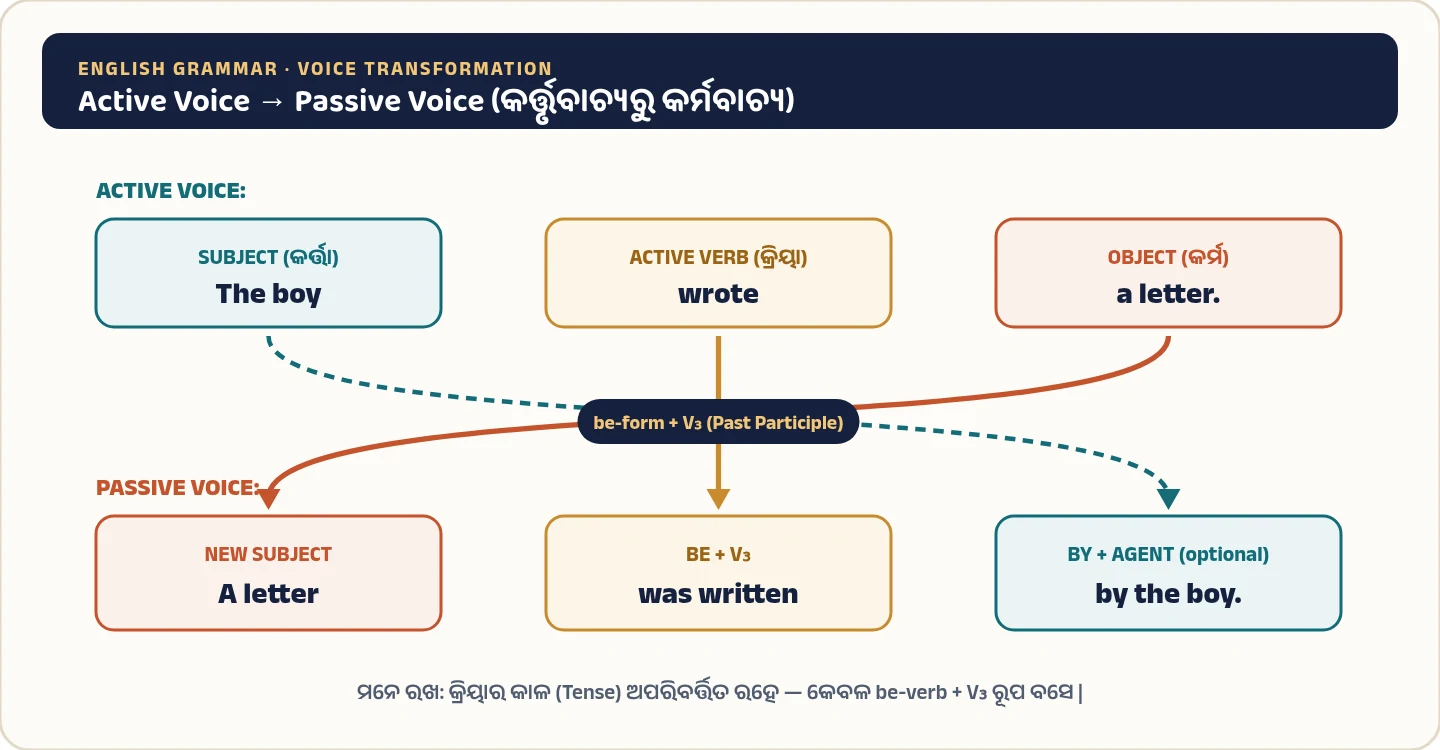
She met meର meକୁ ବାକ୍ୟର ବିଷୟ କଲେ I was met by her ହୁଏ। Object ନୂଆ subject ହେବାରୁ me ପରିବର୍ତ୍ତେ I।
କାମର ସମୟ ରହେ ଅତୀତ, ନୂଆ verb group ହେଉଛି was + past participle। Past participle ଏକ ଅବସ୍ଥା ବର୍ଣ୍ଣନା ମଧ୍ୟ କରିପାରେ।
ତେଣୁ କେବଳ be ଓ participle ଦେଖି ଯାନ୍ତ୍ରିକ ରୂପାନ୍ତର କରନି।
“Someone repairs the road”ରେ ପରିପ୍ରେକ୍ଷ୍ୟ ଅନୁସାରେ ନିୟମିତ କାମ। Roadକୁ subject କଲେ “The road is repaired.” ଏବେ କାମ ଚାଲିଛି ହେଲେ is being repaired।
ଆଗରୁ ସରି ବର୍ତ୍ତମାନ ଫଳ ଦିଶୁଛି ହେଲେ has been repaired। ଅତୀତର ଏକ ସମୟରେ କାମ ଚାଲିଥିଲା ହେଲେ was being repaired।
କାମଟି ଭବିଷ୍ୟତରେ ସରିବ ବୋଲି ଥିଲେ will be repaired। ପ୍ରତି ରୂପରେ repaired ଏକା ଅଛି, ପରିବର୍ତ୍ତନ auxiliaryରେ।
ଏକବଚନ road ବଦଳରେ roads ଲେଖିଲେ is → are, has → have ହୁଏ, କିନ୍ତୁ will ଓ past participle ବଦଳେନାହିଁ। ରୂପାନ୍ତର ପରେ subject ବଦଳିବା ଓ ଘଟଣାର ସମୟ ଅକ୍ଷୁଣ୍ଣ ରଖିବା ଦୁଇ କାମ ଉଭୟ ପରଖ।
Simpleରେ is/was + participle, progressiveରେ is/was being + participle, perfectରେ has/had been + participle। Modal ଥିଲେ will/should + be + participle।
ଏକବଚନ subject ଓ ବହୁବଚନ subject ପାଇଁ ଯଥାଯଥ auxiliary ବାଛ। Perfect progressive ବାକ୍ୟର cumbersome been being ଗଠନକୁ ପାଠର ରୂପାନ୍ତରରେ ଏଡ଼ାଯାଇଛି।
Activeର object complement ନୂଆ passive subject ବିଷୟରେ ତଥ୍ୟ ଦେଇଚାଲେ। ଦୁଇ object ଥିଲେ ପ୍ରାପ୍ତକର୍ତ୍ତା ବା ଦିଆଯାଇଥିବା ବସ୍ତୁ ଉପରେ ଗୁରୁତ୍ୱ ଅନୁଯାୟୀ ରୂପ ବଦଳେ।
People say … ପରି ବାକ୍ୟରେ It is said that … ବା subject + is said to … ଢାଞ୍ଚା ମିଳେ। Make ପରର bare infinitive passiveରେ to-infinitive ହୋଇପାରେ।
ଜଣେ ବାପା ପୁଅକୁ ଟଙ୍କା ଦେଲେ ଗ୍ରହୀତା ଓ ଦିଆଯାଇଥିବା ଜିନିଷ ଦୁହେଁ object। “The boy was given the money”ରେ ପୁଅ ଆଗକୁ, “The money was given to the boy”ରେ ଟଙ୍କା ଆଗକୁ।
ଦ୍ୱିତୀୟରେ to କାହାକୁ ମିଳିଲା ସ୍ପଷ୍ଟ କରେ। Get/have + object + past participle ଦ୍ୱାରା ଅନ୍ୟକୁ ଦେଇ କାମ କରାଇଥିବା ଭାବ ଆସିପାରେ।
“He had the work done” କହିଲେ ନିଜେ କଲେ ବୋଲି ନିଶ୍ଚିତ ନୁହେଁ। Being made to stand ଗଠନରେ active makeର bare verb ଏବେ to ସହ ଆସେ।
ଅନ୍ୟପକ୍ଷରେ saw him climbingର climbing passiveରେ seen climbing ରହିପାରେ। ପୁରୁଣା objectର ଭୂମିକା ବଦଳିଲା ପରେ ତାହା ପଛର ଅଂଶଟି କେଉଁ ରୂପ ନିଏ ତାହା ପୃଥକ ଦେଖ।
“People say that he is honest” → “He is said to be honest.” ଦୁଇ କାମ ଏକା ସମୟର ସନ୍ଦର୍ଭରେ। ଲୋକେ ଏବେ ତାଙ୍କ ପୂର୍ବ ଆଚରଣ କଥା କହୁଥିଲେ “He is said to have been honest” ଅତୀତର ଫରକ ଦେଖାଏ।
“It is said that …” ବ୍ୟବହାର କଲେ ପୂରା ମତକୁ ଏକାଠି ରଖିହୁଏ। ସେହିପରି “Who wrote the book?”ରେ ଉତ୍ତର ଲେଖକଙ୍କ ନାମ ହେବ ବୋଲି ପ୍ରଥମେ ନିଶ୍ଚିତ କର।
ପରେ “By whom was the book written?” ବନାଅ। ଯଦି କେବଳ “Was the book written?” କୁହାଯାଏ ତେବେ ମିଳିବା ଉତ୍ତର ହଁ ବା ନା।
ମୂଳ ଜାଣିବାକୁ ଚାହିଁଥିବା ସୂଚନା ହଜିଗଲେ ବ୍ୟାକରଣ ଭଳି ଦିଶିଲେ ମଧ୍ୟ ରୂପାନ୍ତର ଅସମ୍ପୂର୍ଣ୍ଣ।
ପ୍ରଥମେ ପ୍ରଶ୍ନର ମୂଳ ବିବୃତି ଚିହ୍ନ, objectକୁ subject କର, tense ଅନୁଯାୟୀ be + participle ବସାଅ। Yes/no ପ୍ରଶ୍ନ ପାଇଁ auxiliaryକୁ ନୂଆ subject ଆଗକୁ ଫେରାଅ।
Who କର୍ତ୍ତା ବିଷୟରେ ପଚାରିଥିଲେ by whom …? ବା … by?
ହୋଇପାରେ। Why, when ବା where ପ୍ରଶ୍ନରେ ସେହି ସୂଚନା ମାଗିବାର ଅର୍ଥ ଅକ୍ଷୁଣ୍ଣ ରଖ।
I have a carରେ have ଅଧିକାର ସୂଚାଏ। A car is had by me ଏହି ଅର୍ଥର ସ୍ୱାଭାବିକ ବାକ୍ୟ ହୁଏ ନାହିଁ।
Resemble ଓ lack ପରି ଗଠନରେ ମଧ୍ୟ ଯାନ୍ତ୍ରିକ ଅଦଳବଦଳ କରିବାରୁ ଅସ୍ୱାଭାବିକ ଫଳ ମିଳିପାରେ। “They helped each other”ରେ each other ପରସ୍ପର ସହାୟତା କୁହେ; each otherକୁ ପ୍ରଥମେ ଆଣିଲେ ଏକ ନିଜସ୍ୱ referent ମିଳେ ନାହିଁ।
“These clothes need washing” ଦେଖିବାକୁ active ଥିଲେ ବି ପୋଷାକଗୁଡ଼ିକୁ ଧୋଇବା ଦରକାର, ସେମାନେ ନିଜେ ଧୁଅନ୍ତି ନାହିଁ। To be washed ଏହି ଭାବକୁ ସ୍ପଷ୍ଟ କରେ।
ବାକ୍ୟର ରୂପ ଓ ବାକ୍ୟର ଅର୍ଥ ଅଲଗା କରି ଦେଖିବା ଏଠାରେ ଆବଶ୍ୟକ।
Possession ଅର୍ଥରେ have, linking verb ଓ object ବିନା intransitive verbର ସାଧାରଣ passive ହୁଏ ନାହିଁ। Himself ବା each otherକୁ passive subject କରିଲେ ଅର୍ଥ ସମ୍ପର୍କ ଭାଙ୍ଗେ।
Imperativeକୁ Let … be …ରେ ବଦଳାଇଲେ କାହାକୁ ଦିଆ ଆଦେଶ ଏକ ସାଧାରଣ ପ୍ରସ୍ତାବ ଭଳି ହୋଇପାରେ। Transitive phrasal verbରେ particle ରହେ, ଯଥା was called off।
ପରିଚିତ ଲେଖକ, ଆବିଷ୍କାରକ ବା ଅପ୍ରତ୍ୟାଶିତ କାର୍ଯ୍ୟକର୍ତ୍ତା ମୁଖ୍ୟ ତଥ୍ୟ ଦେଲେ by-phrase ରଖ। କର୍ତ୍ତା ଅଜଣା, ସ୍ପଷ୍ଟ ବା ଅପ୍ରସଙ୍ଗିକ ହେଲେ ଘଟଣାକୁ ଆଗକୁ ଆଣିହୁଏ।
ବିଜ୍ଞପ୍ତି ବା ଖବରର passive ବାକ୍ୟ ଲେଖିବାବେଳେ ପାଠକଙ୍କ ପାଇଁ କାମଟି, ଯାହା ଉପରେ କାମ ହେଲା, ଓ କିଏ କଲା—ଏମାନଙ୍କ ମଧ୍ୟରୁ କାହାର ସୂଚନା ଦରକାର ଭାବ।
କିଏ ଗୋଟିଏ ପୁସ୍ତକ ଲେଖିଛନ୍ତି ପଚାରିଲେ by + author ତଥ୍ୟଟି ନ ରଖିଲେ ଉତ୍ତର ଅସମ୍ପୂର୍ଣ୍ଣ। ସୂଚନାଫଳକରେ “The road is being repaired” ଯଥେଷ୍ଟ ହୋଇପାରେ, କାରଣ ଯାତ୍ରୀଙ୍କୁ ରାସ୍ତାର ସ୍ଥିତି ଦରକାର।
ଯଦି ଏକ ଅତି କଠିନ ସମସ୍ୟା ଜଣେ ଶିଶୁ ସମାଧାନ କଲା, by a child ନୂଆ ଓ ଆଶ୍ଚର୍ଯ୍ୟଜନକ ତଥ୍ୟ ଯୋଡ଼େ। ଅନ୍ୟପଟେ with a stick ଗୋଟିଏ ଉପକରଣ, ଏହା କର୍ତ୍ତାର ନାମ ନୁହେଁ।
କୌଣସି ଫଳ ବିଷୟରେ ଖବର ଲେଖ, ତା’ପରେ by-phraseକୁ କାଢ଼ି ପୁଣି ପଢ଼। ପାଠକ ଯେଉଁ ମୁଖ୍ୟ ତଥ୍ୟ ଖୋଜିବେ ତାହା ରହୁଛି କି ନା ଦେଖି ଶେଷ ରୂପ ବାଛ।
Subject ଓ main verbକୁ ସମାନ ରଖି ସମୟର ଦୃଷ୍ଟି ବଦଳାଅ। ଦ୍ୱାରଟି ରଙ୍ଗ ହେବା ସରିଛି କି ଏବେ ଚାଲିଛି? Passive ବଜାୟ ରଖିବା ସହ ଏହି ଭେଦ କହିବାକୁ ସାହାଯ୍ୟକାରୀ verb ଲାଗେ।
| Activeର ସୂତ୍ର | Passiveରେ ମେଳ |
|---|---|
| have/has + V3 | ନୂଆ subject ସହ have/has, ତା’ପରେ been + V3। |
| am/is/are + -ing | ନୂଆ subject ସହ am/is/are, ତା’ପରେ being + V3। |
ଅଫ୍ଲାଇନ୍ ଡାଉନଲୋଡ୍:HTML ପୃଷ୍ଠାJavaScript ତଥ୍ୟ
object → ନୂଆ subject; beର ଉପଯୁକ୍ତ ରୂପ + past participle; ଆବଶ୍ୟକ ହେଲେ by + agent।
english/learn-and-practice-grammar/source.pdf · ପୃଷ୍ଠା ୯୬–୧୧୧ଅଫ୍ଲାଇନ୍ ଡାଉନଲୋଡ୍:HTML ପୃଷ୍ଠାJavaScript ତଥ୍ୟ
କାମ କରୁଥିବା ବ୍ୟକ୍ତି ବା ସଂସ୍ଥା।
english/learn-and-practice-grammar/source.pdf · ପୃଷ୍ଠା ୯୬–୧୧୧passiveରେ be ପରେ ଲାଗୁଥିବା କ୍ରିୟାର ରୂପ।
english/learn-and-practice-grammar/source.pdf · ପୃଷ୍ଠା ୯୬–୧୧୧ଅଫ୍ଲାଇନ୍ ଡାଉନଲୋଡ୍:HTML ପୃଷ୍ଠାJavaScript ତଥ୍ୟ
ଆଦର୍ଶ ପ୍ରଶ୍ନପତ୍ର · ସେଟ୍ ୧, ଭାଗ ୧, ପ୍ରଶ୍ନ ୪୭ (୧ ନମ୍ବର)
A. is being painted
ବର୍ତ୍ତମାନ ଚାଲୁଥିବା କାମ ପାଇଁ is being + participle।
ଆଦର୍ଶ ପ୍ରଶ୍ନପତ୍ର · ସେଟ୍ ୧, ଭାଗ ୧, ପ୍ରଶ୍ନ ୪୮ (୧ ନମ୍ବର)
B. Was the room decorated?
past simple passiveରେ was + subject + participle ପ୍ରଶ୍ନର ରୂପ।
ଆଦର୍ଶ ପ୍ରଶ୍ନପତ୍ର · ସେଟ୍ ୨, ଭାଗ ୧, ପ୍ରଶ୍ନ ୪୭ (୧ ନମ୍ବର)
A. were being painted
ଗତକାଲି ସେତେବେଳେ କାମ ଚାଲୁଥିଲା; subjectରେ କାମଟି ହେଉଥିଲା।
ଆଦର୍ଶ ପ୍ରଶ୍ନପତ୍ର · ସେଟ୍ ୨, ଭାଗ ୧, ପ୍ରଶ୍ନ ୪୮ (୧ ନମ୍ବର)
D. The work must be finished.
modal + be + past participle।
ଆଦର୍ଶ ପ୍ରଶ୍ନପତ୍ର · ସେଟ୍ ୩, ଭାଗ ୧, ପ୍ରଶ୍ନ ୪୭ (୧ ନମ୍ବର)
B. has been decorated
has been + past participle।
ଆଦର୍ଶ ପ୍ରଶ୍ନପତ୍ର · ସେଟ୍ ୩, ଭାଗ ୧, ପ୍ରଶ୍ନ ୪୮ (୧ ନମ୍ବର)
A. Where was it found?
ସ୍ଥାନବାଚକ where ରହେ; was subject ପୂର୍ବରେ।
ଆଦର୍ଶ ପ୍ରଶ୍ନପତ୍ର · ସେଟ୍ ୪, ଭାଗ ୧, ପ୍ରଶ୍ନ ୪୭ (୧ ନମ୍ବର)
C. The book was returned.
past simpleରେ was + past participle।
ଆଦର୍ଶ ପ୍ରଶ୍ନପତ୍ର · ସେଟ୍ ୪, ଭାଗ ୧, ପ୍ରଶ୍ନ ୪୮ (୧ ନମ୍ବର)
B. When the identity of the artist matters
ଶିଳ୍ପୀ କିଏ ତାହା ମୁଖ୍ୟ ସୂଚନା ହେଲେ ଉଲ୍ଲେଖ ଦରକାର।
ଆଦର୍ଶ ପ୍ରଶ୍ନପତ୍ର · ସେଟ୍ ୫, ଭାଗ ୧, ପ୍ରଶ୍ନ ୪୭ (୧ ନମ୍ବର)
D. be completed
modal ପରେ be + past participle ଲାଗେ।
ଆଦର୍ଶ ପ୍ରଶ୍ନପତ୍ର · ସେଟ୍ ୫, ଭାଗ ୧, ପ୍ରଶ୍ନ ୪୮ (୧ ନମ୍ବର)
C. to stand
ଏହି passive ଗଠନରେ to-infinitive ଆସେ।
ଅଫ୍ଲାଇନ୍ ଡାଉନଲୋଡ୍:HTML ପୃଷ୍ଠାJavaScript ତଥ୍ୟ
A report may focus on what happened or on the affected people; the agent may be unknown or obvious. In these situations a passive sentence can be complete without a by-phrase. ମୁଖ୍ୟ ସୂଚନା କେଉଁଟି ତାହା ଦେଖି agent ରଖନ୍ତୁ।
ଅଫ୍ଲାଇନ୍ ଡାଉନଲୋଡ୍:HTML ପୃଷ୍ଠାJavaScript ତଥ୍ୟ
In 1b she met me becomes I was met by her. In 2b Janaki made the attempt becomes the attempt was made by Janaki. The active object becomes the passive subject. In B(i), identify is + played and are + given. The first be-form agrees with singular badminton and the second with plural clothes. ମୁଖ୍ୟ କ୍ରିୟାର past participle ସ୍ଥିର ରହେ।
ସମୟ ଓ ନୂଆ subject ଅନୁସାରେ beର ରୂପ ବଦଳେ।
Active me object ଥିଲା, passiveରେ subject ହେଲେ I; she agent ହେଲେ by her। Past tenseକୁ was ନେଲା, met ଏବେ past participle।
Present examplesରେ ନୂଆ subject singular/plural ଦେଖି is ବା are ବାଛ।
Compare is being played (progressive passive) with has been decorated or had been decorated (perfect passive). To show both meanings mechanically would require has/have/had been being + past participle. The sequence been being is cumbersome and very rarely used. For this exercise keep the perfect progressive in the active voice, or recast the thought while preserving its duration. ଚାଲିଆସୁଥିବା କାମର ଅବଧି ବୁଝାଇବାକୁ ମୂଳ active ବାକ୍ୟ ରଖିଲେ ଅର୍ଥ ସ୍ପଷ୍ଟ ରହେ।
ସରଳ perfect passive ଲେଖିଦେଲେ ଚାଲିଥିବା କାମର ଭାବ ହରାଇପାରେ।
Perfect passiveର been ଓ progressive passiveର beingକୁ ଏକାଠି ରଖିଲେ has/had been being + V3 ଭଳି ଅସ୍ୱାଭାବିକ ଲମ୍ବା group ହୁଏ। ସେହିପାଇଁ ଏହି ପାଠର ଅଭ୍ୟାସରେ ମୂଳ active ରଖାଯାଏ ବା କଥାଟି ଅନ୍ୟ ଭାବରେ କୁହାଯାଏ।
(i) A — killed; (ii) A — has made; (iii) P — has been selected; (iv) A — wrote; (v) P — was beaten; (vi) A — must have finished. Has ଦେଖି passive ବୋଲି ଧରିବେ ନାହିଁ। (ii)ରେ କର୍ତ୍ତା କାମ କରିଛନ୍ତି; (iii)ରେ କର୍ତ୍ତାଙ୍କୁ ଚୟନ କରାଯାଇଛି।
Has made ଓ must have finishedରେ have ଥିଲେ ବି passive be ନାହିଁ। Has been selected ଓ was beatenରେ be + V3 ଅଛି ଓ subject ଉପରେ କାମ ପଡ଼ିଛି।
ଏକାକୀ past participle ଦେଖି P ବାଛନାହିଁ।
(i) be bought; (ii) were killed; (iii) be cured, be endured; (iv) be punished; (v) is spoken. Will, cannot, must ଓ should ପରେ be + participle ଲାଗେ। Last year ଥିବା ବାକ୍ୟର plural subject ସହ were।
ସାଧାରଣ ତଥ୍ୟରେ is spoken।
(i,iii,iv) modal ପରେ base be ସହ bought/cured/endured/punished। (ii) ଅତୀତରେ ଅନେକ ଲୋକ ଉପରେ କାମ ପଡ଼ିଛି, ତେଣୁ were killed।
(v) ଭାଷା ବିଷୟର ସାଧାରଣ କଥା is spoken।
(vi) was being repaired; (vii) have been caused; (viii) are being denied; (ix) is said; (x) to be left. (vi) ଦେଖିବା ସମୟରେ ମରାମତି ଚାଲୁଥିଲା। (vii)ରେ might ପୂର୍ବରୁ ଛପା ଅଛି, ତେଣୁ ସମ୍ପୂର୍ଣ୍ଣ ରୂପ might have been caused।
(viii)ରେ ଚାଲୁଥିବା ସ୍ଥିତିକୁ ଧରାଯାଇଛି; ସାଧାରଣ ଅର୍ଥରେ are denied ମଧ୍ୟ ଚାଲିବ।
(vi) ଅତୀତରେ ମରାମତି ଚାଲିଥିଲା was being repaired। (vii) ଏବେ ଯାଏ ଫଳ have been caused।
(viii) ବର୍ତ୍ତମାନ ଚାଲୁ are being denied। (ix) ପ୍ରଚଳିତ ଉକ୍ତି is said।
(x) infinitive ଭିତରେ be left।
be held; have been told; been invited; were held; be awarded; had been invited; had been. For the last two gaps the father imagines an unreal earlier invitation and attendance.
ଓଡ଼ିଆ ବୁଝାମଣା — ହେବାକୁ ଥିବା ଉତ୍ସବରେ going to be held ଓ ସମ୍ପନ୍ନ ନିମନ୍ତ୍ରଣରେ has been invited। ଅତୀତର ଅପୂରିତ ଇଚ୍ଛା ପାଇଁ had been invited।
Letterର event କେବେ ହେବ, କେବେ ଖବର ମିଳିଲା ଓ ପୂର୍ବ ବର୍ଷ କ’ଣ ହୋଇଥିଲା ସମୟରେ ସଜାଅ। Will ପୂର୍ବରୁ ଥିଲେ be held; have ପୂର୍ବରୁ ଥିଲେ been invited।
ଖାଲି ସ୍ଥାନକୁ ମାତ୍ର ଗଣି ପୂରା groupକୁ ଦୁଇଥର ଲେଖନାହିଁ।
were burnt; were burnt; were completely destroyed; were rendered; were hospitalised; caused; is still shrouded; is badly needed. Last Sunday sets the main report in the past; the remaining mystery and present need take is.
ଓଡ଼ିଆ ବୁଝାମଣା — ଘଟଣାଦିନର ବିବରଣୀରେ were + participle। ଶେଷରେ ଆଜି ମଧ୍ୟ ରହିଥିବା ଅବସ୍ଥା କହିବାରୁ present ହୋଇଛି।
Fire reportର burnt/destroyed ଆଗରେ ଘରଗୁଡ଼ିକ subject, ତେଣୁ were। Hospitalisedରେ ପ୍ରଭାବିତ ଲୋକ subject।
Caused ଥିବା ସ୍ଥାନରେ subject ନିଜେ କାରଣ ହେଉଛି କି ଦେଖ। ଶେଷର is still shrouded/is badly needed ବର୍ତ୍ତମାନର ଅବସ୍ଥା ଦେଉଛି।
Was born and was drowned both have was + past participle. Gandhiji was born gives an event in his life. He was drowned presents what happened to him. English regularly uses be born for birth. The second example shows a passive use of drown, which also permits an active use in other contexts. was ଅତୀତ କାଳ ଦର୍ଶାଏ।
born ଓ drowned ଘଟଣାର ଅର୍ଥ ଦିଅନ୍ତି।
Was born ହେଉଛି ଜନ୍ମର ସାଧାରଣ English expression। Was drownedରେ ମଣିଷ ଘଟଣାର ପ୍ରଭାବ ପାଇଲେ।
ଉଭୟରେ agentକୁ ବାଧ୍ୟତାମୂଳକ ଯୋଡ଼ିବା ନାହିଁ।
(i) He was murdered. (ii) He was sacked. (iii) He was asked to leave the examination hall. (iv) It was closed down. (v) He was punished. (vi) He was drowned. (vii) It was turned down. (viii) The people were kept waiting. ଏଠି ଦିଆଯାଇଥିବା ପ୍ରସଙ୍ଗର ଗ୍ରହୀତାକୁ ଆଗକୁ ଆଣାଯାଏ।
ଏକାଧିକ ଲୋକ ପାଇଁ (viii)ରେ were।
ବାକ୍ୟରେ ପ୍ରମୁଖ ପାତ୍ର କିଏ ତାକୁ ଆଗେ ରଖ। Sacked ମାନେ କାମରୁ ବରଖାସ୍ତ; asked to leave ନିର୍ଦ୍ଦେଶ ଦିଆଯିବା; closed down ସଂସ୍ଥା ବନ୍ଦ।
ପରିସ୍ଥିତି ଅନୁସାରେ verb ବଦଳେ, was + V3 ଗଠନ ରହେ।
1. The Odia Bhagabat was written by Jagannath Das. 2. The prize was won by my friend Mohan. 3. A chair has been broken. 4. The essay will be finished within a week. ପ୍ରଥମ ଦୁଇ ବାକ୍ୟରେ ବ୍ୟକ୍ତିର ପରିଚୟ ହିଁ ସୂଚନା। ୩ରେ ନାମ ଗୋପନ ରଖିବାକୁ ହେବ।
୪ରେ କାମ ସରିବାକୁ ଗୁରୁତ୍ୱ ଦିଆଯାଏ।
ଲେଖକ Jagannath Das ଓ ପୁରସ୍କାରପ୍ରାପ୍ତ Mohanଙ୍କ ନାମ ଏଠି ପ୍ରଶ୍ନର ଦରକାରୀ ଖବର, ତେଣୁ by-agent ରଖ। ଭଙ୍ଗା chair ଦେଖି କିଏ ଭାଙ୍ଗିଲା ଜଣା ନ ଥିଲେ ଅନୁମାନରେ ନାମ ଦିଅନାହିଁ।
5. Delicious cakes are made in our village during the Raja festival every year. 6. The earth was created long ago. 7. Your birthday will be celebrated this year. ୫ରେ ନିୟମିତ କାମ, ୬ରେ ଅତୀତ ଓ ୭ରେ ଭବିଷ୍ୟତ। କୌଣସିଟିରେ କର୍ତ୍ତାର ନାମ ଆବଶ୍ୟକ ନୁହେଁ।
ପ୍ରତି ବର୍ଷ Rajaରେ ପିଠା କରିବା ନିୟମିତ ପଦ୍ଧତି, ତେଣୁ are made। Long ago ଏକ ଅତୀତ ସୂତ୍ର, ତେଣୁ was created।
ପ୍ରତ୍ୟେକରେ ଯାହା ବିଷୟରେ ଖବର ଦିଆଯାଉଛି ତାହା subject ରହେ।
(i) was written, was translated; (ii) is made; (iii) was injured, was not required; (iv) is never answered, are kept, is done; (v) was blown down; (vi) was posted; (viii) was run over. (iv)ରେ telephone ଓ work ଏକବଚନ; records ବହୁବଚନ।
PDFରେ ଶେଷ ଉପପ୍ରଶ୍ନର ଚିହ୍ନ (viii)।
Was written/was translated ଏକ କୃତି ଉପରେ ଦୁଇ ପୂର୍ବ କାମ। Is made କୌଣସି ବସ୍ତୁର ସାଧାରଣ ଗଠନ।
Is never answered ଓ are keptରେ ସ୍ଥାୟୀ ଅଭ୍ୟାସ ସମାନ ହେଲେ ବି subjectର number ପାଇଁ is/are ଭିନ୍ନ।
1. One tea bag is used per cup. 2. The required number of bags is placed in the kettle. 3. Boiling water is added as needed. 4. The water is stirred carefully so that the bags do not open. 5. The tea is allowed to stand for five minutes. 6. It is poured into cups. 7. Sugar and milk are added to taste. ସାଧାରଣ ପ୍ରଣାଳୀ ପାଇଁ present simple passive।
Sugar and milk ଦୁଇଟି ଥିବାରୁ ଶେଷରେ are added।
ପ୍ରକ୍ରିୟାରେ ଚା’ କରୁଥିବା ବ୍ୟକ୍ତିଠାରୁ ପର୍ଯ୍ୟାୟଗୁଡ଼ିକ ଆଗରେ। One tea bag is usedରୁ ଆରମ୍ଭ କରି water is added ଇତ୍ୟାଦି ଲେଖ।
Number of bagsର head number singular, ତେଣୁ is placed।
ଅଫ୍ଲାଇନ୍ ଡାଉନଲୋଡ୍:HTML ପୃଷ୍ଠାJavaScript ତଥ୍ୟ
ଏହି paperର ପ୍ର. ୪୭ରେ ପ୍ରଶ୍ନବାଚକ ବାକ୍ୟର passive ରୂପ ବାଛିବାକୁ ଥିଲା।
Why was the book returned? Did returnରୁ past simple ଚିହ୍ନନ୍ତୁ।
The book ନୂଆ subject। Past participle returned ଏବଂ subject ପୂର୍ବରେ was।
ସାଧାରଣ କର୍ତ୍ତା they ଦେବା ଆବଶ୍ୟକ ନୁହେଁ।
Sushama was selected monitor by the pupils. Object Sushama ନୂଆ subject ହେଲା। Monitor ତାଙ୍କ ଭୂମିକାକୁ ବୁଝାଉଛି, ତେଣୁ complementକୁ ରଖାଗଲା।
ଅଫ୍ଲାଇନ୍ ଡାଉନଲୋଡ୍:HTML ପୃଷ୍ଠାJavaScript ତଥ୍ୟ