Visual Concept Map · Adverb Clauses
ଏହି ସଚିତ୍ର ଧାରଣା ମାନଚିତ୍ର (Visual Concept Map) ରେ “Adverb Clauses” ଅଧ୍ୟାୟର ମୁଖ୍ୟ ବିଷୟବସ୍ତୁ ଓ ନିୟମଗୁଡ଼ିକୁ ଏକାଠି ସହଜରେ ବୁଝିବା ପାଇଁ ସଜାଯାଇଛି।
Zero/First/Second/Third Conditionals, although/though, so that/lest & BSE transformations
ଏହି ସଚିତ୍ର ଧାରଣା ମାନଚିତ୍ର (Visual Concept Map) ରେ “Adverb Clauses” ଅଧ୍ୟାୟର ମୁଖ୍ୟ ବିଷୟବସ୍ତୁ ଓ ନିୟମଗୁଡ଼ିକୁ ଏକାଠି ସହଜରେ ବୁଝିବା ପାଇଁ ସଜାଯାଇଛି।
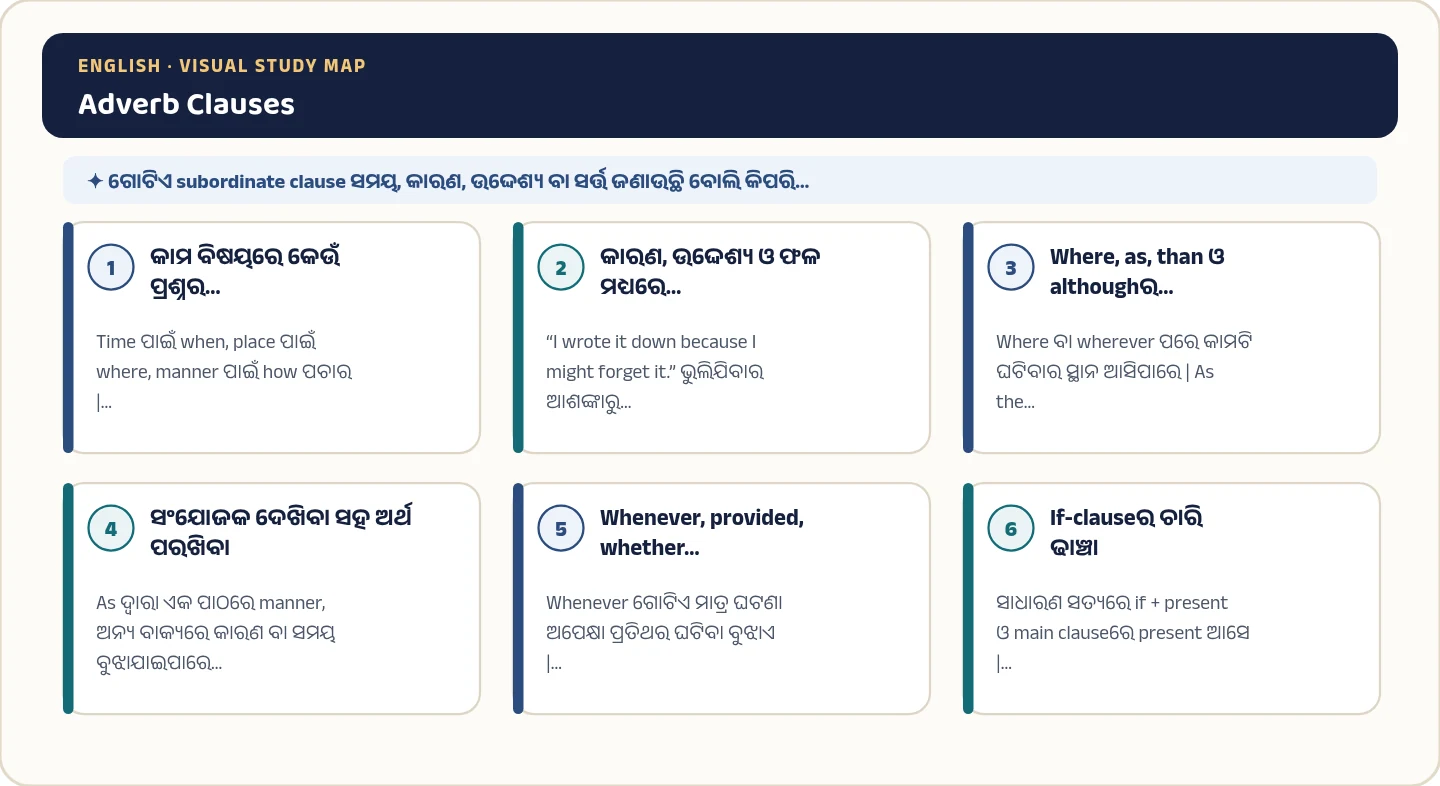
Time ପାଇଁ when, place ପାଇଁ where, manner ପାଇଁ how ପଚାର। ବଗିଚାର ଗଛକୁ ପାଣି ଦେବା ପରେ ବର୍ଷା ଆସିବା ଉଦାହରଣରେ after-clause ସମୟ କହେ।
So that ଭବିଷ୍ୟତର ଉଦ୍ଦେଶ୍ୟ ଦେଖାଏ, because ଆଗରୁ ଥିବା କାରଣ ଦେଖାଏ। Than ତୁଳନା ଓ although ବାଧା ଥିଲେ ମଧ୍ୟ ମୁଖ୍ୟ କାମ ଘଟିବାକୁ ସୂଚାଏ।
“I wrote it down because I might forget it.” ଭୁଲିଯିବାର ଆଶଙ୍କାରୁ ଲେଖିବା ନିଷ୍ପତ୍ତି ଆସିଲା। “I wrote it down so that I would remember it.” ମନେ ରଖିବା ହେଉଛି ଲକ୍ଷ୍ୟ।
“I wrote so clearly that everyone could read it.” ଶେଷ ଅଂଶ ଲେଖିବାର ସ୍ପଷ୍ଟତାର ଫଳ। ତିନି ବାକ୍ୟରେ main action ଲେଖିବା।
ପ୍ରଥମରେ କାହିଁକି ଲେଖିଲି, ଦ୍ୱିତୀୟରେ କେଉଁ ଲକ୍ଷ୍ୟ ରଖିଲି, ତୃତୀୟରେ ତାହାର ପରିଣାମ କ’ଣ ହେଲା ବୋଲି ତିନୋଟି ଅଲଗା ପ୍ରଶ୍ନ ପଚାର। So that ଓ so + adjective/adverb + thatର କାମ କେବଳ that ଦେଖି ସ୍ଥିର ହୁଏନାହିଁ।
Where ବା wherever ପରେ କାମଟି ଘଟିବାର ସ୍ଥାନ ଆସିପାରେ। As the teacher showed us କହିଲେ ଶିକ୍ଷକ ଯେପରି ଦେଖାଇଥିଲେ ସେହି ପ୍ରକାର କୁହାଯାଉଛି।
As if ଗୋଟିଏ କଳ୍ପିତ ତୁଳନା ଆଣିପାରେ। “He speaks as if he knows the answer”ରେ କାହାର କଥା କହିବା ଢଙ୍ଗ ବର୍ଣ୍ଣିତ, ସତରେ ଉତ୍ତର ଜାଣେ ବୋଲି ପ୍ରମାଣ ନାହିଁ।
“They worked harder than we expected”ରେ harder ସହ than ତୁଳନା ଗଢ଼େ। “Although they were tired, they worked”ରେ କ୍ଳାନ୍ତି ସାଧାରଣତଃ କାମ ବନ୍ଦର କାରଣ ହୋଇଥାନ୍ତା।
ପ୍ରକୃତରେ କାମ ଚାଲିଲା, ତେଣୁ concession। କେବଳ ନିଶ୍ଚିତ ଘଟଣାର ସର୍ତ୍ତ ଭାବେ ଏହାକୁ ଦିଅନି।
As ଦ୍ୱାରା ଏକ ପାଠରେ manner, ଅନ୍ୟ ବାକ୍ୟରେ କାରଣ ବା ସମୟ ବୁଝାଯାଇପାରେ। So … thatରେ ମାତ୍ରା ପରର ଫଳକୁ ନେଉଛି।
So that ଉଦ୍ଦେଶ୍ୟ ଦର୍ଶାଇପାରେ। ମୁଖ୍ୟ clauseର କାମ ଓ subordinate clauseର ଘଟଣାକୁ ନିଜ ଭାଷାରେ ଯୋଡ଼ି ତା’ପରେ ନାମ ଦିଅ।
Whenever ଗୋଟିଏ ମାତ୍ର ଘଟଣା ଅପେକ୍ଷା ପ୍ରତିଥର ଘଟିବା ବୁଝାଏ। “Whenever ice is heated enough, it melts” ପରି ସାଧାରଣ ଫଳରେ when ଓ if ଏକାପରି ଆସିପାରେ।
Provided କହିଲେ ଫଳ ପାଇଁ ନିର୍ଦ୍ଦିଷ୍ଟ ସର୍ତ୍ତ ରହେ। “Whether you join the picnic or not, you must pay”ରେ ଦୁଇ ସମ୍ଭାବନା ଥିଲେ ମଧ୍ୟ ଫଳ ସମାନ।
Whether ଦେଖି ସର୍ବଦା ପ୍ରଶ୍ନର noun clause କୁହନି। “I wonder whether you will join”ରେ କିନ୍ତୁ wonder ପରେ କ’ଣ ସନ୍ଦେହ ହେଉଛି ତାହାର object।
“Were wishes horses …” ପାଠରେ if wishes were horsesର କଳ୍ପିତ ସର୍ତ୍ତ। ଏଠାରେ were ଆଗକୁ ଆସିଲେ ମଧ୍ୟ ବାକ୍ୟର ଶେଷରେ question mark ଆସେ ନାହିଁ।
ଏକା connecting word ବା ଶବ୍ଦକ୍ରମ ବିଭିନ୍ନ କାମ କରିପାରେ ବୋଲି main clause ସହ ଏହିପରି ମିଳାଇ ଦେଖ।
ସାଧାରଣ ସତ୍ୟରେ if + present ଓ main clauseରେ present ଆସେ। ସମ୍ଭବ ଭବିଷ୍ୟତ ପାଇଁ if + present, ପରେ will + verb।
କଳ୍ପିତ ପରିସ୍ଥିତିରେ if + past, ପରେ would/could + verb। ଅତୀତର ଅଘଟିତ ସର୍ତ୍ତରେ if + past perfect, ପରେ could/would have + participle।
ସର୍ତ୍ତ ପୂର୍ବରେ ରଖିଲେ ପ୍ରଧାନ clause ଆଗରୁ କମା ଆସେ।
“If he arrives in time, he will see the match.” ଏଠାରେ ସମୟରେ ପହଞ୍ଚିବା ଏବେ ବି ସମ୍ଭବ। “If he had arrived in time, he could have seen the match.” ପୁରୁଣା ସୁଯୋଗ ସରିଯାଇଛି।
“Had he arrived in time, he could have seen the match” ଦ୍ୱିତୀୟଟିର ଅନ୍ୟ ଗଠନ। ଆଗରେ Had ଅଛି ବୋଲି ଏହା ପ୍ରଶ୍ନ ନୁହେଁ।
ମୂଳ if-clauseର ଅର୍ଥ ଓ କମା ପରର result clause ଉଭୟ ରହିଛି। Unless ଦ୍ୱାରା ବ୍ୟତିକ୍ରମ ଥିବା ସର୍ତ୍ତ ଆସେ, ସାଧାରଣତଃ if … not ଭାବ।
ତେଣୁ ନକାରାତ୍ମକ ଅର୍ଥଟି ଆଗରୁ ରହିଥିଲେ ଅନାବଶ୍ୟକ not ଯୋଡ଼ନି। Even if ଆଣିଲେ ଉକ୍ତ ସର୍ତ୍ତ ହେଲେ ମଧ୍ୟ result ବଦଳିବନି ବୋଲି ଅଧିକ ଭାବ ଯୋଡ଼େ।
ଗୋଟିଏ କାମ ସହ ସ୍ଥାନ ଓ ସମୟର ଦୁଇ phrase ଥିଲେ ମଧ୍ୟ ବାକ୍ୟ simple ରହିପାରେ। ଏକାଧିକ ମୁଖ୍ୟ clause ସମାନ ଭାବେ ଯୋଡ଼ିଲେ compound।
ଗୋଟିଏ କାମ କାହିଁକି, କେବେ ବା କେଉଁ ସର୍ତ୍ତରେ ହେଲା ବୋଲି ଅଲଗା clause ଥିଲେ complex। ମୂଳ verbକୁ ସମ୍ବନ୍ଧିତ ଦୁଇ ଶବ୍ଦ ଗୋଷ୍ଠୀର କାମ ତୁଳନା କର।
ଏକ ଅନୁଚ୍ଛେଦରେ ପ୍ରଥମେ finite verb ରେଖାଙ୍କିତ କର, ପ୍ରତିଟି ସହ ତାହାର subject ଯୋଡ଼। କେବଳ and ଦେଖି ସମଗ୍ର ବାକ୍ୟ compound କୁହନି।
And ଦୁଇଟି nounକୁ ମଧ୍ୟ ଯୋଡ଼ିପାରେ। ପ୍ରଥମ ଅଂଶକୁ ଅଲଗା ବିବୃତି ଭାବେ ପଢ଼ି ଦ୍ୱିତୀୟର କାମ ଚିହ୍ନ।
“I returned when the lesson ended”ରେ returned ମୁଖ୍ୟ କାମ, endedର clause ତାହାର ସମୟ। “I know when the lesson ended”ରେ ଏକା ଶବ୍ଦ ଗୋଷ୍ଠୀ knowର object ଭାବେ କାମ କରୁଛି।
ଏହି ତୁଳନା ଦୁଧ ଗଳ୍ପରେ ଭିନ୍ନ ପ୍ରକାରର subordinate clause ଖୋଜିବା ପାଇଁ ଉପଯୋଗୀ। ଶ୍ରେଣୀକରଣ ପରେ ନିଜ ଯୁକ୍ତିକୁ ‘ଏହା ସମୟ କହେ’ ବା ‘ଏହା verbର object’ ବୋଲି ଏକ ବାକ୍ୟରେ ଯାଞ୍ଚ କର।
ମିଶାଇବା ଆଗରୁ ଦୁଇ କଥାର ସମ୍ପର୍କ ଚିହ୍ନ—ଏକା ସାଙ୍ଗରେ ଘଟିଛି କି, ଗୋଟିଏ ଅନ୍ୟଟିର କାରଣ କି, ବା ସର୍ତ୍ତ ଅଛି କି। ଦୁଧ ସମ୍ପର୍କିତ ଅନୁଚ୍ଛେଦରେ ଦେଖ clauseଟି nounର ସ୍ଥାନ ନେଉଛି, ଗୋଟିଏ ନାମକୁ ବର୍ଣ୍ଣନା କରୁଛି ନା କାମର ପରିସ୍ଥିତି କହୁଛି।
ଏହି ତିନି ପରୀକ୍ଷା noun, relative ଓ adverb clauseକୁ ପୃଥକ କରେ।
ମୁଖ୍ୟ କାମଟି କରିବାବେଳେ କଥକ ଆଗର ପରିସ୍ଥିତିକୁ ଇଙ୍ଗିତ କରୁଛନ୍ତି କି ପରେ ମିଳିବା ଲକ୍ଷ୍ୟକୁ? ସେହି ସମୟଦିଗ ଧରି ଦୁଇ conjunction ବାଛିହୁଏ।
| Clauseର ସୂତ୍ର | Main clauseକୁ ପ୍ରଶ୍ନ |
|---|---|
| because + clause | କେଉଁ କାରଣରୁ କାମଟି ହେଲା? |
| so that + clause | କେଉଁ ଫଳ ପାଇବା ଉଦ୍ଦେଶ୍ୟରେ କାମଟି କରାଗଲା? |
ଅଫ୍ଲାଇନ୍ ଡାଉନଲୋଡ୍:HTML ପୃଷ୍ଠାJavaScript ତଥ୍ୟ
ସଂଯୋଜକ ସହିତ ଦୁଇ clauseର ଅର୍ଥସମ୍ପର୍କକୁ ପରଖନ୍ତୁ।
english/learn-and-practice-grammar/source.pdf · ପୃଷ୍ଠା ୮୮–୯୫ଅଫ୍ଲାଇନ୍ ଡାଉନଲୋଡ୍:HTML ପୃଷ୍ଠାJavaScript ତଥ୍ୟ
ଉଦ୍ଦେଶ୍ୟ।
english/learn-and-practice-grammar/source.pdf · ପୃଷ୍ଠା ୮୮–୯୫ବାଧା ବା ବିପରୀତ ପରିସ୍ଥିତି ସତ୍ତ୍ୱେ କାମ ଘଟିବାର ସମ୍ପର୍କ।
english/learn-and-practice-grammar/source.pdf · ପୃଷ୍ଠା ୮୮–୯୫ଅଫ୍ଲାଇନ୍ ଡାଉନଲୋଡ୍:HTML ପୃଷ୍ଠାJavaScript ତଥ୍ୟ
ଆଦର୍ଶ ପ୍ରଶ୍ନପତ୍ର · ସେଟ୍ ୧, ଭାଗ ୧, ପ୍ରଶ୍ନ ୪୫ (୧ ନମ୍ବର)
D. so that
so that କାହିଁକି ଏକ ଲକ୍ଷ୍ୟ ପାଇଁ କାମ କରାଗଲା ଜଣାଏ।
ଆଦର୍ଶ ପ୍ରଶ୍ନପତ୍ର · ସେଟ୍ ୧, ଭାଗ ୧, ପ୍ରଶ୍ନ ୪୬ (୧ ନମ୍ବର)
A. Concession
ବଜାର ଯାଇ ମଧ୍ୟ ପରିବା କିଣିବା ଭୁଲିଗଲେ—ବିପରୀତ ଫଳଟି ମୁଖ୍ୟ।
ଆଦର୍ଶ ପ୍ରଶ୍ନପତ୍ର · ସେଟ୍ ୨, ଭାଗ ୧, ପ୍ରଶ୍ନ ୪୫ (୧ ନମ୍ବର)
C. reason
busy ଥିବା ଘରେ ରହିବାର କାରଣ।
ଆଦର୍ଶ ପ୍ରଶ୍ନପତ୍ର · ସେଟ୍ ୨, ଭାଗ ୧, ପ୍ରଶ୍ନ ୪୬ (୧ ନମ୍ବର)
B. melts
ସାଧାରଣ ସତ୍ୟରେ present simple।
ଆଦର୍ଶ ପ୍ରଶ୍ନପତ୍ର · ସେଟ୍ ୩, ଭାଗ ୧, ପ୍ରଶ୍ନ ୪୫ (୧ ନମ୍ବର)
D. where
where ସ୍ଥାନ ବୁଝାଏ।
ଆଦର୍ଶ ପ୍ରଶ୍ନପତ୍ର · ସେଟ୍ ୩, ଭାଗ ୧, ପ୍ରଶ୍ନ ୪୬ (୧ ନମ୍ବର)
C. A condition
provided ଦ୍ୱାରା ସାହାଯ୍ୟର ଶର୍ତ୍ତ ଦର୍ଶାଯାଏ।
ଆଦର୍ଶ ପ୍ରଶ୍ନପତ୍ର · ସେଟ୍ ୪, ଭାଗ ୧, ପ୍ରଶ୍ନ ୪୫ (୧ ନମ୍ବର)
A. Comparison
ଦୁଇ ପରିମାଣର ତୁଳନା ଅଛି।
ଆଦର୍ଶ ପ୍ରଶ୍ନପତ୍ର · ସେଟ୍ ୪, ଭାଗ ୧, ପ୍ରଶ୍ନ ୪୬ (୧ ନମ୍ବର)
D. She made a note so that she could remember.
ମନେ ରଖିବା ହେଉଛି ଟିପ୍ପଣୀର ଲକ୍ଷ୍ୟ।
ଆଦର୍ଶ ପ୍ରଶ୍ନପତ୍ର · ସେଟ୍ ୫, ଭାଗ ୧, ପ୍ରଶ୍ନ ୪୫ (୧ ନମ୍ବର)
B. as your teacher showed you
କାମ କରିବାର ପ୍ରକାର ଦର୍ଶାଉଥିବା ପୂରା clause।
ଆଦର୍ଶ ପ୍ରଶ୍ନପତ୍ର · ସେଟ୍ ୫, ଭାଗ ୧, ପ୍ରଶ୍ନ ୪୬ (୧ ନମ୍ବର)
A. even though he is simple
even though ବିପରୀତ ପରିସ୍ଥିତି ସୂଚାଏ।
ଅଫ୍ଲାଇନ୍ ଡାଉନଲୋଡ୍:HTML ପୃଷ୍ଠାJavaScript ତଥ୍ୟ
A reason explains the cause of an action. A purpose describes the result a person aims to bring about. Compare acting because something happened with acting so that something will happen. କାରଣ ଓ ଲକ୍ଷ୍ୟକୁ ଅଲଗା କରନ୍ତୁ।
ଅଫ୍ଲାଇନ୍ ଡାଉନଲୋଡ୍:HTML ପୃଷ୍ଠାJavaScript ତଥ୍ୟ
1a When does it rain? After I have watered the plants in the garden (time). 1b Where did they arrive?
Where nobody had set foot before (place). 1c How should it be done? As your teacher showed you (manner). 1d Why write in the diary?
So that I wouldn’t forget (purpose). 1e Why miss the fair? Because I was busy (reason). 2a than we had thought gives comparison. 2b although they were tired gives concession. 2c if you study hard gives condition. କେଉଁ ଉଦ୍ଦେଶ୍ୟରେ କାମ ହେଲା ଓ କେଉଁ କାରଣରୁ ହେଲା, ଏ ଦୁଇ ପ୍ରଶ୍ନ ପୃଥକ ଭାବେ ପଚାର।
After I have watered … ଅଂଶଟି when ପ୍ରଶ୍ନର ଉତ୍ତର। Where nobody … ଜାଗା ବୁଝାଏ।
How, why ଓ under what condition ପ୍ରଶ୍ନରେ ମଧ୍ୟ ଗୋଟିଏ ଶବ୍ଦ ବଦଳରେ ନିଜ finite verb ଥିବା ପୂରା clause ମିଳେ।
Model completions: 1 when it was getting dark; 2 so fast that nobody could catch him; 3 if you gave up now; 4 as I thought it would be; 5 as if he knew nothing. ୨ରେ so fast that ପରର clause ଫଳକୁ ଦର୍ଶାଏ। ୩ରେ wouldn't ଥିବାରୁ if-clauseରେ past form ନିଆଯାଇଛି।
When ଘଟିବାର ସମୟ। So fast thatରେ ଗତିର ଫଳ, ifରେ ସର୍ତ୍ତ।
As I thought ମୂଳ ଆଶା ସହ ତୁଳନା କରେ। Manner ଉଦାହରଣରେ କିପରି କାମ ହେଲା କୁହ, କାହିଁକି ହେଲା ନୁହେଁ।
6 because you have worked hard; 7 even if it rains; 8 than I do; 9 where nobody could find it; 10 even though others doubt him. ଉତ୍ତର ଏକାଧିକ ହୋଇପାରେ। Because କାରଣ, where ସ୍ଥାନ ଓ even though ବିରୋଧୀ ପରିସ୍ଥିତି ସୂଚାଏ।
Because କାରଣ ଦିଏ, even if ସର୍ତ୍ତ ହେଲେ ମଧ୍ୟ ଫଳ ରହିବା କହେ। Than I do ଦ୍ୱିତୀୟ ବ୍ୟକ୍ତିକୁ ତୁଳନାରେ ଆଣେ; where ସ୍ଥାନ ଦିଏ।
Even though ଜଣାଥିବା ବିପରୀତ ପରିସ୍ଥିତି ସ୍ୱୀକାର କରେ।
3. “Where there is no vision” — place. 4. “as they would do unto you” — manner. 5. “as the weather became better” — reason in this reading. 6. “Although he went to the market” — concession.
ଓଡ଼ିଆ ବୁଝାମଣା — ସଂଯୋଜକ ଏକା ଦେଖିଲେ ଯଥେଷ୍ଟ ନୁହେଁ। ମୂଳ କାମର ସ୍ଥାନ, ଢଙ୍ଗ, ସମୟ ବା ବିରୋଧ ବୁଝାଉଛି କି ଦେଖ।
Where ଦ୍ୱାରା ପରିସ୍ଥିତିକୁ ଏକ ସ୍ଥାନ ଭାବେ ଧର। “As they would do”ରେ କିପରି ବ୍ୟବହାର, “as the weather became better”ରେ ପାଗ ସୁଧୁରିବା ଯୋଗୁଁ କାମ ସମ୍ଭବ ହେଲା।
Asର ଏକମାତ୍ର ଅର୍ଥ ଧରନାହିଁ।
8. even though he is very simple — concession; 9. provided you are in need — condition; 10. so that it remains fresh — purpose.
ଓଡ଼ିଆ ବୁଝାମଣା — ପ୍ରତି clause ପାଇଁ କାହିଁକି, କେଉଁ ସର୍ତ୍ତରେ ବା କି ଉଦ୍ଦେଶ୍ୟରେ ପ୍ରଶ୍ନ କର।
ସରଳତା ସତ୍ତ୍ୱେ main clause ସତ ହେଲେ concession; ଦରକାର ଥିଲେ ମାତ୍ର କାମ ହେଲେ condition। ତାଜା ରଖିବାକୁ ଆଗରୁ ପଦକ୍ଷେପ ନିଆଯାଏ, ତେଣୁ so that… purpose।
1. In the way they should go expresses manner. In a more detailed analysis, they should go modifies way. 2. As the dog returns to his vomit introduces a comparison of manner. 7. Whether you join the picnic or not expresses a condition covering both possibilities; the payment still applies. ପ୍ରଥମ ବାକ୍ୟରେ ପୂରା phrase କାମଟି କିଭଳି ହେବ ଜଣାଏ।
ସାତରେ ଦୁଇ ପରିସ୍ଥିତିରେ ମଧ୍ୟ ଏକା ଫଳ।
In the way … ସମଗ୍ର ଅଭିବ୍ୟକ୍ତି କାମର ଢଙ୍ଗ କହେ, କିନ୍ତୁ ଭିତରେ wayକୁ ବିବରଣୀ ଦେଉଥିବା ଅଂଶ ଚିହ୍ନିହୁଏ। As the dog returns ଉଦାହରଣରେ ଏକ ବ୍ୟବହାର ଅନ୍ୟଟି ସହ ତୁଳନା ପାଏ।
3a if + present, present gives a regular result. 3b if + present, will + verb gives a possible future result. In these pairs the initial if-clause takes a comma, while a final if-clause follows without one. 3c if + past, would + verb imagines an unreal situation. 3d if + past perfect, could have + past participle imagines a missed past possibility. In 3c–d the alternative openings Were wishes … and Had he arrived … omit if and keep the introductory comma. ସର୍ତ୍ତ ଆଗରେ ନା ପଛରେ ଅଛି ଦେଖ।
Were ଓ Had ଆଗକୁ ଆସିଲେ ମଧ୍ୟ ଏହି ଦୁଇ ବାକ୍ୟର ସର୍ତ୍ତର ଅର୍ଥ ରହେ।
Condition ପ୍ରଥମେ ଥିଲେ ପୂରା if-clause ପରେ comma। Main clause ଆଗେ ଥିଲେ ସାଧାରଣତଃ ସେହି comma ଲାଗେନାହିଁ।
Present/present ନିୟମିତ ଫଳ; present/will ସମ୍ଭାବ୍ୟ ଫଳ; past/would କଳ୍ପିତ; had + V3/would have + V3 ଅତୀତର ଅଘଟିତ ଫଳ।
1. It floats if you pour oil on water. 2. It expands if you heat iron. 3. It becomes dark if the sun sets. 4. I shall not go out if it rains today. 5. You can understand if you read the lesson. ସାଧାରଣ ନିୟମରେ present + present।
ସମ୍ଭାବ୍ୟ ଘଟଣାରେ ମୁଖ୍ୟ clauseରେ shall ବା can ଆସିପାରେ।
Oil floating, iron expanding ଓ ସୂର୍ଯ୍ୟ ଅସ୍ତ ପରେ ଅନ୍ଧାର ନିୟମିତ ଫଳ, ତେଣୁ present simple। ବ୍ୟକ୍ତିର ପରବର୍ତ୍ତୀ ନିଷ୍ପତ୍ତିକୁ will/shall ପରି modal ଅଲଗା କରେ।
6. We can reach there in time if we start now. 7. I would fly in the sky if I had wings. 8. I would take you to her place if I knew her address. 9. By elimination, the printed pair reads: I could have arrived there on time if you had not reminded me. This would imply the reminder delayed the speaker. If the intended meaning is that the reminder helped, the main clause needs could not have arrived. 10. You would have got a first class if you had studied more sincerely. ୯ରେ ଛପା ଯୋଡ଼ି ରଖି ତାହାର ସମ୍ଭବ ଅର୍ଥ ଓ ଅନ୍ୟ ଅର୍ଥର ସଂଶୋଧନ ଦେଖାଯାଇଛି।
Start nowରୁ ସମୟରେ ପହଞ୍ଚିବାର ସମ୍ଭାବନା ଅଛି। “If I had wings” ଏବେର କଳ୍ପନା, ଅତୀତରେ ଡେଣା ଥିଲା ବୋଲି ନୁହେଁ।
ସେଥିପାଇଁ would fly ବସେ।
Sample endings: 1 tell him I called. 2 he would urge us to be truthful. 3 I would fly away. 4 it turns into steam. 5 the team would have celebrated. ଏଗୁଡ଼ିକୁ ଦିଆଯାଇଥିବା condition ପରେ comma ଦେଇ ଲେଖ। ୪ରେ ତାପମାତ୍ରାର ଛପା ରୂପ 100°Cକୁ ବୁଝାଏ।
If ଅଂଶ ପରେ ଏକ ଆଦେଶ ମଧ୍ୟ ଆସିପାରେ: “tell him I called”। ନିୟମିତ ଫଳ steam ହେଲେ simple present ଓ ଅସମ୍ଭବ ଡେଣାର ଫଳ ହେଲେ would fly।
ସର୍ତ୍ତର ଅର୍ଥରୁ ending ବାଛ।
Possible endings: 6 we shall leave together. 7 please switch it off. 8 I would ask the teacher. 9 you might have avoided the accident. 10 history would have been different. If I were you ଅବାସ୍ତବ ବର୍ତ୍ତମାନ ପାଇଁ; had driven/won ଅବାସ୍ତବ ଅତୀତ ପାଇଁ।
Please switch it off ଏକ ଅନୁରୋଧ, ଭବିଷ୍ୟବାଣୀ ନୁହେଁ। Might have avoidedରେ ଅତୀତରେ ଘଟିନଥିବା ସମ୍ଭାବନା ଅଛି।
If-clauseର tense ସହ main clauseର ସମୟ ମେଳାଅ।
i D; ii X; iii S; iv X; v X; vi X; vii X; viii X; ix S; x D; xi X; xii X; xiii X; xiv X; xv X; xvi X; xvii X; xviii D. (iii)ରେ ଅନେକ adjective ଥିଲେ ମଧ୍ୟ clause ଗୋଟିଏ। (viii)ରେ ଦୁଇ କାର୍ଯ୍ୟ knowର ଅଧୀନରେ ଆସୁଛି।
(x)ରେ ଦୁଇଟି ସ୍ୱାଧୀନ ନିର୍ଦ୍ଦେଶ।
(i,x,xviii)ରେ ଏକାଧିକ independent statement ଥିବାରୁ D। (iii)ର bright, warm ଦୁଇ adjective ଏକା is ସହ, (ix)ରେ ଏକ negative imperative ଥିବାରୁ S।
ଅନ୍ୟଗୁଡ଼ିକରେ ଅଧୀନ clause ଖୋଜ; viiiରେ and ଥିଲେ ମଧ୍ୟ ପୂରା objectଟି know ଉପରେ ନିର୍ଭର।
vi what you told me — subject; vii what I asked for — complement of is; viii you were inattentive and didn’t listen to me — object of know; xi that he cheated in the examination — postponed subject after it; xii that he has been disturbed — complement of sorry; xvii what the teacher had said — object of of. ଏହି clauseଗୁଡ଼ିକ ବ୍ୟକ୍ତି, କଥା ବା ତଥ୍ୟର ସ୍ଥାନ ନିଅନ୍ତି।
ତେଣୁ ଏମାନଙ୍କ କାମ ନାମପଦ ଭଳି।
“What you told me”କୁ that story ବସାଇଲେ subject slot ଦେଖାଯାଏ। “This is what I asked for”ରେ be ପରେ complement।
“I know …” ପରେ ଯାହା ଜାଣିଛି ତାହା object। ସେହିପରି “of what …”ରେ prepositionର object।
ii because the sun is shining — reason; iv while the sun shines — time; xiv as I was leaving the house — time; xv than I had hoped — comparison; xvi in case it rains — precaution against a possible event (condition). (v) ଓ (xiii)ରେ clauseଟି nounକୁ ଚିହ୍ନାଏ, ତେଣୁ ସେ ଦୁଇଟି relative clause।
Becauseର ଉତ୍ତର why, while/as I was leavingର when, than I had hopedରେ comparison ଓ in case it rainsରେ ସମ୍ଭାବନା ପାଇଁ ପୂର୍ବ ପ୍ରସ୍ତୁତି। କେବଳ that ବା what ଦେଖାଯାଇଛି ବୋଲି ତାକୁ adverb କହନାହିଁ।
2. I cannot go because I have no ticket. / I have no ticket, so I cannot go. 5. As I had broken a tooth, I had to see the dentist. / I broke a tooth, so I had to see the dentist.
ଓଡ଼ିଆ ବୁଝାମଣା — ଏକା ଅର୍ଥକୁ because ସହ ଗୋଟିଏ dependent clause ବା so ସହ ଦୁଇଟି ସ୍ୱାଧୀନ ଅଂଶରେ ଲେଖାଯାଇପାରେ।
Because/as ଥିବା ଅଂଶକୁ ଏକାକୀ ରଖିଲେ ବାକ୍ୟ ଅଧା ଲାଗେ। So ପୂର୍ବରେ କାରଣଟି ନିଜେ ଏକ ବାକ୍ୟ ହୋଇପାରେ।
Ticket ନ ଥିବା ଓ tooth ଭାଙ୍ଗିବା ଦୁଇଟିରେ ଏହି ଯୁକ୍ତି ରଖ।
1. When you call on me tomorrow, I will give you the money. / Call on me tomorrow and I will give you the money. 3. Although the days are unlucky, we must not give up hope. / The days are unlucky, but we must not give up hope. 4. Because the day was very cold, I had to take a woollen sweater. / The day was very cold, so I had to take a woollen sweater. ପ୍ରତି ଯୋଡ଼ିର ପ୍ରଥମରେ ଗୋଟିଏ dependent clause ଓ ଦ୍ୱିତୀୟରେ coordinate ସମ୍ବନ୍ଧ।
When ସମୟ ଦିଏ; although ଅସୁବିଧା ସତ୍ତ୍ୱେ ଆଶା ରଖିବା; because/as ଥଣ୍ଡା ପାଇଁ sweater ଦରକାର ହେବା। Compound କଲେ ଏହି ଅର୍ଥକୁ and, but ବା soରେ ରଖିବା ଦରକାର।
If they have eggs is an adverb clause of condition. It qualifies get six. Tuna understands six to mean six packets of milk, although Tuni has just mentioned eggs. The question about buying milk is direct speech and is an independent question. ଅଣ୍ଡା ମିଳିବା ସର୍ତ୍ତ ବୁଝାପଡ଼ିଛି।
ଭୁଲ ବୁଝାମଣା ହୋଇଛି six ପରେ କେଉଁ ନାମପଦ ଉହ୍ୟ ଅଛି ତାହାକୁ ନେଇ।
If they have eggs ଅଂଶଟି ନ ଘଟିଲେ ‘get six’ ନିର୍ଦ୍ଦେଶ ଲାଗୁ ହୁଏନାହିଁ। ମଜାର ମୂଳ ସର୍ତ୍ତରେ ନୁହେଁ, six ପରେ କେଉଁ noun ନ କୁହାଯାଇଛି ସେଥିରେ: eggs ନା packets of milk?
ଅଫ୍ଲାଇନ୍ ଡାଉନଲୋଡ୍:HTML ପୃଷ୍ଠାJavaScript ତଥ୍ୟ