Visual Concept Map · Noun Clauses and Relative Clauses
ଏହି ସଚିତ୍ର ଧାରଣା ମାନଚିତ୍ର (Visual Concept Map) ରେ “Noun Clauses and Relative Clauses” ଅଧ୍ୟାୟର ମୁଖ୍ୟ ବିଷୟବସ୍ତୁ ଓ ନିୟମଗୁଡ଼ିକୁ ଏକାଠି ସହଜରେ ବୁଝିବା ପାଇଁ ସଜାଯାଇଛି।
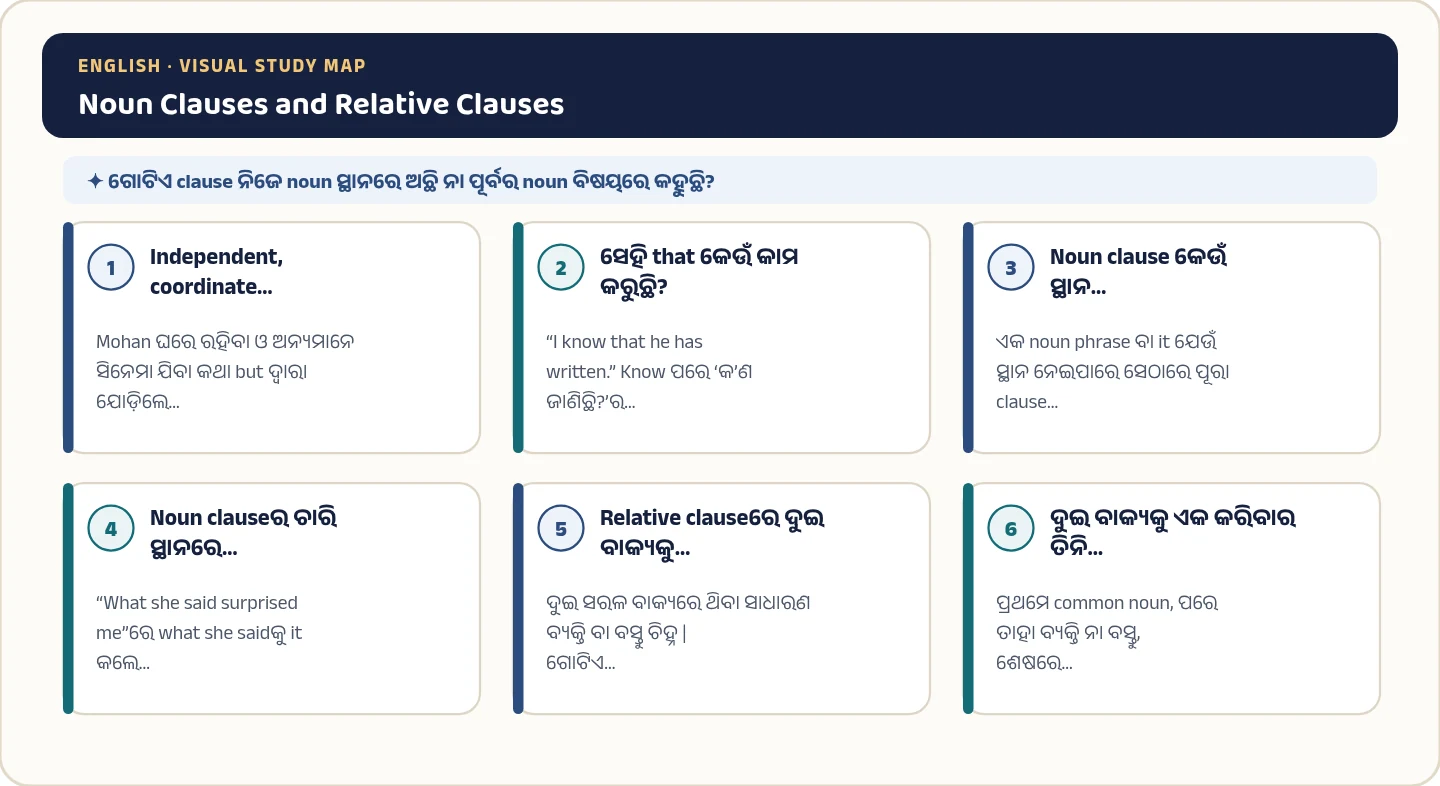
5 functions of Noun Clauses, who/whom/which/that/whose, comma rule & combining sentences
ଏହି ସଚିତ୍ର ଧାରଣା ମାନଚିତ୍ର (Visual Concept Map) ରେ “Noun Clauses and Relative Clauses” ଅଧ୍ୟାୟର ମୁଖ୍ୟ ବିଷୟବସ୍ତୁ ଓ ନିୟମଗୁଡ଼ିକୁ ଏକାଠି ସହଜରେ ବୁଝିବା ପାଇଁ ସଜାଯାଇଛି।
Mohan ଘରେ ରହିବା ଓ ଅନ୍ୟମାନେ ସିନେମା ଯିବା କଥା but ଦ୍ୱାରା ଯୋଡ଼ିଲେ ଉଭୟକୁ ସ୍ୱତନ୍ତ୍ର ବିବୃତି କରିହୁଏ। Whenରେ ଯୋଡ଼ିଲେ ଗୋଟିଏ ଅଂଶ ସମୟ ସୂଚାଇ ଅନ୍ୟଟି ଉପରେ ନିର୍ଭର କରେ।
ଚିଠି seal ଓ post କରିବା ଉଦାହରଣରେ after sealing ଏକ non-finite clause, after he had sealed it ଏକ finite clause। ଉଭୟ ପ୍ରଥମ କାମକୁ ସୂଚାଏ।
“I know that he has written.” Know ପରେ ‘କ’ଣ ଜାଣିଛି?’ର ଉତ୍ତର ପୂରା that-clause, ତେଣୁ noun clause। “The letter that he has written is here.” ଏଠାରେ letter ଆଗରେ ରହିଛି ଓ କେଉଁ letter ବୋଲି ଦରକାରୀ ସୂଚନା ପରେ ଆସେ।
ଏବେ that relative clauseରେ object ସ୍ଥାନକୁ ସୂଚାଉଛି। ପ୍ରଥମ exampleର that ହଟାଇ ଦେଲେ କେତେକ ସନ୍ଦର୍ଭରେ ବାକ୍ୟ ଚାଲେ, କିନ୍ତୁ ତାହାରୁ clauseଟି relative ବୋଲି ପ୍ରମାଣ ହୁଏ ନାହିଁ।
କୌଣସି ପୂର୍ବ nounକୁ ଏହା ସୀମିତ କରୁଛି କି ନା ମୁଖ୍ୟ verbର ସମ୍ପୂର୍ଣ୍ଣ object ଏହା ନିଜେ, ସେହି ପ୍ରଶ୍ନଟି ଉପଯୋଗୀ।
ଏକ noun phrase ବା it ଯେଉଁ ସ୍ଥାନ ନେଇପାରେ ସେଠାରେ ପୂରା clause ଥିଲେ ତାହା noun clause ହୋଇପାରେ। That, what, who, how, when ଆଦିରୁ ଆରମ୍ଭ ହୋଇ ଏହା subject, verbର object, complement ବା prepositionର object ହୋଇପାରେ।
Pay attention to what I sayରେ toର ବିଷୟ ସମଗ୍ର what I say। କେବଳ ଆରମ୍ଭ ଶବ୍ଦ ଦେଖି ପ୍ରକାର ସ୍ଥିର କରନି।
“What she said surprised me”ରେ what she saidକୁ it କଲେ It surprised me। ତେଣୁ ଏହା subject।
“I understood what she said”ରେ understood ପରେ it ବସେ, ଏହା object। “The question is how we shall arrange the money”ରେ is ପରର clause ପ୍ରଶ୍ନଟିର ବିଷୟ ପୂରଣ କରେ।
“Listen to what she says”ରେ to ପରର clause prepositionର object। ଶବ୍ଦ ପରିବର୍ତ୍ତନ କରି ଦେଖିବା ଏକ ରଚନାଗତ ପରୀକ୍ଷା, ସମସ୍ତ ବାକ୍ୟରେ it ତିଆରି କରି ଉତ୍ତର ଦିଅ ବୋଲି ନିର୍ଦ୍ଦେଶ ନୁହେଁ।
ଶେଷ ପ୍ରଶ୍ନରେ ଭିତରେ subject ଓ finite verb ଅଛି କି ମଧ୍ୟ ପରଖ।
ଦୁଇ ସରଳ ବାକ୍ୟରେ ଥିବା ସାଧାରଣ ବ୍ୟକ୍ତି ବା ବସ୍ତୁ ଚିହ୍ନ। ଗୋଟିଏ ସ୍ଥାନରେ noun ରଖି ଅନ୍ୟଟି ପାଇଁ who, which ବା that ବାଛ।
Whose ସମ୍ପର୍କ ବା ମାଲିକାନା, where ସ୍ଥାନକୁ ଯୋଡ଼ିପାରେ। ବ୍ୟକ୍ତି ବା ବୃତ୍ତିର ସଂଜ୍ଞା ଦେବାରେ a person who … ରୂପ ପ୍ରୟୋଗ ହୁଏ।
ପ୍ରଥମେ common noun, ପରେ ତାହା ବ୍ୟକ୍ତି ନା ବସ୍ତୁ, ଶେଷରେ ଦ୍ୱିତୀୟ clauseରେ ତାହାର କାମ ଚିହ୍ନ। “The teacher helps me. She lives nearby.” The teacher who lives nearby helps me ଲେଖିଲେ she ସ୍ଥାନରେ who ଆସିଥିବାରୁ ଆଉ she ଦରକାର ନାହିଁ।
“This is the book. I bought it.” This is the book which I boughtରେ ମଧ୍ୟ ଶେଷର it ଫେରିବ ନାହିଁ। Whose ପରେ ଅଧିକାର ଥିବା ଜିନିଷର ନାମ ରହେ।
The person whose book I borrowedରେ ବସ୍ତୁ book, person ସେହି ବହିର ମାଲିକ। ମୁଖ୍ୟ ବାକ୍ୟର ସାଧାରଣ nounକୁ ରଖିବା ଓ ଭିତର clauseରେ ପୁଣି ସେହି ସ୍ଥାନ ଦୁଇଥର ନ ଭରିବା ଏହି ତିନି ରୂପକୁ ଯୋଡ଼େ।
The boy who … ଗଠନରେ clause ଅନେକ ବାଳକ ଭିତରୁ କେଉଁଜଣ ତାହା କହିପାରେ। Amit ପରି ସ୍ପଷ୍ଟ ନାମ ପରେ ଦୁଇ କମା ମଧ୍ୟର clause ଅତିରିକ୍ତ ସୂଚନା ଦିଏ।
ଏହା non-defining। ଏଥିରେ that ବସେନାହିଁ ଓ pronoun ଛାଡ଼ିହୁଏ ନାହିଁ।
Travellers ଉଦାହରଣରେ କମା ଥିଲେ ସମଗ୍ର ଦଳ, କମା ନ ଥିଲେ ଦଳର ଏକ ଅଂଶ ବୁଝାଯାଇପାରେ।
Travellers ଉଦାହରଣରେ ପଥ ବନ୍ୟାଗ୍ରସ୍ତ ଥିବା କିଛି ଲୋକ ଜାଣିଥିଲେ ବୋଲି ଭାବ। କମାବିହୀନ who-clause କେବଳ ଜାଣିଥିବା ଲୋକଙ୍କୁ ଚିହ୍ନାଏ।
ସେମାନେ ଅନ୍ୟ ପଥ ନେଲେ। ଏହି ଦଳର ଅନ୍ୟ ସମ୍ଭାବ୍ୟ ଯାତ୍ରୀଙ୍କ ବିଷୟରେ ଆମେ କିଛି କହିନାହୁଁ।
କମା ଦେଇ who-clauseଟିକୁ ଅଲଗା କଲେ ଉକ୍ତ ଯାତ୍ରୀଦଳକୁ ଆଗରୁ ଚିହ୍ନାଯାଇଛି। ସମସ୍ତଙ୍କ ବିଷୟରେ ବନ୍ୟାକଥା ଏକ ଅତିରିକ୍ତ ତଥ୍ୟ।
ବାକ୍ୟଟି ଉଚ୍ଚାରଣରେ ଦୁଇ ପାଖରେ ସାନ ବିରାମ ଦେଇ ପଢ଼। Non-defining clause ହଟାଇଲେ ମୂଳ ଦଳର ପରିଚୟ ରହେ।
ଏଠାରେ relative pronoun ମଧ୍ୟ ହଟାଇବା ଯାଏ ନାହିଁ।
Relative pronoun ସବୁଥରେ ପୂର୍ବର ଗୋଟିଏ nounକୁ ମାତ୍ର ସୂଚାଏ ନାହିଁ। Satish ଶେଷ ମିନିଟ୍ରେ ଗୋଲ୍ ଦେଲା, which was fortunate—ଏଠାରେ ଭାଗ୍ୟର କଥା ଗୋଲ୍ ଦେବାର ସମଗ୍ର ଘଟଣା, ଗୋଟିଏ noun ନୁହେଁ।
ପାଠର ନିୟମରେ anyone ବା something ପରି indefinite pronoun ପଛର non-defining ରୂପକୁ ଏଡ଼ାଯାଇଛି। ତାହାଠାରୁ ଭିନ୍ନ, whom ଏକ ବ୍ୟକ୍ତି ବିଷୟରେ ଭିତର clauseର object, whose ପରେ ତାହାର ଅଧିକାର ଥିବା ଜିନିଷ ଆସେ।
“The person whom I met” ଓ “the person whose book I found”ରେ ଉଭୟ personକୁ ବର୍ଣ୍ଣନା କରୁଛି, ହେଲେ meetର object ପ୍ରଥମରେ person, findର object ଦ୍ୱିତୀୟରେ book। Pronoun ବାଛିବା ପୂର୍ବରୁ ଭିତର clauseକୁ ଅଲଗା ଛୋଟ sentenceରେ କହିବା ଏଥିପାଇଁ ଏକ ଭଲ ପରୀକ୍ଷା।
Defining clauseରେ pronounଟି object ହେଲେ ତାହାକୁ ଛାଡ଼ିହୁଏ, ଯଥା the button you pressed। Subject ହେଲେ ଛାଡ଼ିଲେ ଭିତର clauseର କର୍ତ୍ତା ହଜିଯାଏ।
ଯୁଗଳ ଶବ୍ଦଖେଳରେ ଉତ୍ତର ନିଜେ କହି ନ ଦେଇ ତାହା କେଉଁ ବସ୍ତୁ, ବ୍ୟକ୍ତି ବା ସ୍ଥାନ ଚିହ୍ନାଉଥିବା ଏକ relative clause ଗଢ଼।
Know ପରେ କ’ଣ ବା କାହାକୁ ଜାଣେ ପଚାର। ଯଦି ଉତ୍ତର ହେଉଛି ଲେଖାର ବିଷୟବସ୍ତୁ, ସମଗ୍ର clauseକୁ ଧର। ଯଦି ଉତ୍ତର ଜଣେ ଲେଖିଥିବା ଝିଅ, noun ଓ ତା’ର ପରିଚୟସୂଚକ ଅଂଶକୁ ଏକାଠି କର।
| ଗଠନ | କାମ |
|---|---|
| know + what she wrote | ଜଣାଥିବା କଥାର ପୂରା ବିଷୟବସ୍ତୁ। |
| the girl + who wrote it | କେଉଁ ଝିଅ ସେ ପରିଚୟ ଦେଉଥିବା relative clause। |
ଅଫ୍ଲାଇନ୍ ଡାଉନଲୋଡ୍:HTML ପୃଷ୍ଠାJavaScript ତଥ୍ୟ
Clauseଟି ନିଜେ nounର ସ୍ଥାନ ନେଉଛି କି ପୂର୍ବର ଏକ nounକୁ ବର୍ଣ୍ଣନା କରୁଛି—ଏହି ପାର୍ଥକ୍ୟ ଦେଖନ୍ତୁ।
english/learn-and-practice-grammar/source.pdf · ପୃଷ୍ଠା ୭୭–୮୭ଅଫ୍ଲାଇନ୍ ଡାଉନଲୋଡ୍:HTML ପୃଷ୍ଠାJavaScript ତଥ୍ୟ
ବାକ୍ୟର ଅସମ୍ପୂର୍ଣ୍ଣ ଅର୍ଥକୁ ପୂରଣ କରୁଥିବା ଅଂଶ।
english/learn-and-practice-grammar/source.pdf · ପୃଷ୍ଠା ୭୭–୮୭relative clauseକୁ ପୂର୍ବର noun ସହିତ ଯୋଡ଼ୁଥିବା ସର୍ବନାମ।
english/learn-and-practice-grammar/source.pdf · ପୃଷ୍ଠା ୭୭–୮୭ଅଫ୍ଲାଇନ୍ ଡାଉନଲୋଡ୍:HTML ପୃଷ୍ଠାJavaScript ତଥ୍ୟ
ଆଦର୍ଶ ପ୍ରଶ୍ନପତ୍ର · ସେଟ୍ ୧, ଭାଗ ୧, ପ୍ରଶ୍ନ ୪୩ (୧ ନମ୍ବର)
C. subject
କ’ଣ correct—ଉତ୍ତର ହେଉଛି ପୂରା clause।
ଆଦର୍ଶ ପ୍ରଶ୍ନପତ୍ର · ସେଟ୍ ୧, ଭାଗ ୧, ପ୍ରଶ୍ନ ୪୪ (୧ ନମ୍ବର)
D. that
ପୁସ୍ତକର commaରେ ଅଲଗା non-defining clause ପାଇଁ ଏହି ନିୟମ।
ଆଦର୍ଶ ପ୍ରଶ୍ନପତ୍ର · ସେଟ୍ ୨, ଭାଗ ୧, ପ୍ରଶ୍ନ ୪୩ (୧ ନମ୍ବର)
A. Object of a preposition
to ପରେ ପୂରା clause ବସିଛି।
ଆଦର୍ଶ ପ୍ରଶ୍ନପତ୍ର · ସେଟ୍ ୨, ଭାଗ ୧, ପ୍ରଶ୍ନ ୪୪ (୧ ନମ୍ବର)
D. commas
non-defining relative clauseକୁ commaରେ ପୃଥକ କରାଯାଏ।
ଆଦର୍ଶ ପ୍ରଶ୍ନପତ୍ର · ସେଟ୍ ୩, ଭାଗ ୧, ପ୍ରଶ୍ନ ୪୩ (୧ ନମ୍ବର)
B. A complement
isର ଅର୍ଥକୁ clause ପୂରଣ କରେ।
ଆଦର୍ଶ ପ୍ରଶ୍ନପତ୍ର · ସେଟ୍ ୩, ଭାଗ ୧, ପ୍ରଶ୍ନ ୪୪ (୧ ନମ୍ବର)
A. It identifies the boy
ପୂର୍ବ noun boyକୁ ନିର୍ଦ୍ଦିଷ୍ଟ କରୁଛି।
ଆଦର୍ଶ ପ୍ରଶ୍ନପତ୍ର · ସେଟ୍ ୪, ଭାଗ ୧, ପ୍ରଶ୍ନ ୪୩ (୧ ନମ୍ବର)
C. that
that she was happy ସମଗ୍ରଟି କ’ଣ କହିଲେ ବୁଝାଏ।
ଆଦର୍ଶ ପ୍ରଶ୍ନପତ୍ର · ସେଟ୍ ୪, ଭାଗ ୧, ପ୍ରଶ୍ନ ୪୪ (୧ ନମ୍ବର)
B. A noun clause
how it ends ପୂରା clause onର object।
ଆଦର୍ଶ ପ୍ରଶ୍ନପତ୍ର · ସେଟ୍ ୫, ଭାଗ ୧, ପ୍ରଶ୍ନ ୪୩ (୧ ନମ୍ବର)
D. the content of her question
ସେ କ’ଣ ପଚାରିଲେ—how I felt ତାହା କହେ।
ଆଦର୍ଶ ପ୍ରଶ୍ନପତ୍ର · ସେଟ୍ ୫, ଭାଗ ୧, ପ୍ରଶ୍ନ ୪୪ (୧ ନମ୍ବର)
C. who
non-defining clauseରେ ବ୍ୟକ୍ତି ପାଇଁ who।
ଅଫ୍ଲାଇନ୍ ଡାଉନଲୋଡ୍:HTML ପୃଷ୍ଠାJavaScript ତଥ୍ୟ
A defining clause identifies which person or thing is intended and belongs closely to the noun. A non-defining clause adds information about an already identified noun and is set off by commas. comma ଅର୍ଥର ପାର୍ଥକ୍ୟ ଜଣାଏ।
ଅଫ୍ଲାଇନ୍ ଡାଉନଲୋଡ୍:HTML ପୃଷ୍ଠାJavaScript ତଥ୍ୟ
1a and 1b link two self-contained statements with but: the family went to the cinema and Mohan stayed home. In 1c, Mohan stayed at home is the main clause. The when-clause tells when and depends on it. In 2a, the same subject seals and then posts the letter. In 2b, reversing the verbs puts posting first, which makes no practical sense for this letter. ସଂଯୋଜକ ବଦଳିଲେ clauseର ସମ୍ପର୍କ ବଦଳେ।
ଗଠନ ଠିକ୍ ଥିଲେ ମଧ୍ୟ ଘଟଣାକ୍ରମ ଭୁଲ୍ ହୋଇପାରେ।
But ଦୁଇଟି ପୂରା କଥା ଯୋଡ଼େ, ତେଣୁ ପ୍ରତ୍ୟେକର ନିଜ subject ଓ finite verb ମିଳେ। Letterକୁ seal ଓ post କରିବା କ୍ରିୟାରେ ସମୟକ୍ରମ ଅଛି; ବ୍ୟାକରଣରେ ଦୁଇଟି statement possible ହୋଇଥିଲେ ମଧ୍ୟ ଅଦଳବଦଳରେ ଅର୍ଥ ବଦଳେ।
In 3a–c the main action is he posted the letter. The after-clause makes the sealing earlier, regardless of word order. In 3a and 3b, sealing is non-finite and its understood subject is he. In 3c, had in he had sealed is finite and the subject he is explicit. The book treats the actions in 2a as coordinated. In 3a, the sealing is subordinate to the posting. after ଥିବା ଅଂଶଟି ସମୟ ଜଣାଏ, ସ୍ୱତନ୍ତ୍ର ମୁଖ୍ୟ ବାକ୍ୟ ହୋଇ ରହେ ନାହିଁ।
After ଯେଉଁ କାମ ସହ ଯୋଡ଼ା ସେହି କାମ ପ୍ରଥମେ। Clauseଟି ପରେ ଲେଖା ହୋଇଥିଲେ ମଧ୍ୟ sealing ଆଗରୁ ହୁଏ।
Coordinating and କେବଳ ଦୁଇ କାମ ଯୋଡ଼େ, after ସମୟର ସମ୍ପର୍କକୁ ସ୍ପଷ୍ଟ କରେ।
S: Where have you been?; Humpty Dumpty sat on a wall; The clock struck one; Who pulled her out?; Jack fell down. P: Under the queen’s chair; A stitch in time; All the king’s horses; Like a diamond in the sky; up the hill; Pussy in the well; a nice fairy story. C: After sealing the letter; to fetch a pail of water; And Jill came tumbling after (a coordinate clause in the rhyme). ଶେଷ ଉଦାହରଣଟି and ସହ ପୂର୍ବ କଥାକୁ ଯୋଡ଼େ।
ଦୁଇଟି non-finite clause ଏକା ପୂରା ବାକ୍ୟ ହୋଇପାରନ୍ତି ନାହିଁ।
ସ୍ୱାଧୀନ ପ୍ରଶ୍ନ “Who pulled her out?” ଏକ sentence, କାରଣ ତା’ର ଅର୍ଥ ଓ finite verb ଦୁହେଁ ଅଛି। “Under the …” ପରି phraseରେ finite verb ନାହିଁ।
Dependent clauseରେ verb ଥାଏ, ତଥାପି ମୁଖ୍ୟ କଥା ଲାଗେ।
I cannot express / how sorry I am. Do you know / when the next train arrives? Jack fell down / no subordinate clause. All … is not gold / that glitters. All depends on … / how the work is done. He says / that his mother is ill. It is feared / that he will not help us. He told me / that he was ready. It is clear / that he is honest. ଚତୁର୍ଥରେ relative clause ମୁଖ୍ୟ ବାକ୍ୟର ମଝିରେ ଆସେ।
ତୃତୀୟର and ପରର ଅଂଶ coordinate, ଏହି ପ୍ରଶ୍ନରେ ତାହାକୁ ଚିହ୍ନଟ କରିବା ମାଗି ନାହିଁ।
“Do you know when the next train arrives?”ରେ ମୂଳ ପ୍ରଶ୍ନ Do you know …? ଭିତର ପ୍ରଶ୍ନରେ subject train ଆଗେ ଓ arrives ପରେ।
Jack fell downରେ ଦ୍ୱିତୀୟ clause ଖୋଜିବାର କାରଣ ନାହିଁ।
[Something] may be true / What he says. I asked the boy / how old he was. He waved his hand / no subordinate clause. The point is … / that he was absolutely honest. [Something] is uncertain / When his father will return. His great fear is … / that he may not succeed. Humpty Dumpty sat on a wall / no subordinate clause. A proverb is one man’s wit / no subordinate clause. There is many a slip / before the cup is taken to the lip. ବନ୍ଧନୀ ଓ ଖାଲି ସ୍ଥାନ clauseଟିର ସ୍ଥାନ ଦେଖାଉଛି।
ମୂଳ ବାକ୍ୟର ନୂଆ ଶବ୍ଦ ନୁହେଁ।
“What he says may be true”ରେ ମୂଳ ଗଠନ Something may be true। ସମଗ୍ର what-clause ହିଁ subject।
“I asked the boy how old he was”ରେ ପର ଅଂଶଟି ପଚରାଯାଇଥିବା ସୂଚନା।
1. “who has done it” explains the anticipatory it. 2. “how hard she works” is the object of know. 3. “That he is honest” is the subject. 4. “how it ends” is the object of on.
ଓଡ଼ିଆ ବୁଝାମଣା — ତଥ୍ୟଟି କେଉଁଠାରେ ଆସିଛି ଦେଖ। Subject ବା verb/prepositionର object ଭାବେ noun clause କାମ କରିପାରେ।
ଆଗର it ଅର୍ଥରେ ଖାଲି ସ୍ଥାନ ଧରି ରଖିଲେ ପରର clause ପ୍ରକୃତ ବିଷୟ ଭରେ। “How hard she works”କୁ something ସହ ବଦଳାଇ knowର object ଦେଖ।
“That he is honest” ବାକ୍ୟ ଆରମ୍ଭ କଲେ ସମଗ୍ର କଥାଟି subject।
In the speech example “I’m glad to hear it” gives the words spoken. In the last example “that he must help you” completes “My decision is” and is the complement.
ଓଡ଼ିଆ ବୁଝାମଣା — ସିଧା ଉଦ୍ଧୃତ କଥା ଓ that ଦେଇ ଆରମ୍ଭ ହୋଇଥିବା ପରିପୂରକ clause ଅଲଗା କର।
ମୂଳ କଥାଟି ସିଧା quote ହେଲେ ତା’ର ପ୍ରଥମ ପୁରୁଷ ରହିଥାଏ। “My decision is …”ରେ ପରର clause ସିଦ୍ଧାନ୍ତ କ’ଣ ତାହାର ପରିଚୟ ଦିଏ, ତେଣୁ complement।
7 What is in our fate — subject; 8 that they have cheated us — complement of is; 9 that her uncle had come — object of know; 10 who wrote The Ramayan — object of tell; 11 how the war will come to an end — object of say; 12 that he would put some flowers on her brother’s grave — object of promised. ପ୍ରଥମ ବାକ୍ୟରେ କଣ ଏଡ଼ାଇହେବ ନାହିଁ ପଚାର।
ଶେଷ ଚାରିଟିରେ କଣ ଜାଣିବା, କହିବା ବା ପ୍ରତିଶ୍ରୁତି ଦେବା ବିଷୟ ଦେଖ।
Subject ପରେ main predicate ଖୋଜ। “The fact is …”ରେ is ପରେ complement, “know …”ରେ object।
ଏହି ସ୍ଥାନ-ପରୀକ୍ଷାରୁ ସମାନ thatରେ ଆରମ୍ଭ ହୋଇଥିବା clauseର ଭିନ୍ନ କାମ ବୁଝାଯାଏ।
Model completions: 1 where he lives; 2 he had made a mistake; 3 that he is tired; 4 when the train would arrive; 5 the road was closed; 6 what you suggest; 7 he will finish the work tomorrow; 8 the earth moves round the sun; 9 That he is honest; 10 that the school will reopen tomorrow. ପ୍ରଥମ ଓ ଚତୁର୍ଥଟିରେ wh-word ପରେ subject + verb ରହେ।
୯ରେ clause କର୍ତ୍ତା, ୧୦ରେ rumourର ବିଷୟବସ୍ତୁ।
Where he lives ଓ when the train would arrive ପ୍ରତ୍ୟେକରେ subject ଓ verb ଅଛି। ଏଗୁଡ଼ିକ main verbର ଅଜଣା ଖବରକୁ ପୂରଣ କରନ୍ତି; ନିଜେ ପ୍ରତ୍ୟକ୍ଷ ପ୍ରଶ୍ନ ନୁହନ୍ତି, ତେଣୁ does he live କ୍ରମ ହୁଏନାହିଁ।
1b. The book is lying on the table. The book belongs to my friend. 1c. The boy always gives me books. The boy is my friend. Which replaces the repeated book in a clause and who replaces the repeated boy. ପୁନରାବୃତ୍ତ ନାମପଦକୁ ଖୋଜିଲେ ଦୁଇ ଅଲଗା ବାକ୍ୟ ମିଳେ।
ଅଲଗା ବାକ୍ୟରେ book ବା boy ଦ୍ୱିତୀୟଥର ଆସେ। ଦୁହିଁକୁ ଯୋଡ଼ିଲେ ସେହି ପୁନରାବୃତ୍ତ noun ସ୍ଥାନରେ which/that ବା who ଆସି ନିକଟର antecedentକୁ ଫେରି ଦେଖାଏ।
1. The birds that live in the neighbourhood are chirping. 2. I write with the pen my father bought for me. 3. The sick whom Florence Nightingale nursed were delighted. 4. I like the man who has a smiling face. 5. The thief who had robbed me escaped in the dark. 6. The boy whose book I have borrowed is our monitor. 7. The chair he is sitting in has a cracked leg. Whose ଅଧିକାର ସୂଚାଏ ଓ ପରେ book ଆସେ।
୨ ଓ ୭ରେ object relative ଉହ୍ୟ ଅଛି।
Birds ନିଜେ live କରୁଥିବାରୁ that ହେଉଛି subject। Father bought the penରେ father subject ଓ pen object; ଯୋଡ଼ିଲେ pen ପରେ object pronoun ଛାଡ଼ିହୁଏ।
ମଣିଷ ଥିଲେ who/whomର ଏହି ଭେଦ ମଧ୍ୟ ଦେଖ।
Drop the pronoun in 2 (the story book my father bought), 3 (the shopkeeper I was working for), 4 (the best possible explanation we can give), 10 (the man Mohan was talking to), 11 (the music we were listening to) and 12 (the pen my father bought). Keep it in 1 and 5–9. ଉହ୍ୟ ରହୁଥିବା ଶବ୍ଦଗୁଡ଼ିକ defining relative clauseର object।
Comma ଦିଆ extra-information clauseରେ ବା relative ନିଜେ subject ହେଲେ ରଖିବାକୁ ହେବ।
“I was working for …”ରେ I ପୂର୍ବରୁ subject, ତେଣୁ shopkeeper object ସ୍ଥାନରୁ pronoun ବାଦ୍ ଦେଇହୁଏ। “Birds that live …”ରେ that ବାଦ୍ ଦେଲେ liveର subject ହଜେ।
A driver is a person who drives a vehicle; a conductor, one who collects fares; an actor, one who plays a part; a teacher, one who helps learners; a journalist, one who reports news; a plumber, one who repairs pipes; a farmer, one who grows crops; a doctor, one who treats illness; a patient, one who receives treatment. A hospital is a place where sick people receive care. A newspaper is a document in which news is published. A transitive verb is a verb which takes an object. ସଂକ୍ଷିପ୍ତ ଯୋଡ଼ିଗୁଡ଼ିକୁ ଖାତାରେ A … is a person who … ରୂପରେ ଲେଖ।
Driver ପାଇଁ person + who + drives, ଗୋଟିଏ ଜିନିଷ ପାଇଁ thing + which/that + its use। ପରିଭାଷାରେ କେଉଁ କାମ ତାକୁ ଅନ୍ୟ ସମସ୍ତ ବ୍ୟକ୍ତି ବା ବସ୍ତୁଠାରୁ ଅଲଗା କରେ ତାହା ଥାଉ।
1 that glitters; 2 who live in glass houses; 3 that ends; 4 who pays the piper; 5 who laughs last; 6 that has no turning; 7 that blows nobody; 8 who do not want; 9 that prays together. Take the beginning and end from the same printed row. Row 8 begins “There are no one” in the supplied page; “There is no one so deaf as those who do not want to hear” gives agreement with no one. ଏଠି who ବ୍ୟକ୍ତିକୁ ଓ that ବସ୍ତୁ ବା ସମୂହକୁ ଚିହ୍ନାଏ।
“All that glitters …”ରେ that allକୁ ସୀମିତ କରେ। “People who live …”ରେ persons ସହ who ମେଳେ।
ଲୋକୋକ୍ତି ମିଳାଇବାବେଳେ relative pronoun ସହ ପୂରା ଲୋକୋକ୍ତିର ଅର୍ଥ ମଧ୍ୟ ପରଖ।
In 1c the clause beginning who identifies which boy is the speaker’s friend. No comma separates it from the boy. In 2, Amit already identifies the person. The same description, placed between two commas, adds information about him. କେଉଁ ବାଳକ ତାହା ଚିହ୍ନଟ କରାଇବା ଓ ଚିହ୍ନା ବ୍ୟକ୍ତିଙ୍କ ବିଷୟରେ ଆଉ ଗୋଟିଏ କଥା ଯୋଡ଼ିବା ମଧ୍ୟରେ ଏହି ପାର୍ଥକ୍ୟ।
ଯଦି କେଉଁ boy ବୋଲି ଖୋଜିବାକୁ clause ଦରକାର, ତାହା defining। Amit ନାମରେ ପରିଚୟ ମିଳିସାରିଥିଲେ ମଝିର clause ଅତିରିକ୍ତ ଖବର; କାଟିଦେଲେ ମୂଳ ପରିଚୟ ଅକ୍ଷୁଣ୍ଣ ରହେ।
i who sells fruits and vegetables D; ii who is a green grocer N; iii who often comes to our house D; iv who often comes to our house N; v who is a judge D; vi who is a judge N; vii who is a teacher N; viii that wears a crown D; ix who thinks of our welfare D; x who thinks of our welfare N. (v) କେଉଁ କକା ବୋଲି ଚିହ୍ନାଏ, (vi) କକାଙ୍କ ବିଷୟରେ ଅଧିକ ଖବର ଦିଏ।
ଏକା “who often comes to our house” ଦୁଇଥର ଥିଲେ ମଧ୍ୟ antecedent ନିଜେ ନିର୍ଦ୍ଦିଷ୍ଟ କି ଚିହ୍ନ। ସାଧାରଣ nounକୁ ଚିହ୍ନାଇଲେ D; ପୂର୍ବରୁ ଚିହ୍ନା ବ୍ୟକ୍ତି ବିଷୟରେ ଯୋଡ଼ିଲେ N।
Comma ଏହି ପଠନକୁ ଦେଖାଏ।
i none; ii put commas around which lasted ten days if the strike is already identified; iii around who is working at Koraput; iv none; v around who is sick if the grandmother is already identified; vi around who discovered the theory of relativity; vii around who got this bridge built; viii around who faithfully served the poor; ix a comma before which is unfortunate; x around who is impartial if the chairman is already identified. (ix)ର which ଆଗର ପୂରା ଘଟଣାକୁ ସୂଚାଏ।
ଜଣେ ବା ଗୋଟିଏକୁ ଅନେକଙ୍କ ମଧ୍ୟରୁ ଚିହ୍ନାଇବାକୁ ହେଲେ comma ବିନା ଭିନ୍ନ ଅର୍ଥ ହୁଏ।
ମଝିର extra informationର ଆରମ୍ଭ ଓ ଶେଷରେ ଦୁଇ comma ଥାଏ। ଶେଷରେ ଥିଲେ ପ୍ରଥମ comma ପରେ full stop ଅନ୍ୟ ସୀମା କରେ।
Strike ଆଗରୁ ଚିହ୍ନା କି ତାହା ଉପରେ ‘which lasted ten days’ର ପଠନ ନିର୍ଭର କରେ।
1 which; 2 who; 3 who (or that); 4 which/that; 5 whose; 6 that/which (or omit it); 7 whose; 8 which/that. In whichରେ preposition ଆଗରୁ ଅଛି। ୫ ଓ ୭ରେ ପର ନାମପଦ ସହ ମାଲିକାନାର ସମ୍ପର୍କ ଥିବାରୁ whose।
Whose ପରେ ଅଧିକାରୀଙ୍କ ବସ୍ତୁର noun ଲାଗେ। Preposition + whichରେ which ବାଦ୍ ହୁଏନାହିଁ।
Defining object gapରେ pronoun ବାଦ୍ ଦେଲେ ମଧ୍ୟ clauseର ନିଜ subject ରହିଛି କି ପରଖ।
A pair can build this ten-word chain on squared paper. PENGUIN: a bird that swims but cannot fly. IGLOO: a house that is made of snow. LOG: a piece of a tree that has been cut. GOAT: an animal that may give milk. TEACHER: a person who helps pupils learn. READER: someone who reads. ROAD: a way on which vehicles travel. DOCTOR: a person who treats illness. REPORT: an account that gives information. TRAIN: a vehicle that runs on rails. Consecutive words share I, L, G, T, R, D, D, R, T. ସାଥୀ ନିଜ ପୃଷ୍ଠାରେ ଅକ୍ଷର ମିଳାଇ ଛକ ବସାଇବେ ଓ ଯେକୌଣସି ସଠିକ୍ ନୂଆ clue ଦେଇପାରିବେ।
Crossword clueରେ କେବଳ nounର ନାମ ପୁଣି ନ କହି ତାହାର distinguishing feature ଦିଅ। A bird that swims but cannot flyରେ bird ଶ୍ରେଣୀ, relative clauseଟି ଅଧିକ ସଂକୀର୍ଣ୍ଣ ସୂତ୍ର।
ଯୋଡ଼ା ଶବ୍ଦର shared letter ଗୋଟିଏ ଘରେ ବସେ।
ଅଫ୍ଲାଇନ୍ ଡାଉନଲୋଡ୍:HTML ପୃଷ୍ଠାJavaScript ତଥ୍ୟ