Visual Concept Map · Non-finite Verb Forms
ଏହି ସଚିତ୍ର ଧାରଣା ମାନଚିତ୍ର (Visual Concept Map) ରେ “Non-finite Verb Forms” ଅଧ୍ୟାୟର ମୁଖ୍ୟ ବିଷୟବସ୍ତୁ ଓ ନିୟମଗୁଡ଼ିକୁ ଏକାଠି ସହଜରେ ବୁଝିବା ପାଇଁ ସଜାଯାଇଛି।
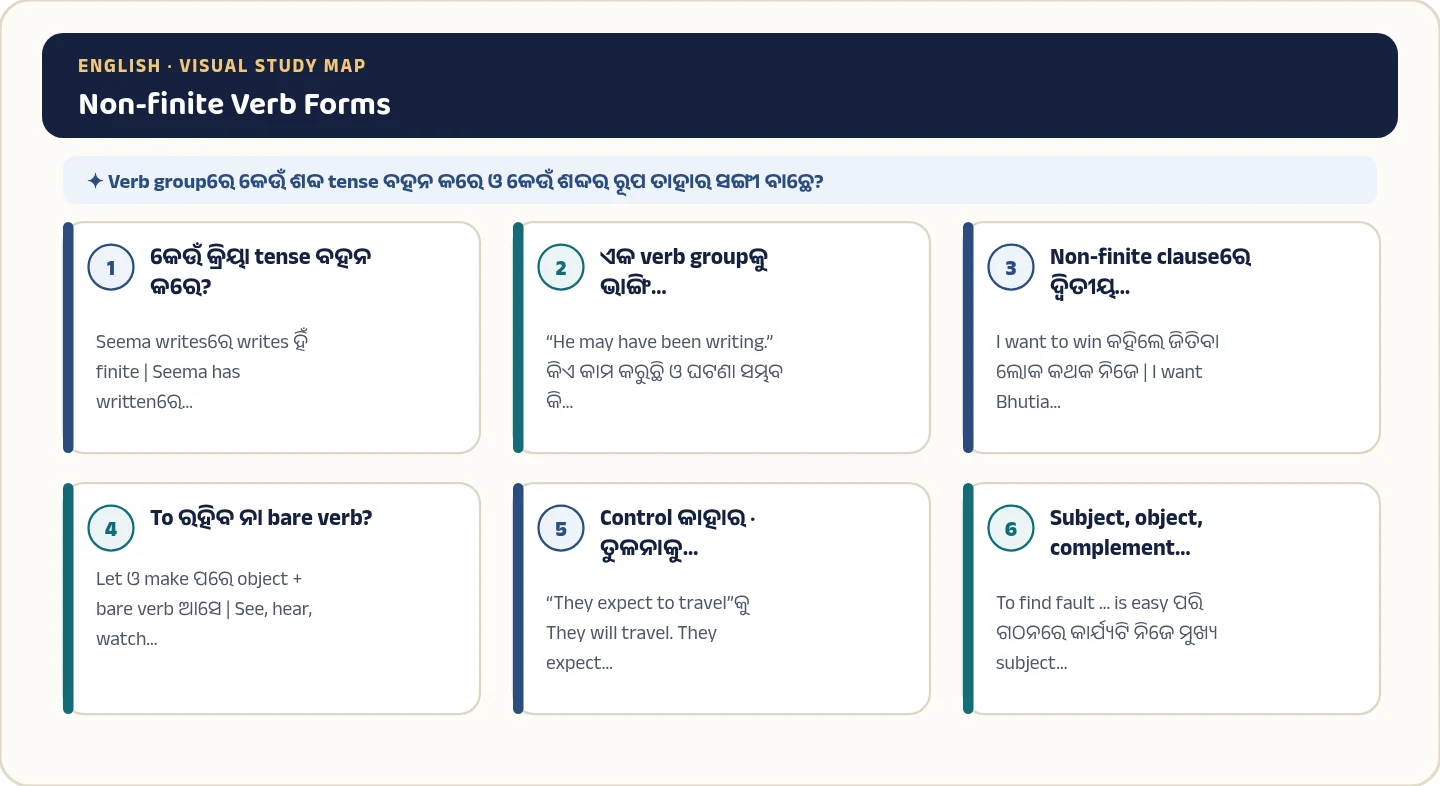
BSE notation (to+V, φ+V, V-ing), advise/let/make/see/hear patterns, meaning contrasts & drills
ଏହି ସଚିତ୍ର ଧାରଣା ମାନଚିତ୍ର (Visual Concept Map) ରେ “Non-finite Verb Forms” ଅଧ୍ୟାୟର ମୁଖ୍ୟ ବିଷୟବସ୍ତୁ ଓ ନିୟମଗୁଡ଼ିକୁ ଏକାଠି ସହଜରେ ବୁଝିବା ପାଇଁ ସଜାଯାଇଛି।
Seema writesରେ writes ହିଁ finite। Seema has writtenରେ has ନିଜେ subject ଓ tense ସହ ମେଳେ, written ତାହାର ପରର participle।
Bare infinitive, to-infinitive, -ing ଓ past participle non-finite ରୂପ ହୋଇପାରନ୍ତି। Written ବା to writeକୁ ଏକବଚନ subject ପରେ ଏକାକୀ ବସାଇ ପୂରା ଘୋଷଣାତ୍ମକ ବାକ୍ୟ ହୁଏ ନାହିଁ।
“He may have been writing.” କିଏ କାମ କରୁଛି ଓ ଘଟଣା ସମ୍ଭବ କି ତାହାର ଭାବ ପ୍ରଥମ modalରେ ଅଛି। ପରେ have ମୂଳ ରୂପ, been past participle, writing -ing form।
He ବଦଳରେ they କଲେ ଶେଷର writingରେ ବଚନର ଚିହ୍ନ ଆସେ ନାହିଁ। “The letter may have been written”ରେ ଶେଷ ରୂପ written ହେବାରୁ କାମଟି ଯାହା ଉପରେ ହେଲା ସେହି letter ବିଷୟରେ କଥା ହେଉଛି।
ଏହି ଦୁଇ ଉଦାହରଣ ଭିନ୍ନ କରିବା ପାଇଁ ପ୍ରତି -ing ଥିଲେ present tense ଓ ପ୍ରତି -en ଥିଲେ past tense ବୋଲି କହିଲେ ଭୁଲ୍ ହୁଏ। ପ୍ରଥମେ finite ସଦସ୍ୟ ପରେ ଅନ୍ୟ ସମସ୍ତ ରୂପ କ’ଣ କାମ କରୁଛି ଦେଖ।
I want to win କହିଲେ ଜିତିବା ଲୋକ କଥକ ନିଜେ। I want Bhutia to win କହିଲେ ଇଚ୍ଛା କଥକଙ୍କର, ଜିତିବା Bhutiaଙ୍କର।
Non-finite clause ନିଜେ ସମୟ ସ୍ଥିର କରେନାହିଁ। ଦୁଇଟି ସରଳ ବାକ୍ୟରେ ଭାଙ୍ଗିଲେ ଦୁଇ କାମର କର୍ତ୍ତା ଓ ସମ୍ପର୍କ ସ୍ପଷ୍ଟ ହୁଏ।
Let ଓ make ପରେ object + bare verb ଆସେ। See, hear, watch ପରେ କାମଟି ସମଗ୍ର ଭାବେ ଦେଖିବା ବା ଶୁଣିବାର ଉଦାହରଣ ଅଛି।
Request କାହାକୁ ଅନୁରୋଧ କରୁଛି ସେହି object ପରେ to-infinitive ନିଏ। Expect ପରେ ସିଧା to + verb ବା object ସହ to + verb ଉଭୟ ହୋଇପାରେ।
କେବଳ to କାଟିବା ବା ଯୋଡ଼ିବା ଆଗରୁ ପ୍ରଥମ verbର pattern ଦେଖ।
“They expect to travel”କୁ They will travel. They expect this. ବୋଲି ଭାଙ୍ଗିଲେ ଦୁଇ କାମର subject ସମାନ। “They expect me to travel”ର ପ୍ରଥମ କଥା I will travel।
ଗୋଟିଏ me ଯୋଡ଼ା ହେବାରୁ ଭ୍ରମଣ କରିବା ବ୍ୟକ୍ତି ବଦଳିଲା। ଏହି object ସଦା to ସହ ଆସେ ନାହିଁ।
“They made me write”ରେ me ପରେ bare form, “They asked me to write”ରେ to-form। Had better ଓ would rather ପରେ ମଧ୍ୟ bare verb ପାଠରେ ଦେଖାଯାଇଛି।
ବାକ୍ୟ ପୂରଣ କରିବାବେଳେ bracketର Iକୁ me କରିବା ଓ କ୍ରିୟାରେ to ଦରକାର କି ଦେଖିବା ଦୁଇଟି ଅଲଗା ନିଷ୍ପତ୍ତି।
To find fault … is easy ପରି ଗଠନରେ କାର୍ଯ୍ୟଟି ନିଜେ ମୁଖ୍ୟ subject। She plans to buy …ରେ planର ବିଷୟ କ’ଣ ବୋଲି ପଚାରିଲେ object ମିଳେ।
He is to go …ରେ ଶେଷ ଅଂଶ subject ବିଷୟକୁ ପୂରଣ କରେ। To save the child କୌଣସି କାମର ଉଦ୍ଦେଶ୍ୟ କହିଲେ ତାହା adjunct।
ରୂପ ଏକ ହେଲେ ମଧ୍ୟ କାର୍ଯ୍ୟ ଭିନ୍ନ ହୋଇପାରେ।
ପାଠରେ hear, see, watch ପରେ object + bare verb ଓ କେତେକ ସ୍ଥାନରେ object + -ing ଦେଖାଯାଏ। “I saw him cross the road” କହିଲେ ରାସ୍ତା ପାରିହେବା ଘଟଣାକୁ ଏକ ଏକକ ଭାବରେ ନିଆଯାଇଛି।
“I saw him crossing the road”ରେ ମୋ ଆଖିରେ ପଡ଼ିଲା ବେଳେ ଚାଲିଥିବା କାମ ମୁଖ୍ୟ। ଦୁଇ ବାକ୍ୟର finite verb saw, ବ୍ୟକ୍ତି him।
ଏହି ସ୍ଥିର ଅଂଶ ଦୁଇଟିକୁ ପ୍ରଥମେ ଚିହ୍ନିଲେ ଅର୍ଥ ପରିବର୍ତ୍ତନ କରୁଥିବା ଅଂଶ cross/crossing ସ୍ପଷ୍ଟ ହୁଏ। ଏହା ଏକ ରୂପ ସବୁ ସ୍ଥାନରେ ଠିକ୍ ଓ ଅନ୍ୟଟି ଭୁଲ୍ ବୋଲି ପ୍ରଶ୍ନ ନୁହେଁ।
“Tell the police about the accident” ଉପଦେଶକୁ non-finite ଗଠନରେ He advised me to report the accident to the police କହିହୁଏ। ରୂପାନ୍ତର ପୂର୍ବରେ ଯାହାକୁ କୁହାଯାଉଛି ସେ ବ୍ୟକ୍ତି ଭିତର ରିପୋର୍ଟ କରିବା କାମର କର୍ତ୍ତା।
Allow someone to see a file ସହ let someone see the file ମିଳାଅ। ଉଭୟରେ ଅନୁମତି ଅଛି, କିନ୍ତୁ ଦ୍ୱିତୀୟ verbର ରୂପ ବାଛିବା ନିୟମ ଭିନ୍ନ।
Prefer ବା hate ପରେ ମଧ୍ୟ ଭାବ ଦେଖ। “I hate telling lies” ଏକ ସାଧାରଣ ଅଭ୍ୟାସ ପ୍ରତି ଅପସନ୍ଦ।
“I hate to repeat this” ଏବେ କହିବାକୁ ପଡ଼ୁଥିବା ଆଶଙ୍କାଜନକ କଥା ପ୍ରତି ଅନିଚ୍ଛା ଦର୍ଶାଇପାରେ। ରୂପ ବଦଳିବା ସହ ସାଧାରଣ ପସନ୍ଦ କି ଏକ ନିର୍ଦ୍ଦିଷ୍ଟ ପରିସ୍ଥିତି, ଏହି ଗୁରୁତ୍ୱ ବଦଳୁଛି କି ଶୁଣ।
କିଛି verb ସହ ଦୁଇ ରୂପହିଁ ଚାଲେ, କିନ୍ତୁ ଅର୍ଥ ସମାନ ରହେ ନାହିଁ। Remember ବା forget ପରେ -ing ଆଗରୁ ଘଟିଥିବା ଅନୁଭବକୁ ଫେରାଏ।
To + verb କରିବାକୁ ଥିବା କାମକୁ ବୁଝାଏ। ଚିଠିଟି ଆଗରୁ ପକାଇଛି କି ଏବେ ପକାଇବାର କାମ ବାକି ଅଛି—ଏହି ସମୟକ୍ରମରୁ ରୂପ ବାଛ।
Enjoy ପରେ କୌଣସି କାର୍ଯ୍ୟ କହିବାକୁ ହେଲେ -ing, want ପରେ ନିଜ ଉଦ୍ଦେଶ୍ୟ କହିଲେ to-infinitive ଚାଲେ। ଦ୍ୱିତୀୟ କ୍ରିୟାଟି ମୁଖ୍ୟ କାମର କାରଣ ବା ଉଦ୍ଦେଶ୍ୟ ମଧ୍ୟ ହୋଇପାରେ।
“She went to the post office to post the letter”ରେ ଶେଷ ଅଂଶ ‘ସେ କାହିଁକି ଗଲା?’ର ଉତ୍ତର। “She forgot to post the letter”ରେ ଚିଠି ପକାଇବା ଥିଲା କିନ୍ତୁ ଭୁଲିଗଲା।
“She will never forget posting that letter”ରେ କାମ ହୋଇସାରିଛି, ସେହି ସ୍ମୃତି ରହିଛି। ପ୍ରତି ଥର ଶେଷର ଘଟଣାଟି ହୋଇଛି, ଚାଲିଛି ନା ହେବାକୁ ବାକି ଅଛି ଗୋଟିଏ ଓଡ଼ିଆ ବାକ୍ୟରେ କହି ନେଲେ ଠିକ୍ ଇଂରାଜୀ ରୂପ ବାଛିବା ସହଜ ହୁଏ।
ଗୋଟିଏ singକୁ ତିନିଟି ଭିନ୍ନ ସାଥୀ ଦିଅ। ଅର୍ଥରେ ସମ୍ଭାବନା, ସମାପ୍ତି ବା ଚାଲିଥିବା ଅବସ୍ଥା ଯୋଡ଼ିଲେ ସେହି ମୂଳ କାମର grammar ବଦଳେ।
| ପ୍ରଥମ ଶବ୍ଦ | ପରର ରୂପ |
|---|---|
| can, must, may | Bare infinitive, ଯଥା can sing। |
| has, have ବା had ଦ୍ୱାରା perfect | Past participle, ଯଥା has sung। |
| be ଦ୍ୱାରା progressive | Present participle, ଯଥା is singing। |
ଅଫ୍ଲାଇନ୍ ଡାଉନଲୋଡ୍:HTML ପୃଷ୍ଠାJavaScript ତଥ୍ୟ
enjoy playing; want to go; let me read; remind him to write। ନିୟନ୍ତ୍ରଣକାରୀ verb ଓ ତା’ପରର pattern ଏକାଠି ଶିଖନ୍ତୁ।
english/learn-and-practice-grammar/source.pdf · ପୃଷ୍ଠା ୩୭–୪୪ଅଫ୍ଲାଇନ୍ ଡାଉନଲୋଡ୍:HTML ପୃଷ୍ଠାJavaScript ତଥ୍ୟ
ମୁଖ୍ୟ କ୍ରିୟାର ମୂଳ ରୂପ, to ସହିତ ବା ବିନା toରେ।
english/learn-and-practice-grammar/source.pdf · ପୃଷ୍ଠା ୩୭–୪୪କର୍ତ୍ତାର ବଚନ ବା tenseର ଚିହ୍ନ ନିଜେ ବହନ କରୁନଥିବା ରୂପ।
english/learn-and-practice-grammar/source.pdf · ପୃଷ୍ଠା ୩୭–୪୪ଅଫ୍ଲାଇନ୍ ଡାଉନଲୋଡ୍:HTML ପୃଷ୍ଠାJavaScript ତଥ୍ୟ
ଆଦର୍ଶ ପ୍ରଶ୍ନପତ୍ର · ସେଟ୍ ୧, ଭାଗ ୧, ପ୍ରଶ୍ନ ୩୭ (୧ ନମ୍ବର)
D. playing
enjoy ପରେ verb-ing ରୂପ ଦିଆଯାଏ।
ଆଦର୍ଶ ପ୍ରଶ୍ନପତ୍ର · ସେଟ୍ ୧, ଭାଗ ୧, ପ୍ରଶ୍ନ ୩୮ (୧ ନମ୍ବର)
A. touch
let + object + base verb ନିୟମ ଲାଗୁହୁଏ।
ଆଦର୍ଶ ପ୍ରଶ୍ନପତ୍ର · ସେଟ୍ ୨, ଭାଗ ୧, ପ୍ରଶ୍ନ ୩୭ (୧ ନମ୍ବର)
C. read
let + object + base verb।
ଆଦର୍ଶ ପ୍ରଶ୍ନପତ୍ର · ସେଟ୍ ୨, ଭାଗ ୧, ପ୍ରଶ୍ନ ୩୮ (୧ ନମ୍ବର)
B. to see
hope ପରେ to-infinitive ଆସେ।
ଆଦର୍ଶ ପ୍ରଶ୍ନପତ୍ର · ସେଟ୍ ୩, ଭାଗ ୧, ପ୍ରଶ୍ନ ୩୭ (୧ ନମ୍ବର)
D. do
make + object + bare infinitive।
ଆଦର୍ଶ ପ୍ରଶ୍ନପତ୍ର · ସେଟ୍ ୩, ଭାଗ ୧, ପ୍ରଶ୍ନ ୩୮ (୧ ନମ୍ବର)
C. travelling
mind ପରେ -ing।
ଆଦର୍ଶ ପ୍ରଶ୍ନପତ୍ର · ସେଟ୍ ୪, ଭାଗ ୧, ପ୍ରଶ୍ନ ୩୭ (୧ ନମ୍ବର)
A. to write
remind + object + to-infinitive।
ଆଦର୍ଶ ପ୍ରଶ୍ନପତ୍ର · ସେଟ୍ ୪, ଭାଗ ୧, ପ୍ରଶ୍ନ ୩୮ (୧ ନମ୍ବର)
D. talking
କଥା କହିବା ବନ୍ଦ ପାଇଁ stop + -ing।
ଆଦର୍ଶ ପ୍ରଶ୍ନପତ୍ର · ସେଟ୍ ୫, ଭାଗ ୧, ପ୍ରଶ୍ନ ୩୭ (୧ ନମ୍ବର)
B. cry
make + object + base verb।
ଆଦର୍ଶ ପ୍ରଶ୍ନପତ୍ର · ସେଟ୍ ୫, ଭାଗ ୧, ପ୍ରଶ୍ନ ୩୮ (୧ ନମ୍ବର)
A. to study
encourage + object + to-infinitive।
ଅଫ୍ଲାଇନ୍ ଡାଉନଲୋଡ୍:HTML ପୃଷ୍ଠାJavaScript ତଥ୍ୟ
Let takes an object followed by a bare infinitive; allow takes an object followed by a to-infinitive. Compare let them touch with allow them to touch. ଅର୍ଥ ନିକଟ ହେଲେ ମଧ୍ୟ verb pattern ଭିନ୍ନ।
ଅଫ୍ଲାଇନ୍ ଡାଉନଲୋଡ୍:HTML ପୃଷ୍ଠାJavaScript ତଥ୍ୟ
1(a) felt is finite, to face is a non-finite infinitive. 1(b) wrote is finite, announcing is a non-finite participle. In 2(a–c), could, may and may respectively are the finite auxiliaries. Their non-finite followers are (a) have, been, laughing, (b) have, been, writing and (c) have, been, written. ଦୀର୍ଘ verb groupରେ ପ୍ରଥମ auxiliaryରେ tense ରହେ, ପରର ସବୁ କ୍ରିୟା ନିଜେ tense ବା subject ଅନୁସାରେ ବଦଳନ୍ତି ନାହିଁ।
Pastକୁ present କଲେ felt → feels ଓ wrote → writes ବଦଳିପାରେ, କିନ୍ତୁ to face ବା announcingର ରୂପ ଅବିକୃତ ରହେ। ଏହି ପରିବର୍ତ୍ତନ ପରୀକ୍ଷାରୁ finite ଶବ୍ଦଟି ଧରାପଡ଼େ।
3 writes, 4 has, 5 is and 6 will are finite. With singular Seema, 7 write cannot on its own express the simple present: use writes. In 8, written requires a finite verb, e.g. has written. In 9 use is writing. For 10, retain the infinitive by adding a finite verb: wants to write. ୭ରେ subject ସହ କ୍ରିୟାର ରୂପ ମେଳିନାହିଁ।
୮–୧୦ରେ participle ବା infinitive ଏକାକୀ ମୁଖ୍ୟ finite verbର କାମ କରିପାରେ ନାହିଁ।
Seema ସହ simple present ଲେଖିଲେ writes; writingକୁ ନିଜେ ରଖିବାକୁ is writing; writtenକୁ perfect କରିବାକୁ has written। Will ପରେ ସେହି ମୂଳ write ଯଥେଷ୍ଟ।
ସୁଧାର କେଉଁଟି ବାଛିବ ତାହା କହିବାକୁ ଚାହୁଁଥିବା ଅର୍ଥ ଧରେ।
11 made / write, 12 want / to write, 13 found / written and typed, 14 saw / writing. In each pair the first form is finite. In 15(a–b) wants changes to wanted when the tense changes. The infinitive to write stays the same. ୧୩ରେ written ଓ typed ପତ୍ରଗୁଡ଼ିକର ଅବସ୍ଥା ଜଣାଏ।
୧୪ରେ writing ଦ୍ୱାରା Seemaଙ୍କ ଲେଖିବା କାର୍ଯ୍ୟକୁ ଦେଖିବା କଥା ବୁଝାଏ।
Made someone writeରେ bare form, want someone to writeରେ to-form। Written/typedରେ ଲେଖା ବା ଟାଇପ ହୋଇସାରିଥିବା ଅବସ୍ଥା; saw someone writingରେ ଚାଲିଥିବା କାମ।
ତେଣୁ ଚାରିଟିକୁ ଏକା infinitive ନାମ ଦିଅନାହିଁ।
a been, answering; b have, finished, doing; c have, been, helped; d have, been, studying; e have, been, screened. ଏକ verb groupର ପ୍ରଥମ auxiliary କାଳ ବା modal ଦର୍ଶାଏ। (b)ରେ doing ମଧ୍ୟ finishedର ପରିପୂରକ non-finite form।
ମୂଳ verb groupର ପ୍ରଥମ finite ଶବ୍ଦ ଛାଡ଼ି ପରର ପ୍ରତି ଶବ୍ଦ ଯାଞ୍ଚ କର। “have been helped”ରେ have bare form, been ହେଉଛି beର participle ଓ helped passive participle।
“been studying”ରେ ଶେଷ ଶବ୍ଦ progressive।
37. I hope to see you: I will do the seeing. 38. He requested me to help him: I am to help. 39. They expected to travel: they are the travellers. 40. They expected me to travel: I am the traveller. ୩୯ ଓ ୪୦ରେ expected ସମାନ।
ତାହା ପରେ me ଯୋଡ଼ା ହେଲେ ଯାତ୍ରା କରିବା ବ୍ୟକ୍ତି ବଦଳିଯାଏ।
I hope to seeରେ I ଦେଖିବି। He requested me to helpରେ ଯାହାକୁ me କୁହାଯାଇଛି ସେ ସାହାଯ୍ୟ କରିବେ।
Expect ପରେ ମଝିରେ object ଆସିଛି କି ଦେଖିଲେ ଦ୍ୱିତୀୟ କାମର କର୍ତ୍ତା କିଏ ଧରିହେବ।
a. My friend will get the medal. I want that. b. I did the exercise. She helped me. c. I tell lies. I hate doing that. d. I shall write a story by tomorrow. I expect that. e. You will write a story by tomorrow. I expect that. f. We wrote the story. Our teacher made us do it. (c) ଏକ ବ୍ୟାକରଣ ଅଭ୍ୟାସ।
ଦୁଇ ଅଂଶକୁ ଯୋଡ଼ିଲେ କାହାର କାମ, ଆଉ କିଏ ଚାହୁଁଛି ବା ବାଧ୍ୟ କରୁଛି, ବୁଝାଯାଏ।
ପ୍ରଥମ ଧାରଣାରେ ମୁଖ୍ୟ ଇଚ୍ଛା/ପସନ୍ଦ/ସାହାଯ୍ୟ, ଦ୍ୱିତୀୟରେ କ’ଣ ହେବାକୁ ଚାହୁଁଛନ୍ତି ରଖ। “I want my friend to get the medal” ଭାଙ୍ଗିଲେ ପଦକ ପାଇବ friend ଓ ଚାହେ I।
ଦୁହିଁର subject ଏକ କରନାହିଁ।
a to buy… is the object/complement of plans; b to get… completes allow with others; c to save the child is an adjunct of purpose; d her sing a song is the complement of heard (her is its object and does the singing); e To find fault with others is the subject; f to go abroad completes is. ପୃ. ୩୯ ଅନୁସାରେ (b)ରେ କାହାକୁ ଓ କଣ କରିବାକୁ ଅନୁମତି ମିଳୁଛି ଦେଖ।
(c)ରେ Why? ପ୍ରଶ୍ନର ଉତ୍ତର ମିଳେ।
Verbର ଅର୍ଥ ପୂରଣ କରୁଥିବା clause ହଟାଇଲେ କ’ଣ ଯୋଜନା କରାଗଲା ବା କାହାକୁ କ’ଣ ଅନୁମତି ମିଳିଲା ଅସ୍ପଷ୍ଟ ହୁଏ। To save the child କାହିଁକି କାମ ହେଲା ଜଣାଏ, ତେଣୁ ଏଠି purpose।
(a) me do it; (b) them touch the flowers; (c) the beggar curse the rude boys; (d) anyone to see the files; (e) him to write the letter.
ଓଡ଼ିଆ ବୁଝାମଣା — Make, let, hear ପରେ object + bare infinitive। Allow ଓ remind ସହ to ଦରକାର।
Make/let ପରେ object + bare verb। Hear ପରେ କାମଟି ପୂରା ଶୁଣାଗଲେ bare form ହୋଇପାରେ।
Allow/want ପରି ଗଠନରେ object + to-infinitive ରଖ। Them ଓ him ପରେ ସମସ୍ତଠାରେ ଏକା pattern ନୁହେଁ।
(a) us make; (b) to meet; (c) us feel; (d) me to phone; (e) us cry; (f) her to study; (g) to come.
ଓଡ଼ିଆ ବୁଝାମଣା — କାହାକୁ କିଛି କରିବାକୁ ଦେଉଛନ୍ତି ବା ଉତ୍ସାହିତ କରୁଛନ୍ତି, ସେହି ଅନୁସାରେ object ବାଛ।
Us feel ଓ us cryରେ ଅନୁଭବ କରିବା ବା କାନ୍ଦିବା କର୍ତ୍ତା us ଦ୍ୱାରା ବୁଝାଯାଏ। Me to phone ବା her to studyର to ମୁଖ୍ୟ verbର ଆବଶ୍ୟକତା।
ଦୁଇ ଶବ୍ଦକୁ ଏକ ଗୋଷ୍ଠୀ ଭାବେ ପରଖ।
(a) playing; (b) to go; (c) to swim; (d) to study, talking; (e) travelling, to travel; (f) read; (g) to see.
ଓଡ଼ିଆ ବୁଝାମଣା — ମୁଖ୍ୟ କ୍ରିୟା ପର ରୂପ ନିର୍ଣ୍ଣୟ କରେ। Enjoy ଓ mind ପରେ -ing, hope ପରେ to-infinitive।
Playing ଓ talking କାମର ନାମ ଭଳି verbର complement ହୁଅନ୍ତି। To study ଉଦ୍ଦିଷ୍ଟ କାମକୁ, bare read ଅନ୍ୟ verb ପରେ ମୂଳ ରୂପକୁ ଦେଖାଏ।
Travelling/to travel ଥିବା ଦୁଇ ସ୍ଥାନରେ ପୂର୍ବ verb ଏକା ନୁହେଁ।
a laugh; b to go; c walk; d sleep; e clean; f to hear; g to come; h climb. Make/let/see ପରେ bare infinitive। Want ଓ persuade ପରେ ବ୍ୟକ୍ତିକୁ ସୂଚାଉଥିବା object ଏବଂ to-infinitive।
Help ସହ to clean ମଧ୍ୟ ଚାଲେ।
Make ବା let ପରେ object ଥିଲେ laugh, walk, sleep ପରି bare form ଦେଖ। Persuadeରେ କାହାକୁ ରାଜି କରିଲେ ଓ କ’ଣ କରିବାକୁ ରାଜି କରିଲେ—ଏପରି object + to-form ଆସେ।
a. I don’t want anyone to know about it. b. I had asked him to help me. c. The man told me not to touch that wire. d. Father allowed me to use his watch. e. He advised me to report the accident to the police. f. Do you want East Bengal to win?
କାମ କରିବା ଲୋକକୁ object formରେ ରଖି to + verb ଦିଅ। ନିଷେଧ ପାଇଁ not to।
ନୂଆ ବାକ୍ୟରେ ଦ୍ୱିତୀୟ କାମର କର୍ତ୍ତାକୁ ରଖ: ask him to help। ନିଷେଧ ହେଲେ told me not to touch, told me to not ପ୍ରକାରରେ ଏହି ଅଭ୍ୟାସର modelକୁ ଭାଙ୍ଗନାହିଁ।
a to give; b to repeat; c being or to be; d to remain; e telling (also to tell); f to post; g posting. (b) ଏବେ କହିବାକୁ ଅନିଚ୍ଛା, (e) ସାଧାରଣ ଅପସନ୍ଦ। (f) ଆଗକୁ କାମ କରିବା ମନେ ପକାଇବା; (g) ପୂର୍ବରୁ ପଠାଇଥିବା ଚିଠିର ଘଟଣା ମନେ ଥିବା।
Remember to post ଅର୍ଥ ପୋଷ୍ଟ କରିବା କାମଟି ମନେ ରଖ; remember posting ଅର୍ଥ ଆଗରୁ ପୋଷ୍ଟ କରିବା ଘଟଣା ମନେ ଅଛି। ଏହି କାମର ସମୟ-ଫରକ ଉପରେ (f,g)ର ଭିନ୍ନ ଉତ୍ତର ନିର୍ଭର କରେ।
ଅଫ୍ଲାଇନ୍ ଡାଉନଲୋଡ୍:HTML ପୃଷ୍ଠାJavaScript ତଥ୍ୟ