Visual Concept Map · Subject Verb Agreement
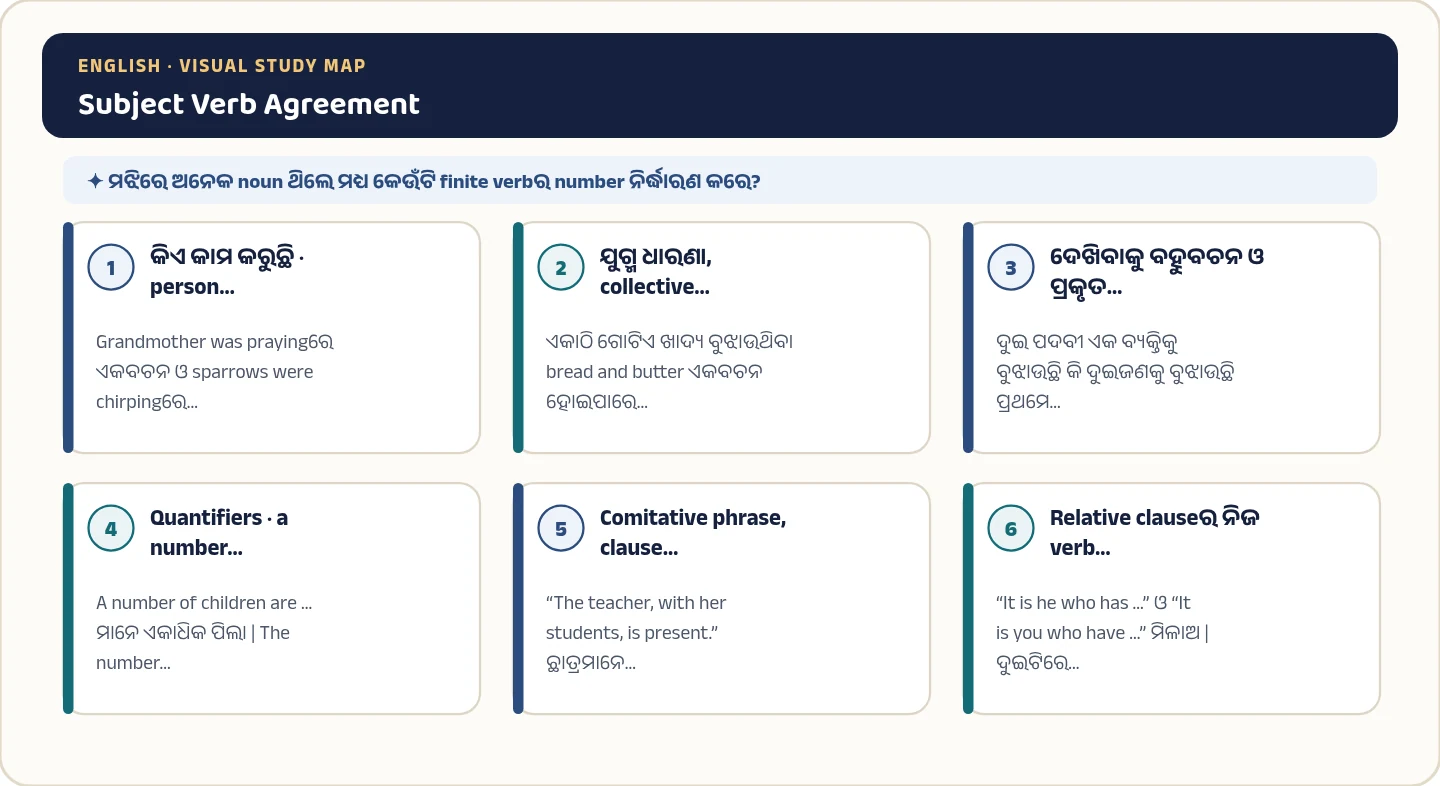
ଏହି ସଚିତ୍ର ଧାରଣା ମାନଚିତ୍ର (Visual Concept Map) ରେ “Subject Verb Agreement” ଅଧ୍ୟାୟର ମୁଖ୍ୟ ବିଷୟବସ୍ତୁ ଓ ନିୟମଗୁଡ଼ିକୁ ଏକାଠି ସହଜରେ ବୁଝିବା ପାଇଁ ସଜାଯାଇଛି।
There+V, either-or/neither-nor, along with, pair nouns, the+adjective, relative clauses & drills
ଏହି ସଚିତ୍ର ଧାରଣା ମାନଚିତ୍ର (Visual Concept Map) ରେ “Subject Verb Agreement” ଅଧ୍ୟାୟର ମୁଖ୍ୟ ବିଷୟବସ୍ତୁ ଓ ନିୟମଗୁଡ଼ିକୁ ଏକାଠି ସହଜରେ ବୁଝିବା ପାଇଁ ସଜାଯାଇଛି।
Grandmother was prayingରେ ଏକବଚନ ଓ sparrows were chirpingରେ ବହୁବଚନ subject ଯୋଗୁଁ finite auxiliary ବଦଳିଛି। There ସହ ଆରମ୍ଭ ହେଲେ ପ୍ରକୃତ subjectକୁ verb ପରେ ଖୋଜ।
କିନ୍ତୁ ସମୟ, ଦୂରତା ବା ପାଗ କହୁଥିବା It ପାଇଁ is/was। ଗୋଟିଏ ମୋଟ ପରିମାଣ ଭାବେ ବ୍ୟବହୃତ ଦୂରତା ବା ସମୟକୁ ଏକବଚନ ଧରାଯାଏ।
“The books on the table are mine.” Table verbର ପାଖରେ ଅଛି, କିନ୍ତୁ କ’ଣ ମୋର ବୋଲି ପଚାରିଲେ books ମିଳେ। “The table on which the books are placed is mine” ଲେଖିଲେ ଏବେ main clauseର subject table।
ଭିତର relative clauseର books ପାଇଁ are placed ଓ ବାହାର table ପାଇଁ is। ଏକ ବାକ୍ୟରେ ଦୁଇ finite verb ଥିଲେ ଦୁଇଟି ପାଇଁ ଅଲଗା subject ଖୋଜ।
There is room ଓ there are opportunitiesରେ there ଏକା ରହିଲେ ମଧ୍ୟ room/ opportunities ବଦଳିଲେ verb ବଦଳେ। It is rainingରେ ଆଉ କୌଣସି ପ୍ରକୃତ plural subject ପରେ ଖୋଜିବାର ଆବଶ୍ୟକତା ନାହିଁ।
ଏକାଠି ଗୋଟିଏ ଖାଦ୍ୟ ବୁଝାଉଥିବା bread and butter ଏକବଚନ ହୋଇପାରେ। ଦୁଇ ଭିନ୍ନ ବ୍ୟକ୍ତିକୁ andରେ ଯୋଡ଼ିଲେ ସାଧାରଣତଃ ବହୁବଚନ।
Committee ଏକ ସଂସ୍ଥା ଭାବେ was, ମତଭେଦରେ ଅଲଗା ସଦସ୍ୟଙ୍କୁ ଭାବିଲେ were। Police ଓ cattle ପାଠରେ ବହୁବଚନ, furniture ଓ stationery ଏକବଚନ।
Subject ଓ verb ମଧ୍ୟରେ ଏକ relative clause ଆସିପାରେ। The radio which you gave … ଗଠନରେ ମୁଖ୍ୟ verb radio ସହ ମେଳିବ।
Each of ବା one of ପରେ ବହୁବଚନ ଶବ୍ଦ ରହିଲେ ମଧ୍ୟ ମୁଖ୍ୟ କଥା ଏକଜଣ ବିଷୟରେ। No child ଓ no childrenରେ ପରବର୍ତ୍ତୀ noun ଅନୁଯାୟୀ verb ବଦଳେ।
ଦୁଇ ପଦବୀ ଏକ ବ୍ୟକ୍ତିକୁ ବୁଝାଉଛି କି ଦୁଇଜଣକୁ ବୁଝାଉଛି ପ୍ରଥମେ ଚିହ୍ନ। ଏକ subject ସହ ଅତିରିକ୍ତ ବିବରଣୀ ଯୋଡ଼ିଲେ ସେଥିରେ ଥିବା ନିକଟତମ noun କ୍ରିୟାକୁ ନିୟନ୍ତ୍ରଣ କରେ ନାହିଁ।
ଶବ୍ଦର ଶେଷର s ଦେଖିମାତ୍ରେ form ନ ବାଛି ସେ ଗୋଟିଏ ବିଷୟ, ବସ୍ତୁ ବା ପ୍ରକୃତରେ ଏକାଧିକ ଲୋକଙ୍କୁ ବୁଝାଉଛି କି ଦେଖ।
“One of the boys has come.” ପୁଅ ଅନେକ ହେଲେ ମଧ୍ୟ ଆସିଛି ଜଣେ। ପାଠର formal exerciseରେ either of, neither of ଓ none of ପରେ plural noun ଥାଇ ମଧ୍ୟ ସାଧାରଣତଃ singular verb ବାଛାଯାଇଛି।
କଥାବାର୍ତ୍ତାରେ କେତେକ plural ପ୍ରୟୋଗ ମଧ୍ୟ ମିଳେ ବୋଲି ପାଠ ଉଲ୍ଲେଖ କରିଛି। “Most of the water is gone” ଓ “Most of the children are here”ରେ କିନ୍ତୁ ମାପାଯାଉଥିବା nounଟି ନିର୍ଣ୍ଣାୟକ।
ପ୍ରଥମେ one/each ପରି ଗୋଟିଏ ସଦସ୍ୟ ଉଦ୍ଦିଷ୍ଟ କି, ନା ପରର nounର ପରିମାଣ ବା ଅଂଶ ଉଦ୍ଦିଷ୍ଟ ତାହା ପରଖ। ସମସ୍ତ of-phrase ପାଇଁ ଏକା ଯାନ୍ତ୍ରିକ ନିୟମ ହୁଏନାହିଁ।
A number of children are … ମାନେ ଏକାଧିକ ପିଲା। The number of children is … କହିଲେ ସଂଖ୍ୟାଟି ହିଁ ମୁଖ୍ୟ subject।
A lot of ପରେ ପ୍ରକୃତ noun ଦେଖ, ଯଥା people were ଓ money was। A herd of elephantsରେ ଦଳ ଏକକ ଭାବେ ଆସିପାରେ।
Mathematics ବା news ଶେଷରେ s ଥିଲେ ମଧ୍ୟ ପାଠରେ ଏକବଚନ।
Either … or, neither … nor ଓ not only … but also ବିଭିନ୍ନ numberର subjectକୁ ଯୋଡ଼ିଲେ ପାଠର ନିୟମାନୁସାରେ verbକୁ ନିକଟତମ subject ସହ ମେଳାଅ। Tagରେ ପ୍ରଥମ ବାକ୍ୟର auxiliary ଓ subject ପାଇଁ ଠିକ୍ pronoun ଦରକାର।
ଧନାତ୍ମକ I am ପରେ ସ୍ୱୀକୃତ ପ୍ରଶ୍ନରୂପ aren’t I?। ପ୍ରଥମେ ପୂରା ବିବୃତିଟିକୁ ପଢ଼ି ତା’ପରେ tag ଯୋଡ଼।
“The teacher, with her students, is present.” ଛାତ୍ରମାନେ ସାଥିରେ ଥିଲେ ମଧ୍ୟ with her students ମୁଖ୍ୟ subjectକୁ ଆଉ ଗୋଟିଏ ସମାନ subject କରେ ନାହିଁ। With, as well as ଓ together withର ଯୋଡ଼ା ଅଂଶକୁ କିଛି ସମୟ ପାଇଁ ହଟାଇଲେ ମୂଳ agreement ଦିଶେ।
କିନ୍ତୁ “Neither the teacher nor the students are ready”ରେ textbookର nearest-subject ନିୟମ ପାଇଁ students ମୁଖ୍ୟ। ସେମାନଙ୍କ କ୍ରମ ଓଲଟାଇଲେ singular teacher ନିକଟକୁ ଆସିବ।
“What he says is true”ରେ ଏକ clause ପୂରାଟା subject ଥିବାରୁ ଗୋଟିଏ ଉକ୍ତି ଭାବେ singular ନିଏ।
Scissors ବା spectaclesର ଦୁଇ ଅଂଶ ଥାଏ। “The scissors are here” କିନ୍ତୁ “A pair of scissors is here.” The rich ବା the poor ପରି adjective ଗୋଟିଏ ଶ୍ରେଣୀର ଲୋକଙ୍କୁ ଦର୍ଶାଇଲେ plural verb ନିଏ।
ଏହାର ବିପରୀତ, ନାମ ଦେଖିବାକୁ plural ଲାଗିଲେ ମଧ୍ୟ ଗୋଟିଏ ସଂସ୍ଥା ବା ଏକକ ବସ୍ତୁର proper name ହୋଇପାରେ। Tag କରିବାବେଳେ ପୁଣି subjectର ଅର୍ଥ ଦେଖ।
“Ours is a great nation, isn’t it?” ରେ oursର ଅର୍ଥ ଆମ ଦେଶ। ତେଣୁ tagରେ it, ଆମେ ସମସ୍ତେ ବୋଲି they ନୁହେଁ।
ଏହା ପ୍ରମାଣ କରେ pronoun ବାଛିବା ପୂର୍ବରୁ କେଉଁ ସତ୍ତାର କଥା ଚାଲିଛି ଜାଣିବା ଦରକାର।
“It is he who has …” ଓ “It is you who have …” ମିଳାଅ। ଦୁଇଟିରେ ପ୍ରଥମ it ପାଇଁ is, କିନ୍ତୁ ଦ୍ୱିତୀୟ verb ପାଇଁ who କାହାକୁ ସୂଚାଉଛି ଦେଖିବାକୁ ହେବ।
He ସହ has, you ସହ have। ଏହିପରି ଏକା ବାକ୍ୟରେ ଦୁଇଟି ଅଲଗା agreement ନିୟନ୍ତ୍ରଣ କରୁଛି।
ଅନ୍ୟ ଉଦାହରଣ, “The friend who helps the boys is here” ଓ “The friends who help the boy are here.” ଦ୍ୱିତୀୟ ବାକ୍ୟର boy ଏକବଚନ ହେଲେ ମଧ୍ୟ ସେ helpର object, ତେଣୁ କ୍ରିୟା boy ସହ ମେଳିବା କଥା ନାହିଁ।
ପରୀକ୍ଷାରେ ଏପରି ବାକ୍ୟ ଆସିଲେ ଆଗେ who-clauseର verb ସହ ଗୋଟିଏ ରେଖାରେ antecedentକୁ ଯୋଡ଼, ପରେ main verb ପାଇଁ ପୃଥକ ରେଖା କର।
ଏକ ବାକ୍ୟରେ କେତେକ ପିଲା କ’ଣ କରୁଛନ୍ତି ମୁଖ୍ୟ; ଅନ୍ୟଟିରେ ତାଲିକାର ସଂଖ୍ୟା ବଢ଼ୁଛି କି କମୁଛି ମୁଖ୍ୟ। Article ବଦଳ ସମଗ୍ର subjectର ଅର୍ଥ ଓ agreement ବଦଳାଏ।
| Subjectର ଗଠନ | Verb ବାଛିବାର କାରଣ |
|---|---|
| a number of + plural noun | ଅନେକ ସଦସ୍ୟଙ୍କ କଥା; plural verb। |
| the number of + plural noun | ଗୋଟିଏ ସଂଖ୍ୟାର କଥା; singular verb। |
ଅଫ୍ଲାଇନ୍ ଡାଉନଲୋଡ୍:HTML ପୃଷ୍ଠାJavaScript ତଥ୍ୟ
The number is / a number of students are। ଶେଷ noun ଦେଖି ତୁରନ୍ତ verb ବାଛିବେ ନାହିଁ।
english/learn-and-practice-grammar/source.pdf · ପୃଷ୍ଠା ୨୯–୩୬ଅଫ୍ଲାଇନ୍ ଡାଉନଲୋଡ୍:HTML ପୃଷ୍ଠାJavaScript ତଥ୍ୟ
ବାକ୍ୟର କର୍ତ୍ତା।
english/learn-and-practice-grammar/source.pdf · ପୃଷ୍ଠା ୨୯–୩୬ମୁଖ୍ୟ କ୍ରିୟାକୁ ସାହାଯ୍ୟ କରୁଥିବା କ୍ରିୟା।
english/learn-and-practice-grammar/source.pdf · ପୃଷ୍ଠା ୨୯–୩୬ଅଫ୍ଲାଇନ୍ ଡାଉନଲୋଡ୍:HTML ପୃଷ୍ଠାJavaScript ତଥ୍ୟ
ଆଦର୍ଶ ପ୍ରଶ୍ନପତ୍ର · ସେଟ୍ ୧, ଭାଗ ୧, ପ୍ରଶ୍ନ ୩୫ (୧ ନମ୍ବର)
C. has
ଏଠି କର୍ତ୍ତା number ଏକବଚନ।
ଆଦର୍ଶ ପ୍ରଶ୍ନପତ୍ର · ସେଟ୍ ୧, ଭାଗ ୧, ପ୍ରଶ୍ନ ୩୬ (୧ ନମ୍ବର)
D. are
ଏଠି a number of children ଅନେକ ପିଲାଙ୍କୁ ବୁଝାଏ।
ଆଦର୍ଶ ପ୍ରଶ୍ନପତ୍ର · ସେଟ୍ ୨, ଭାଗ ୧, ପ୍ରଶ୍ନ ୩୫ (୧ ନମ୍ବର)
A. are
ଭଗ୍ନାଂଶ ପରର apples ବହୁବଚନ।
ଆଦର୍ଶ ପ୍ରଶ୍ନପତ୍ର · ସେଟ୍ ୨, ଭାଗ ୧, ପ୍ରଶ୍ନ ୩୬ (୧ ନମ୍ବର)
D. has
ମୁଖ୍ୟ କର୍ତ୍ତା teacher ଏକବଚନ।
ଆଦର୍ଶ ପ୍ରଶ୍ନପତ୍ର · ସେଟ୍ ୩, ଭାଗ ୧, ପ୍ରଶ୍ନ ୩୫ (୧ ନମ୍ବର)
B. has
acid ପରିମାଣବାଚକ ଏକବଚନ।
ଆଦର୍ଶ ପ୍ରଶ୍ନପତ୍ର · ସେଟ୍ ୩, ଭାଗ ୧, ପ୍ରଶ୍ନ ୩୬ (୧ ନମ୍ବର)
A. is
news ଦେଖିବାକୁ -s ଥିଲେ ମଧ୍ୟ singular।
ଆଦର୍ଶ ପ୍ରଶ୍ନପତ୍ର · ସେଟ୍ ୪, ଭାଗ ୧, ପ୍ରଶ୍ନ ୩୫ (୧ ନମ୍ବର)
C. has
either ଏକବଚନ କର୍ତ୍ତା।
ଆଦର୍ଶ ପ୍ରଶ୍ନପତ୍ର · ସେଟ୍ ୪, ଭାଗ ୧, ପ୍ରଶ୍ନ ୩୬ (୧ ନମ୍ବର)
B. are
ଏଠି verb ପାଖର କର୍ତ୍ତା pupils ବହୁବଚନ।
ଆଦର୍ଶ ପ୍ରଶ୍ନପତ୍ର · ସେଟ୍ ୫, ଭାଗ ୧, ପ୍ରଶ୍ନ ୩୫ (୧ ନମ୍ବର)
D. is
ପାଠରେ groupକୁ ଏକ unit ଭାବେ singular verb ସହିତ ବ୍ୟବହାର କରାଯାଏ।
ଆଦର୍ଶ ପ୍ରଶ୍ନପତ୍ର · ସେଟ୍ ୫, ଭାଗ ୧, ପ୍ରଶ୍ନ ୩୬ (୧ ନମ୍ବର)
C. is
ପୂରା noun clause ଏକବଚନ କର୍ତ୍ତା।
ଅଫ୍ଲାଇନ୍ ଡାଉନଲୋଡ୍:HTML ପୃଷ୍ଠାJavaScript ତଥ୍ୟ
The head of the subject is teacher. The phrase with her pupils adds information and does not make a compound subject. Hence the singular verb agrees with teacher. with ପରର ବହୁବଚନ ଦେଖି verb ବାଛିବା ଭୁଲ।
ଅଫ୍ଲାଇନ୍ ଡାଉନଲୋଡ୍:HTML ପୃଷ୍ଠାJavaScript ତଥ୍ୟ
Grandmother is a singular third-person subject, so the finite verb is was in was praying. The sparrows is plural and takes were in were not chirping. The negative word not does not control agreement. ଉଭୟ ବାକ୍ୟ ଅତୀତ କାଳର।
ପକ୍ଷୀଙ୍କ ସଂଖ୍ୟା ଏକରୁ ଅଧିକ ଥିବାରୁ were ବସିଛି। ଜେଜେମା’ଙ୍କ ଦୁଇ କାମ praying ଓ telling ଥିଲେ ମଧ୍ୟ subject ଏକବଚନ।
ଉଭୟ ବାକ୍ୟରେ ଗଠନ past progressive। Praying/ଚାଲିଥିବା କାମର -ing ରୂପ number ବଦଳାଏନାହିଁ।
Subject singularରୁ plural ହେଲେ ବଦଳ ହୁଏ finite beରେ: was → were।
The jury has selected its chairman and the committee was unanimous treat the members as one group. The jury were divided and the committee were divided focus on members who held different views. ଦଳଟି ଏକକ ହେଲେ ଏକବଚନ କ୍ରିୟା ଓ ଭିନ୍ନ ମତ ଦେଉଥିବା ସଦସ୍ୟମାନେ ମୁଖ୍ୟ ହେଲେ ଏଠାରେ ବହୁବଚନ କ୍ରିୟା ଆସିଛି।
Unanimous ଅର୍ଥ ସମସ୍ତଙ୍କ ଏକ ମତ; divided ଅର୍ଥ ମତ ଅଲଗା। ଏହି ଦୁଇ ଶବ୍ଦରୁ committee ଓ juryକୁ unit ବା ପୃଥକ ସଦସ୍ୟ ଭାବେ ପଢ଼ିବାର ସୂତ୍ର ମିଳେ।
a are; b was; c is; d are; e is. There ନୁହେଁ, ପଛର opportunities ଓ room କ୍ରିୟାର ବଚନ ନିର୍ଣ୍ଣୟ କରେ। Two plus two ଗୋଟିଏ ହିସାବ; two twos ଦୁଇଟି ଦଳ।
ସମୁଦାୟ ଦୂରତାକୁ ଗୋଟିଏ ମାପ ବୋଲି ଧରାଯାଏ।
(a) Opportunities ଗଣନୀୟ plural; (b) room ଏଠି ଉନ୍ନତିର ଅବକାଶ, uncountable। (c) ଗୋଟିଏ ହିସାବ, (d) twos ବହୁବଚନ, (e) seventy kilometres ଏକ ମୋଟ ଦୂରତା।
ସବୁ ସଂଖ୍ୟା ପରେ ସମାନ verb ଆସେନାହିଁ।
f is; g has; h were; i are; j is. Fish and chips ଗୋଟିଏ ଖାଦ୍ୟ। Crowd ଏକାଠି ହୋଇଛି, କିନ୍ତୁ assemblyର ସଦସ୍ୟମାନଙ୍କ ମତ ଅଲଗା।
Police ସହ plural ଏବଂ clothing ସହ singular verb।
(f) ଖାଦ୍ୟ ତାଲିକାର ଏକ dish, (g) ଏକ ଭିଡ଼ ଜମିଲା, (h) ସଦସ୍ୟଙ୍କ ମତ ଭାଗ ହେଲା। (i) police ଏକାଧିକ ସଦସ୍ୟକୁ ସୂଚାଏ; (j) clothing ଏଠି ଏକ ଅଗଣନୀୟ ସମଷ୍ଟିନାମ।
(a) has, (b) is, (c) is, (d) is, (e) has. In (e) the one title expression denotes the same office-holder in the exercise.
ଓଡ଼ିଆ ବୁଝାମଣା — Either, neither ଓ one ଏଠାରେ ଏକବଚନ। ଦୁଇଟି ପଦବି ଏକ ଲୋକଙ୍କୁ ସୂଚାଇଲେ (e)ରେ ଏକବଚନ।
(a,b,c)ରେ boys/officers/friends ବହୁବଚନ ଦେଖାଗଲେ ବି either, neither, one ଏକ ସଦସ୍ୟକୁ ନିଏ। (d) honeyକୁ ଅଗଣନୀୟ ଅଂଶ ଭାବେ ଦେଖାଯାଇଛି।
(e) governor ଓ chancellor ଏକା ବ୍ୟକ୍ତିର ଦୁଇ ପଦବି।
(f) was, (g) was, (h) is, (i) has, (j) is. Crop, money, regiment, number and mumps each take a singular verb here.
ଓଡ଼ିଆ ବୁଝାମଣା — ଭାଗ ପାଇଁ ପର ନାମପଦ, a regiment ପାଇଁ ପୂରା ଦଳ, the number ପାଇଁ ସଂଖ୍ୟା ହିଁ କର୍ତ୍ତା।
(f) cropର ଅଂଶ ଓ (g) moneyର ପରିମାଣ ପ୍ରତ୍ୟେକ ଏକ ସମୁଦାୟ। (h) volunteers ଅପେକ୍ଷା regimentକୁ ଧର।
(i) ‘the number’ ଏକ ସଂଖ୍ୟା। (j) mumps ଏକ ରୋଗର ନାମ।
a does; b likes; c was; d was; e live. What he says ଗୋଟିଏ clause। As well as ପରେ ଆଉ ନାମ ଥିଲେ ମଧ୍ୟ ମୁଖ୍ୟ କର୍ତ୍ତା Ram।
A pair ଗୋଟିଏ ଯୋଡ଼ା; the rich ଏକ ଶ୍ରେଣୀର ଲୋକ।
(a) ପୂରା what-clause ଏକ subject, (b) as well as phrase ବାଦ୍ ଦେଲେ Ram ରହିଯାଏ। (c) nor ପାଖ subject jasmine singular।
(d) spectaclesକୁ a pair କହିବାରୁ ଏକ। (e) the rich ଅର୍ଥ rich people, ତେଣୁ live।
f was; g is; h are; i aren’t I?; j have. ପୁସ୍ତକର ନାମଟି ଗୋଟିଏ କୃତି ଓ six weeks ଏଠି ଗୋଟିଏ ଅବକାଶ। Trousers ବହୁବଚନ।
(i)ରେ ଛପା ବିକଳ୍ପର aren’t ପରେ tag ସମ୍ପୂର୍ଣ୍ଣ କରିବାକୁ I ଦରକାର। (j)ର who ପୂର୍ବର youକୁ ସୂଚାଏ।
(f) ଶୀର୍ଷକର Tales ଦେଖି plural କରନାହିଁ, ଏକ ବହି। (g) ଏକ ଅବକାଶ ଭାବେ six weeks।
(h) trousers ନିଜେ plural। (i) standard negative tag “aren’t I?”।
(j) whoର antecedent you, ତେଣୁ have।
a are; b is, isn’t it?; c have; d were; e are, when the youth means young people collectively. ଲୋକସମୂହ ବୁଝାଉଥିବା youth ଓ ଗୋଟିଏ ଯୁବକ ବୁଝାଉଥିବା youth ଭିନ୍ନ।
(a) There ପରେ people; (b) ଗୋଟିଏ nation ତେଣୁ tag it। (c,d) police ଓ cattle ସାଧାରଣତଃ plural verb ନିଅନ୍ତି।
(e) ଏଠି youthକୁ ଯୁବଗୋଷ୍ଠୀ ଭାବେ ବୁଝିଲେ are।
f was; g travels; h is; i cause; j is. His uncle ଥିବାରୁ (f)ରେ ଜଣେ ଯୁବକ। News ଓ mumpsର ଶେଷରେ s ଥିଲେ ମଧ୍ୟ singular।
Bacteria ବହୁବଚନ ଓ a pair ଏକବଚନ।
(f) His uncle କହିଛି ଯେ ଜଣେ ଯୁବକର କଥା। (g,h) news ଓ mumps ଶେଷରେ s ସତ୍ତ୍ୱେ ଏକବଚନ।
(i) bacteria plural, ସେଥିପାଇଁ cause। (j) spectacles ପୂର୍ବର a pair ଗଣନାକୁ ଏକ କରେ।
ଅଫ୍ଲାଇନ୍ ଡାଉନଲୋଡ୍:HTML ପୃଷ୍ଠାJavaScript ତଥ୍ୟ