Visual Concept Map · Types of Sentences
ଏହି ସଚିତ୍ର ଧାରଣା ମାନଚିତ୍ର (Visual Concept Map) ରେ “Types of Sentences” ଅଧ୍ୟାୟର ମୁଖ୍ୟ ବିଷୟବସ୍ତୁ ଓ ନିୟମଗୁଡ଼ିକୁ ଏକାଠି ସହଜରେ ବୁଝିବା ପାଇଁ ସଜାଯାଇଛି।
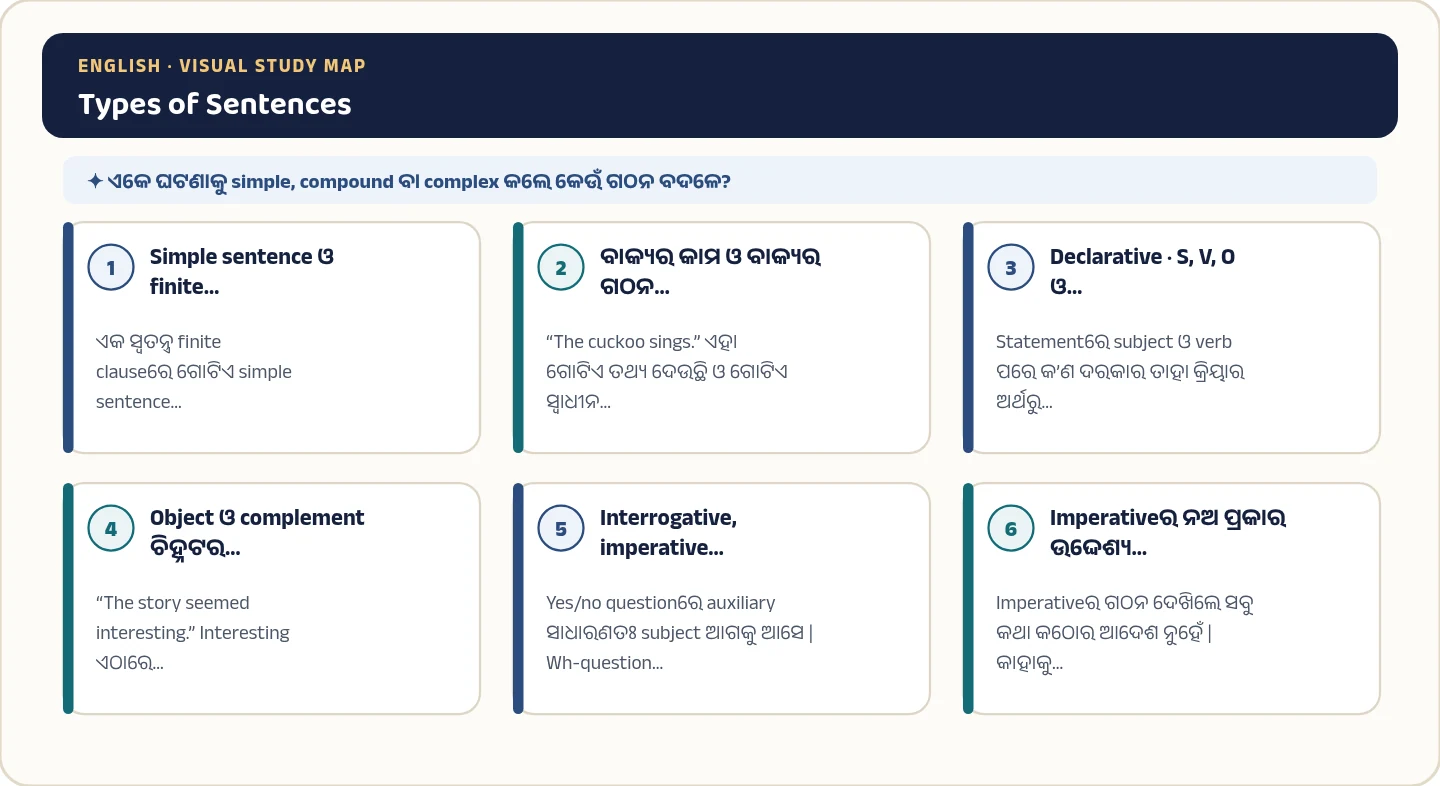
Finite-verb counting, coordinating (FANBOYS) vs subordinating conjunctions & transformations
ଏହି ସଚିତ୍ର ଧାରଣା ମାନଚିତ୍ର (Visual Concept Map) ରେ “Types of Sentences” ଅଧ୍ୟାୟର ମୁଖ୍ୟ ବିଷୟବସ୍ତୁ ଓ ନିୟମଗୁଡ଼ିକୁ ଏକାଠି ସହଜରେ ବୁଝିବା ପାଇଁ ସଜାଯାଇଛି।
ଏକ ସ୍ୱତନ୍ତ୍ର finite clauseରେ ଗୋଟିଏ simple sentence ହୋଇପାରେ। Has been teachingରେ ତିନିଟି ରୂପ ଦେଖାଗଲେ ମଧ୍ୟ tense ବହନ କରୁଛି ପ୍ରଥମ auxiliary has।
ବାକ୍ୟ ଶ୍ରେଣୀ ନିର୍ଣ୍ଣୟ କରିବାବେଳେ ପ୍ରତ୍ୟେକ -ing କୁ ଅଲଗା finite clause ବୋଲି ଗଣିବାରୁ ବଞ୍ଚ।
“The cuckoo sings.” ଏହା ଗୋଟିଏ ତଥ୍ୟ ଦେଉଛି ଓ ଗୋଟିଏ ସ୍ୱାଧୀନ clause ଥିବାରୁ simple declarative। “Is the cuckoo singing?” ଗୋଟିଏ ପ୍ରଶ୍ନ, ତଥାପି ଏକା clause ଥିବାରୁ simple interrogative।
“Listen to the bird”ରେ subject ଛାପା ହୋଇ ନଥିଲେ ମଧ୍ୟ ଯାହାକୁ କୁହାଯାଉଛି ସେହି youକୁ ବୁଝିହୁଏ। “How beautifully it sings!” ରେ ବିସ୍ମୟ, କିନ୍ତୁ ପ୍ରଶ୍ନ ଭଳି subject ଓ verb ଓଲଟି ନାହାନ୍ତି।
ଏହି ଚାରି ବାକ୍ୟରେ ପକ୍ଷୀର କଥାଟି ପ୍ରାୟ ସମାନ ରଖାଯାଇଛି। ପରିବର୍ତ୍ତନ ହେଉଛି ଶ୍ରୋତାଙ୍କଠାରୁ କ’ଣ ଆଶା କରାଯାଉଛି—ସୂଚନା ଗ୍ରହଣ, ଉତ୍ତର, କାମ ବା ଅନୁଭବର ଭାଗୀଦାରି।
Statementରେ subject ଓ verb ପରେ କ’ଣ ଦରକାର ତାହା କ୍ରିୟାର ଅର୍ଥରୁ ନିର୍ଣ୍ଣୟ ହୁଏ। SVରେ ଅତିରିକ୍ତ object ଦରକାର ନାହିଁ।
SVOରେ କାମ ଏକ objectକୁ ପହଞ୍ଚେ। SVCରେ complement subjectକୁ ବର୍ଣ୍ଣନା କରେ।
ଦୁଇ object ଥିଲେ କିଏ କ’ଣ ପାଇଲା ଦେଖ। SVOCରେ ଶେଷ ଅଂଶ object ବିଷୟରେ କିଛି କହେ, ଯଥା him deadରେ dead ତା’ର ଅବସ୍ଥା।
“The story seemed interesting.” Interesting ଏଠାରେ ଆଉ ଗୋଟିଏ ବସ୍ତୁର ନାମ ନୁହେଁ। ଏହା story କିଭଳି ଲାଗିଲା ଜଣାଏ, ତେଣୁ subject complement।
“They elected him president.” Him କାହାକୁ ବାଛିଲେ ତାହା କହେ। President ସେହି himର ନୂଆ ଭୂମିକା କହେ, ତେଣୁ object complement।
ତୁଳନା କର “She gave him a book.” Him ଓ a book ଏଠାରେ ଏକ ଲୋକ ବା ବସ୍ତୁର ଦୁଇ ବର୍ଣ୍ଣନା ନୁହନ୍ତି। ଜଣେ ଗ୍ରହୀତା, ଅନ୍ୟଟି ତାଙ୍କୁ ଦିଆଯାଉଥିବା ବସ୍ତୁ।
ତେଣୁ ଏହା ଦୁଇ objectର pattern। ଉଭୟ ବାକ୍ୟରେ verb ପରେ ଦୁଇ ଅଂଶ ଦିଶିଲେ ମଧ୍ୟ ସେମାନଙ୍କ ଅର୍ଥଗତ ସମ୍ପର୍କ ଅଲଗା।
Yes/no questionରେ auxiliary ସାଧାରଣତଃ subject ଆଗକୁ ଆସେ। Wh-question ସୂଚନା ମାଗେ।
Who ନିଜେ subject ହେଲେ ପୁଣି ଏକ subject ଯୋଡ଼ା ହୁଏ ନାହିଁ। Imperativeରେ ବୁଝାଯାଉଥିବା you ଛାଡ଼ି base verbରୁ ନିର୍ଦ୍ଦେଶ ଦେଇହୁଏ।
Exclamationରେ What + noun phrase ବା How + adjective/adverb ଦ୍ୱାରା ବିସ୍ମୟର ଭାବ ଆସେ।
Imperativeର ଗଠନ ଦେଖିଲେ ସବୁ କଥା କଠୋର ଆଦେଶ ନୁହେଁ। କାହାକୁ ବଡ଼ଙ୍କୁ ସମ୍ମାନ ଦେବା କହିଲେ advice, ଆଉ ଏକ କପ୍ ଚା’ ନେବାକୁ please ସହ କହିଲେ polite request।
ସୈନିକଙ୍କୁ ଚାଲିବାକୁ କହିଲେ command, let’s ବାକ୍ୟ suggestion, ଦୟା ଚାହିଁଲେ prayer। ବିପଦ ସୂଚାଇଲେ warning, ଉତ୍ତରଖାତା କିପରି ଲେଖିବା କହିଲେ instruction, କବାଟ ବନ୍ଦ କରିବାକୁ କହିଲେ order, ଭଲ ଯାତ୍ରା କାମନା କଲେ wish।
ପରର exclamationରେ ମଧ୍ୟ ରୂପ ବଦଳିପାରେ। “What a fine singer she is!”ରେ singer ମୁଖ୍ୟ noun।
“How well she sings!”ରେ well ଗାଇବାର ଢଙ୍ଗକୁ କହେ। ପ୍ରଥମେ ପ୍ରଶଂସାର ବିଷୟ ବ୍ୟକ୍ତି ନା କାର୍ଯ୍ୟର ଗୁଣ ତାହା ଚିହ୍ନିଲେ what/how ବାଛିବା ସହଜ।
ଦୁଇଟି ସ୍ୱାଧୀନ କଥା and, but ବା or ଦ୍ୱାରା ଯୋଡ଼ିହୁଏ। And ଯୋଗ, but ବିରୋଧ ଓ or ବିକଳ୍ପ ସୂଚାଏ।
ସେହି subject ଦ୍ୱିତୀୟ clauseରେ ବୁଝାଯାଇପାରେ। Either … or, neither … nor, both … and ପ୍ରୟୋଗରେ ଯୋଡ଼ାର ଦୁଇ ପାର୍ଶ୍ୱରେ ସମପ୍ରକାରର ଶବ୍ଦ ବା ଗଠନ ରଖ।
ଦୁଇ ବିବୃତି ଭିତରୁ କେଉଁଟି କାରଣ ଓ କେଉଁଟି ଫଳ ଚିହ୍ନ। “He practised, so he improved.” ଦୁଇ ଅଂଶ ଓଲଟାଇ “He improved, for he practised” କଲେ ଦ୍ୱିତୀୟ ଅଂଶ ବ୍ୟାଖ୍ୟା ଦିଏ।
“He practised, yet he did not succeed”ରେ ଆଶା ଓ ପ୍ରକୃତ ଫଳର ବିରୋଧ। Otherwise ଆଗକୁ ଥିବା କାମ ନ କଲେ କ’ଣ ହେବ ଦର୍ଶାଏ।
Correlative ଦୁଇଟି ଶବ୍ଦର ଯୋଡ଼ା। “Both energy and patience are needed”ରେ ଦୁଇ nounକୁ ଓ “She both draws and paints”ରେ ଦୁଇ verbକୁ ଯୋଡ଼ାଯାଇଛି।
ଦୁଇ ସ୍ଥାନରେ ଏକ ପ୍ରକାର ଅଂଶ ନ ରଖିଲେ ଯୁକ୍ତିଟି ବେଢ଼ଙ୍ଗ ଶୁଣାଯାଏ।
Main clause ନିଜେ ମୂଳ କଥା କହିପାରେ। Subordinate clause ସମୟ, ସର୍ତ୍ତ, ଅବଜେକ୍ଟ ବା ଏକ ନାମ ସମ୍ବନ୍ଧରେ ସୂଚନା ଯୋଡ଼େ।
He would go if you asked himରେ he would go ମୁଖ୍ୟ କଥା ଓ if ଅଂଶ ସର୍ତ୍ତ। ବର୍ଗୀକରଣରେ ପ୍ରଥମେ finite verb, ପରେ conjunction ଓ ଶେଷରେ clauseଗୁଡ଼ିକର ପରସ୍ପର ସମ୍ପର୍କ ଚିହ୍ନ।
“Tell me the place of your birth.” ଏଠାରେ of your birth ମଧ୍ୟରେ finite verb ନାହିଁ। “Tell me where you were born” ଗଠନରେ where ପରେ you ଓ were ଆସି ଏକ ଅଲଗା clause ତିଆରି ହେଲା।
ମୂଳ ଅନୁରୋଧ ରହିଲେ ମଧ୍ୟ ବାକ୍ୟ ଏବେ complex। କେତେ conjunction ଅଛି ସେତିକି ଗଣିଲେ ପର୍ଯ୍ୟାପ୍ତ ନୁହେଁ।
He can sing and actରେ କ୍ରିୟାଦ୍ୱୟ ଏକା auxiliaryକୁ ବାଣ୍ଟିପାରେ। ଅନ୍ୟ ବାକ୍ୟରେ and ପରେ ସ୍ୱାଧୀନ ବିବୃତି ଥାଇପାରେ।
ପାଠର ଅଭ୍ୟାସରେ ଦ୍ୱିତୀୟ ଅଂଶର ଅନୁକ୍ତ subject ବା auxiliary ପୁନସ୍ଥାପନ କରି ବାକ୍ୟର ଦୁଇ ଭାଗ ପରୀକ୍ଷା କର।
ଦୁଇ ବାକ୍ୟରେ ଘରେ ପହଞ୍ଚିବା ଓ ବିଶ୍ରାମ ସମାନ କାମ। ପହଞ୍ଚିବା ବିଷୟର ଅଂଶଟି ନିଜ tense ଓ subject ପାଇଲେ ପ୍ରଥମ phrase ଓ ଦ୍ୱିତୀୟ clause ମଧ୍ୟର ମୂଳ ତଫାତ ଦିଶେ।
| ଚିହ୍ନ | ଗଠନର ପରିଣାମ |
|---|---|
| on reaching home | Non-finite phrase; ନିଜର finite clause ହୁଏନାହିଁ। |
| when she reached home | ନିଜ subject ଓ finite verb ଅଛି; when ଏହାକୁ dependent କରେ। |
ଅଫ୍ଲାଇନ୍ ଡାଉନଲୋଡ୍:HTML ପୃଷ୍ଠାJavaScript ତଥ୍ୟ
ଗଠନ ପାଇଁ clause ଗଣନ୍ତୁ; ଉଦ୍ଦେଶ୍ୟ ପାଇଁ ବକ୍ତା କ’ଣ କରୁଛନ୍ତି ଦେଖନ୍ତୁ।
english/learn-and-practice-grammar/source.pdf · ପୃଷ୍ଠା ୧୯–୨୮ଅଫ୍ଲାଇନ୍ ଡାଉନଲୋଡ୍:HTML ପୃଷ୍ଠାJavaScript ତଥ୍ୟ
କର୍ତ୍ତା ବିଷୟରେ ଯାହା କୁହାଯାଏ।
english/learn-and-practice-grammar/source.pdf · ପୃଷ୍ଠା ୧୯–୨୮ସମମର୍ଯ୍ୟାଦାର clause ଯୋଡ଼ୁଥିବା and ବା or ପରି ଶବ୍ଦ।
english/learn-and-practice-grammar/source.pdf · ପୃଷ୍ଠା ୧୯–୨୮ଅଫ୍ଲାଇନ୍ ଡାଉନଲୋଡ୍:HTML ପୃଷ୍ଠାJavaScript ତଥ୍ୟ
ଆଦର୍ଶ ପ୍ରଶ୍ନପତ୍ର · ସେଟ୍ ୧, ଭାଗ ୧, ପ୍ରଶ୍ନ ୩୩ (୧ ନମ୍ବର)
B. Imperative
କୌଣସି କାମ କରିବାକୁ ନିର୍ଦ୍ଦେଶ imperativeର କାମ।
ଆଦର୍ଶ ପ୍ରଶ୍ନପତ୍ର · ସେଟ୍ ୧, ଭାଗ ୧, ପ୍ରଶ୍ନ ୩୪ (୧ ନମ୍ବର)
C. has
ପ୍ରଥମ ସହାୟକ କ୍ରିୟା has ଏଠି tense ଓ agreement ଦର୍ଶାଏ।
ଆଦର୍ଶ ପ୍ରଶ୍ନପତ୍ର · ସେଟ୍ ୨, ଭାଗ ୧, ପ୍ରଶ୍ନ ୩୩ (୧ ନମ୍ବର)
C. Declarative
ଏହା ଘଟଣା ସମ୍ପର୍କରେ ଏକ ବିବରଣୀ।
ଆଦର୍ଶ ପ୍ରଶ୍ନପତ୍ର · ସେଟ୍ ୨, ଭାଗ ୧, ପ୍ରଶ୍ନ ୩୪ (୧ ନମ୍ବର)
B. Indirect object
କାହାକୁ ଦେଲେ—ପ୍ରାପ୍ତକର୍ତ୍ତାକୁ ଦର୍ଶାଏ।
ଆଦର୍ଶ ପ୍ରଶ୍ନପତ୍ର · ସେଟ୍ ୩, ଭାଗ ୧, ପ୍ରଶ୍ନ ୩୩ (୧ ନମ୍ବର)
D. How fine the weather is!
ଆବେଗ ସହ ଗୁଣ ଦର୍ଶାଇଛି।
ଆଦର୍ଶ ପ୍ରଶ୍ନପତ୍ର · ସେଟ୍ ୩, ଭାଗ ୧, ପ୍ରଶ୍ନ ୩୪ (୧ ନମ୍ବର)
C. or
ଅଲଗା ବିକଳ୍ପକୁ or ସମମର୍ଯ୍ୟାଦାରେ ଯୋଡ଼େ।
ଆଦର୍ଶ ପ୍ରଶ୍ନପତ୍ର · ସେଟ୍ ୪, ଭାଗ ୧, ପ୍ରଶ୍ନ ୩୩ (୧ ନମ୍ବର)
A. SV
subject ଓ intransitive verb ଅଛି, object ନାହିଁ।
ଆଦର୍ଶ ପ୍ରଶ୍ନପତ୍ର · ସେଟ୍ ୪, ଭାଗ ୧, ପ୍ରଶ୍ନ ୩୪ (୧ ନମ୍ବର)
D. complex
ଅଧୀନ clause ଥିବା ଗଠନ complex।
ଆଦର୍ଶ ପ୍ରଶ୍ନପତ୍ର · ସେଟ୍ ୫, ଭାଗ ୧, ପ୍ରଶ୍ନ ୩୩ (୧ ନମ୍ବର)
B. Turn to the next page.
ଉହ୍ୟ subject you ସହିତ ନିର୍ଦ୍ଦେଶ।
ଆଦର୍ଶ ପ୍ରଶ୍ନପତ୍ର · ସେଟ୍ ୫, ଭାଗ ୧, ପ୍ରଶ୍ନ ୩୪ (୧ ନମ୍ବର)
A. sweet
sweet ଫୁଲର ଗୁଣ ବର୍ଣ୍ଣନା କରେ।
ଅଫ୍ଲାଇନ୍ ଡାଉନଲୋଡ୍:HTML ପୃଷ୍ଠାJavaScript ତଥ୍ୟ
A statement and a question may each contain one independent clause. The former conveys information; the latter asks for it. Clause structure and the speaker’s purpose must therefore be examined separately. ଗଠନ ଓ ଉଦ୍ଦେଶ୍ୟ ଦୁଇଟି ଅଲଗା ପରୀକ୍ଷା।
ଅଫ୍ଲାଇନ୍ ଡାଉନଲୋଡ୍:HTML ପୃଷ୍ଠାJavaScript ତଥ୍ୟ
(i) has, (ii) shall, (iii) have, (iv) has, (v) works, (vi) must.
ଓଡ଼ିଆ ବୁଝାମଣା — ଏକାଧିକ କ୍ରିୟା ଥିଲେ ପ୍ରଥମ auxiliaryରେ କାଳ ରହେ।
Has/have, shall ଓ must ଥିବା verb groupରେ ପ୍ରଥମ auxiliary ବା modal finite। Worksରେ ଅଲଗା auxiliary ନଥିବାରୁ works ନିଜେ tense ଓ agreement ବହନ କରେ।
ତେଣୁ ପ୍ରତି -ing formକୁ finite କହିବା ଭୁଲ୍।
(i) declarative, (ii) imperative, (iii) interrogative, (iv) exclamatory, (v) imperative, (vi) interrogative, (vii) imperative, (viii) interrogative.
ଓଡ଼ିଆ ବୁଝାମଣା — ବାକ୍ୟର କାମ ଓ ଗଠନ ଉଭୟ ଦେଖ। ସାବଧାନ କରାଇବା ମଧ୍ୟ imperative ହୋଇପାରେ।
ଯେଉଁଠି ତଥ୍ୟ କୁହାଯାଏ declarative; ଉତ୍ତର ମାଗିଲେ interrogative; ନିର୍ଦ୍ଦେଶ ବା ଅନୁରୋଧ ହେଲେ imperative। ଆଶ୍ଚର୍ଯ୍ୟରେ What/How ଆରମ୍ଭ ହେଲେ ମଧ୍ୟ ଉତ୍ତର ମାଗୁନଥିଲେ exclamatory।
(i) How fine the weather is! (ii) What an intelligent girl she is!
(iii) How fluently he speaks! (iv) What a sharp memory she has!
(v) What a beautiful night it is! (vi) What a costly necklace she has put on!
ଓଡ଼ିଆ ବୁଝାମଣା — How ପରେ adjective ବା adverb, What ପରେ noun phrase ଆସେ।
How fine …ରେ adjective ଓ how fluently …ରେ adverb। What an intelligent girl … ଏବଂ what a sharp memory …ରେ noun phrase ଅଛି।
ଶେଷର subject + verb କ୍ରମକୁ ସାଧାରଣ ପ୍ରଶ୍ନ କରି ଓଲଟାଅନାହିଁ।
Make; concentrate; avoid; take; get; hope. Don’t ପରେ getର ମୂଳ ରୂପ ଆସେ।
ଓଡ଼ିଆ ବୁଝାମଣା — ସବୁ ଖାଲି ସ୍ଥାନରେ ନିର୍ଦ୍ଦେଶ ଦେଉଥିବା base form ଦରକାର।
ଏହା ପରୀକ୍ଷାର୍ଥୀଙ୍କୁ ସିଧା ନିର୍ଦ୍ଦେଶ। “Make …”, “concentrate …”, “avoid …”ରେ ଲୁଚିଥିବା subject you।
“Don't get …”ରେ ନିଷେଧ ଯୋଡ଼ିଲେ ମଧ୍ୟ getରେ -s ବା -ing ଆସେନାହିଁ।
i. He finished his exercises and put away his books. ii. He must not be late, or he will be punished. iii. Make haste, otherwise you will be late. iv. He is rich, yet he is not contented. v. He was horrified, for he saw a bloodstain on the floor. କ୍ରମ ପାଇଁ and, ଅନ୍ୟଥା ପରିଣାମ ପାଇଁ or/otherwise, ବିପରୀତ ଆଶା ପାଇଁ yet ଓ କାରଣ ପାଇଁ for।
କାମ ପରେ କାମ ପାଇଁ and। “Do this, or …”ରେ କାମ ନ କଲେ ପରର ଫଳ।
Otherwise ମଧ୍ୟ ସେହି ବିକଳ୍ପ ଫଳ ସୂଚାଏ। ସମସ୍ତ ପ୍ରଶ୍ନରେ ସୁବିଧା ପାଇଁ and ବସାଇଲେ ସତର୍କତାର ଅର୍ଥ ହରାଏ।
vi. He tried hard, but he did not succeed. vii. They took every precaution, yet they suffered from the disease. viii. I have a lot of work, so I must do it now. ix. Be good and you will be happy. x. He practised daily, so he became an expert player. ଯେଉଁଠି ଦ୍ୱିତୀୟ କଥା ପ୍ରଥମର ଫଳ, ସେଠି so ଅର୍ଥକୁ ସ୍ପଷ୍ଟ କରେ।
Tried hard ସହ did not succeed ଆଶାର ବିପରୀତ; precaution ପରେ illness ମଧ୍ୟ ସେପରି। ତେଣୁ but/yet।
କୌଣସି କାମ ଫଳରେ ପରର କାମ ହେଲେ so ରଖି cause ଆଗରେ ଅଛି କି ଦେଖ।
i. Both energy and patience are necessary for success in life. ii. I have left my glasses either on the bus or at the office. iii. He can speak neither English nor Hindi. iv. The boy is not only very healthy but also very happy. ଦୁଇ ପଟରେ ସମାନ ପ୍ରକାରର ଅଂଶ ରଖ।
(ii)ରେ ଦୁଇ ସ୍ଥାନସୂଚକ phrase, (iv)ରେ ଦୁଇ ଗୁଣ।
Both … and ଦୁଇ ଗୁଣକୁ ଏକାଠି ଆବଶ୍ୟକ କରେ, ତେଣୁ are। Either … or ଦୁଇ ସମ୍ଭାବ୍ୟ ସ୍ଥାନରୁ ଗୋଟିଏ।
On the bus ଓ at the office ପରି ସମାନ କାମର ଦୁଇ phraseକୁ ଯୋଡ଼।
v. He drinks neither tea nor coffee. vi. She not only draws pictures neatly but also paints them beautifully. vii. The artists will both sing and dance for us. Neither ନିଜେ negative ଅର୍ଥ ଦେଉଥିବାରୁ (v)ରେ doesn’t ଦରକାର ନାହିଁ।
Neither tea nor coffee ଉଭୟ ପାନୀୟକୁ ବାଦ୍ ଦିଏ। Not only draws … but also paints … ଦୁଇଟି ସକାରାତ୍ମକ କାମ ଯୋଡ଼େ।
Pairର ଦ୍ୱିତୀୟ ଶବ୍ଦ ଛାଡ଼ିଲେ କେଉଁ ସମ୍ପର୍କ ତାହା ଅଧା ରହିଯାଏ।
i. MC He would go / SC if you asked him. ii. MC You should not disbelieve [something] / SC what he says. iii. MC He found the watch / SC that he had lost. iv. MC he rose to greatness / SC Though he was born of poor parents. ଚଉକ ବନ୍ଧନୀଟି clauseର ସ୍ଥାନ ଦର୍ଶାଏ; ସେହି ଶବ୍ଦ ମୂଳ ବାକ୍ୟରେ ନାହିଁ।
If you asked him ସର୍ତ୍ତ ଜଣାଏ, ତେଣୁ he would go ମୁଖ୍ୟ କଥା। What he saysକୁ something ଦେଇ ବଦଳାଇହୁଏ, ତେଣୁ ତାହା disbelieveର objectର ସ୍ଥାନ ନେଇଛି।
v. MC We thought [something] / SC that he was a hermit. vi. MC A dog seldom bites / SC that barks. vii. MC The place has recently been discovered / SC where Buddha was buried. viii. MC It always pours / SC when it rains. ମଝିର relative clauseକୁ ଅଲଗା କଲେ ମୂଳ କର୍ତ୍ତା ଓ କ୍ରିୟା ସ୍ପଷ୍ଟ ହୁଏ।
“We thought …” ପରେ ଚିନ୍ତାର ବିଷୟ ପଡ଼େ; ସମଗ୍ର that-clause object। “A dog … seldom bites”ରେ ମଝିର relative clause କେଉଁ dog ତାହା ଚିହ୍ନାଏ।
ମୁଖ୍ୟ ଅଂଶ ଦୁଇ ପାଶେ ଥିବାରୁ ତାକୁ ପୁଣି ଯୋଡ଼।
i X; ii D; iii X; iv X; v X; vi S; vii X; viii X (there is a dependent time clause and two linked actions in the main part); ix S; x D. ପୁସ୍ତକର ପୃ. ୨୪ର ପଦ୍ଧତିରେ ସମାନ କର୍ତ୍ତା ଛାଡ଼ି ଦୁଇ କାର୍ଯ୍ୟ ଯୋଡ଼ାଗଲେ ମଧ୍ୟ (ii), (x)କୁ coordinate ଭାବେ ଧରାଯାଇଛି।
ଏକ finite main clause ସହ non-finite phrase ମଧ୍ୟ S ହୋଇପାରେ। ପରସ୍ପର ସ୍ୱାଧୀନ ଦୁଇ ମୁଖ୍ୟ clause D।
ଗୋଟିଏ ନିର୍ଭରଶୀଳ clause ଥିଲେ X; ତେଣୁ viiiର main partରେ ଦୁଇ କାମ ଥାଇ ମଧ୍ୟ X ହୁଏ।
ଅଫ୍ଲାଇନ୍ ଡାଉନଲୋଡ୍:HTML ପୃଷ୍ଠାJavaScript ତଥ୍ୟ