Visual Concept Map · Tense Revisited
ଏହି ସଚିତ୍ର ଧାରଣା ମାନଚିତ୍ର (Visual Concept Map) ରେ “Tense Revisited” ଅଧ୍ୟାୟର ମୁଖ୍ୟ ବିଷୟବସ୍ତୁ ଓ ନିୟମଗୁଡ଼ିକୁ ଏକାଠି ସହଜରେ ବୁଝିବା ପାଇଁ ସଜାଯାଇଛି।
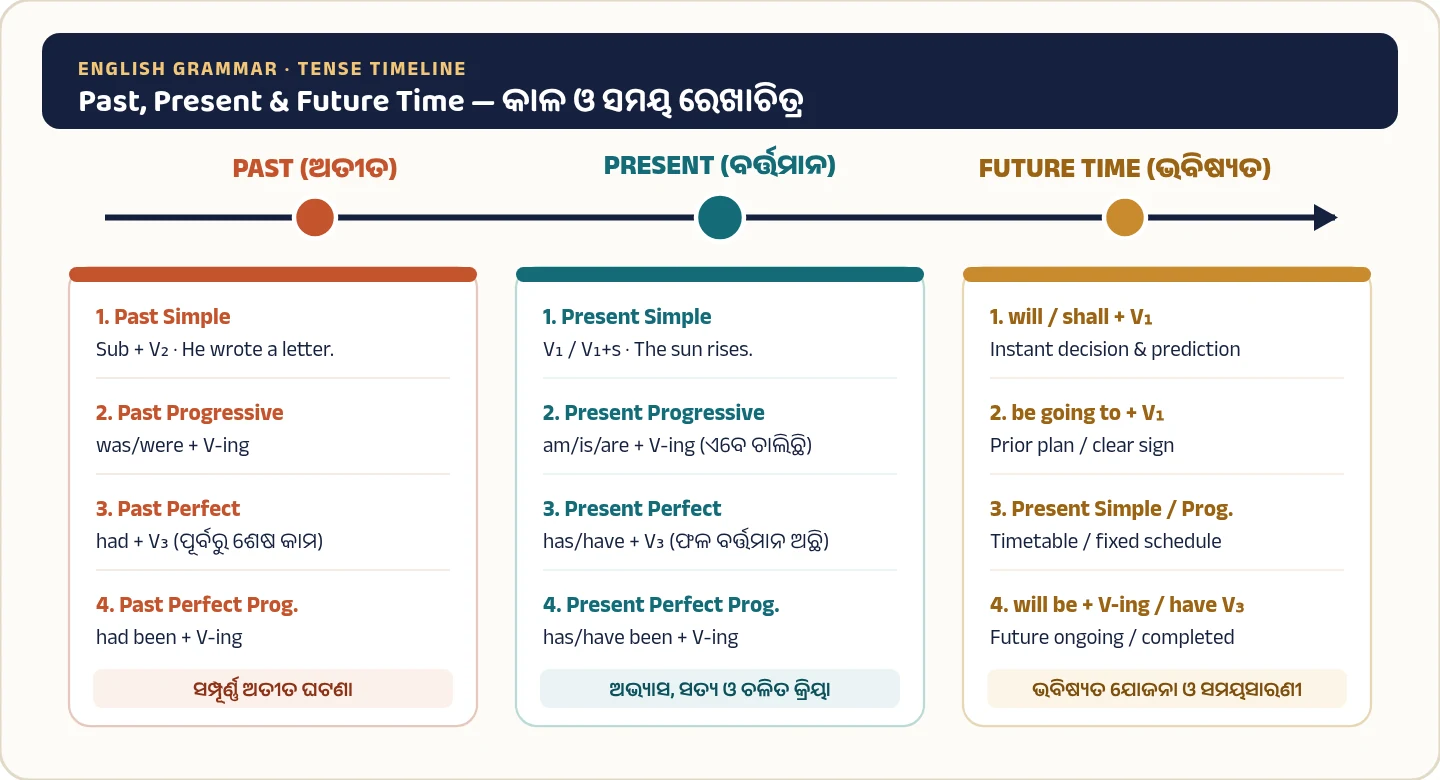
Present Simple/Progressive/Perfect, Past Simple/Progressive/Perfect & Odia tense contrast
ଏହି ସଚିତ୍ର ଧାରଣା ମାନଚିତ୍ର (Visual Concept Map) ରେ “Tense Revisited” ଅଧ୍ୟାୟର ମୁଖ୍ୟ ବିଷୟବସ୍ତୁ ଓ ନିୟମଗୁଡ଼ିକୁ ଏକାଠି ସହଜରେ ବୁଝିବା ପାଇଁ ସଜାଯାଇଛି।
Time ଘଟଣା କେବେ ଘଟେ ତାହା କହେ, tense ଚିହ୍ନିବାକୁ ବାକ୍ୟର verb group ଦେଖିବାକୁ ପଡ଼େ। Present simple ଅଭ୍ୟାସ, ସାଧାରଣ ସତ୍ୟ ଓ ଅପେକ୍ଷାକୃତ ସ୍ଥିର ଅବସ୍ଥା ଦର୍ଶାଏ।
He wants to be an engineerରେ wants ଇଚ୍ଛାର ଅବସ୍ଥା ଜଣାଏ। ସେ ଏବେ କ’ଣ କରୁଛି ପଚାରିଲେ be + -ing ବ୍ୟବହାର ହୁଏ।
ନମୁନା ଦୁଇଟି ପଢ଼। “She learns a new step every week. She is learning a difficult step today.” ପ୍ରଥମ ବାକ୍ୟର every week ଏକ ନିୟମିତତା ଦେଖାଏ।
ଦ୍ୱିତୀୟରେ ଆଜି ଚାଲିଥିବା କାମଟିକୁ ନେଇ କଥା ହେଉଛି। ପ୍ରଥମକୁ ପ୍ରଶ୍ନ କଲେ Does she learn …?
Doesରେ ଏକବଚନର ଚିହ୍ନ ଆସିଯାଇଥିବାରୁ ପରେ learns ବସେ ନାହିଁ। ଦ୍ୱିତୀୟରେ Is she learning …?
ପ୍ରଶ୍ନର ଅଂଶ ବନାଇବାକୁ ଆଗରୁ ଥିବା isକୁ ଆଗକୁ ଆଣିହୁଏ। I like dancingରେ dancing ଦେଖି ସମଗ୍ର ବାକ୍ୟ progressive କୁହନି।
ମୁଖ୍ୟ finite verb like। ପାଠର dance school ସଂଳାପରେ କଥକଙ୍କ ପସନ୍ଦ ଓ ଏହି ସମୟରେ ସେ କରୁଥିବା କାମକୁ ଏହି ପରୀକ୍ଷାରେ ଅଲଗା କର।
ପାଠର ଆରମ୍ଭରେ ବିଶେଷ ଭେଦଟି ହେଉଛି English verbର ଦୁଇଟି defined tense ଅଛି, present ଓ past। ତେବେ ଆମେ future timeର କଥା ମଧ୍ୟ କହୁ।
ଏହା ସମ୍ଭବ କାରଣ tense form, auxiliary, time expression ଓ ପରିସ୍ଥିତି ମିଶି ଅର୍ଥ ଦିଅନ୍ତି। “She is studying science this year”ରେ ପୂରା ବର୍ଷର ଅସ୍ଥାୟୀ ପାଠ୍ୟକ୍ରମ ବୁଝାଯାଏ।
ସେ କଥା କହୁଥିବା ପ୍ରତ୍ୟେକ ମୁହୂର୍ତ୍ତରେ ବହି ଧରିଛି ବୋଲି ନୁହେଁ। “She studies science” ପାଠ୍ୟବିଷୟର ସାଧାରଣ ପରିଚୟ ହୋଇପାରେ।
ଆଉ “The class begins tomorrow”ରେ begins present ରୂପ ହେଲେ ମଧ୍ୟ tomorrow ଭବିଷ୍ୟତର ସମୟ ସ୍ଥିର କରୁଛି। ତେଣୁ ‘which tense form?’ ଓ ‘what time?’ ପାଠର ସଂଳାପରେ ଦୁଇ ଭିନ୍ନ ପ୍ରଶ୍ନ।
She lives with her aunt ସ୍ଥିର ବ୍ୟବସ୍ଥା ବୁଝାଇପାରେ। She is staying with her aunt ଏହି ସମୟର ଅସ୍ଥାୟୀ ବାସକୁ ଆଗକୁ ଆଣେ।
ବର୍ତ୍ତମାନ progressiveରେ subject ଅନୁସାରେ am/is/are ବାଛି ପରେ -ing ଯୋଡ଼। ଚିତ୍ର ବା ଝରକାରୁ ଦେଖାଯାଉଥିବା ଦୃଶ୍ୟ କହିବାରେ ଚାଲୁ କାମ ଓ ସାଧାରଣ ଅଭ୍ୟାସ ଅଲଗା କର।
Present perfectରେ has/have + past participle ଆସେ। ଫଳ ଏବେ ଦିଶିଲେ ଏହି ରୂପ ପ୍ରୟୋଜନୀୟ।
Present perfect progressiveରେ has/have been + -ing ଆଗରୁ ଆରମ୍ଭ କାମର ଅବଧି ବା ପରିଶ୍ରମର ଚିହ୍ନ ଉପରେ ଜୋର ଦିଏ। ଛାତ ମରାମତି ସରିଛି କି ମରାମତିରେ ସମୟ କଟିଛି—ଏହି ଅର୍ଥଭେଦରୁ ରୂପ ବାଛ।
ଘଟଣା ଦେଖି ଏବେ ପହଞ୍ଚିଥିବା ଲୋକ ପଚାରିପାରେ “What has happened?” ତାଙ୍କ ଆଗରେ ଅଛି ବର୍ତ୍ତମାନର ଫଳ। ସେ ପୁରୁଣା ନିର୍ଦ୍ଦିଷ୍ଟ ସମୟ ଜାଣିବାକୁ ଚାହିଁଲେ “When did it happen?” ତା’ପରେ କଥକ ପୃଷ୍ଠଭୂମିକୁ was/were + -ingରେ ଦେଖାଇପାରେ।
ସେହି ମୁହୂର୍ତ୍ତ ପୂର୍ବରୁ ସହାୟତା ମଗା ହୋଇଥିଲା ବୋଲି ଜଣାଇଲେ had already called ପୂର୍ବ ଘଟଣାକୁ ଚିହ୍ନାଏ। ଏଠାରେ କଥାବାର୍ତ୍ତା ଚାଲିଥିବା ସମୟ, ଦୁର୍ଘଟଣାର ସମୟ ଓ ତା’ ପୂର୍ବର ସମୟ ତିନୋଟି ବିନ୍ଦୁ।
ଏଗୁଡ଼ିକୁ ସଜାଇବା ପରେ ରୂପ ବାଛିଲେ କେବଳ already ବା when ଶବ୍ଦ ଦେଖି ଭୁଲ୍ ରୂପ ବାଛିବା କମେ।
Past simple ନିର୍ଦ୍ଦିଷ୍ଟ ପୂର୍ବ ସମୟର ସମ୍ପନ୍ନ କାମ କହେ। Past progressive ଅନ୍ୟ ଘଟଣା ସମୟରେ ଚାଲୁଥିବା ପୃଷ୍ଠଭୂମି କହେ।
ଦୁଇଟି ଅତୀତ ଘଟଣାରେ ପୂର୍ବରୁ ସରିଥିବା କାମକୁ had + past participle ଦେଇ ଚିହ୍ନାଇହୁଏ। ସେହି ଅତୀତ ସୀମାରୁ ଆଗର ଅବଧିକୁ ଗୁରୁତ୍ୱ ଦେଲେ had been + -ing।
“Have you broken the window?” ରେ ଜଣେ ଲୋକ ଭଙ୍ଗା ଝରକା ଦେଖି ଏକ ଫଳର କାରଣ ପଚାରୁଛନ୍ତି। ଏକମାତ୍ର ଆଘାତରେ କାମଟି ସରିଥିଲେ “have been breaking” ଅନାବଶ୍ୟକ ଭାବେ କାମ ଚାଲି ରହିବାର ଭାବ ଦିଏ।
ଅନ୍ୟପଟେ ବଗିଚାରେ ଦୀର୍ଘ ସମୟ କାମ କରିଥିବା ଲୋକ କ୍ଳାନ୍ତ ଦିଶିଲେ “Have you been working in the garden?” ପ୍ରାସଙ୍ଗିକ। ଉଭୟ କାମର ଫଳ ଏବେ ଦିଶୁଛି, କିନ୍ତୁ ଭଙ୍ଗା ଝରକା ଏକ ସମ୍ପନ୍ନ ଘଟଣାକୁ ଓ କ୍ଳାନ୍ତି ଏକ ସମୟ ଧରି ଚାଲିଥିବା ଚେଷ୍ଟାକୁ ପ୍ରାଧାନ୍ୟ ଦିଏ।
ଅତୀତର ଆଉ ଏକ ମୁହୂର୍ତ୍ତରୁ ପଛକୁ ଚାହିଁଲେ ସମାନ ଭେଦ had worked ଓ had been workingରେ ଦେଖିହୁଏ।
କଥାବାର୍ତ୍ତା ସମୟରେ ନିଆ ନିଷ୍ପତ୍ତି ବା ସାହାଯ୍ୟର ପ୍ରସ୍ତାବ ପାଇଁ will, ଆଗର ଉଦ୍ଦେଶ୍ୟ ବା ବର୍ତ୍ତମାନ ସଙ୍କେତରୁ ଭବିଷ୍ୟତ ଫଳ ପାଇଁ be going to ବ୍ୟବହୃତ ହୁଏ। ପକ୍କା personal arrangement ପାଇଁ present progressive, ନିର୍ଦ୍ଧାରିତ ସମୟସୂଚୀ ପାଇଁ present simple।
ଏକା କାମ କହୁଥିଲେ ମଧ୍ୟ କଥକ କେବେ ଓ କାହିଁକି ତାହା ନିଷ୍ପତ୍ତି ନେଲେ ପ୍ରଥମେ ଭାବ। Be about to ଅତି ଶୀଘ୍ର ଘଟିବାକୁ ଥିବା କାମ, will be + -ing ଭବିଷ୍ୟତ ମୁହୂର୍ତ୍ତରେ ଚାଲୁଥିବା କାମ, will have + past participle ସେତେବେଳକୁ ସରିଥିବା କାମ ଦର୍ଶାଏ।
ପାଠର ସାଙ୍ଗମାନଙ୍କ ପରି weekend ନେଇ କଥା ହେଉଛ। “The train leaves at six. I am meeting my uncle at the station.” ପ୍ରଥମ କାମଟି ତୁମ ମନ ପରିବର୍ତ୍ତନରେ ବଦଳେ ନାହିଁ, ତାହା ନିର୍ଦ୍ଧାରିତ ସମୟସୂଚୀ।
ଦ୍ୱିତୀୟଟି ତୁମ personal arrangement। ହଠାତ୍ ଜଣେ ସାହାଯ୍ୟ ଚାହିଁଲେ “I’ll help” ଏବେ ନିଆ ନିଷ୍ପତ୍ତି।
“By the time he arrives, I’ll have finished my work” ରେ ଭବିଷ୍ୟତର ଆଉ ଏକ ଘଟଣାକୁ ସୀମା କରି କାମ ସରିବା କଥା ଅଛି। ଲକ୍ଷ୍ୟ କର, by the timeର clauseରେ arrives ଥିଲେ ମଧ୍ୟ ତାହା ଭବିଷ୍ୟତକୁ ଦର୍ଶାଉଛି।
ଭବିଷ୍ୟତ ସମୟ ଅର୍ଥ ପ୍ରତି clauseରେ will ଯୋଡ଼ିବା ନୁହେଁ।
ଷ୍ଟେସନରେ ଦୁଇ କାମ ପାଇଁ ଦୁଇଟି ସମୟଚିହ୍ନ ରଖ। କଥକ ପ୍ରଥମେ ନିଜ ପହଞ୍ଚିବା କହି ପରେ ଆଗରୁ ଚାଲିଯାଇଥିବା ଟ୍ରେନ୍ ବିଷୟରେ କହିପାରନ୍ତି।
| ଘଟଣାର ସ୍ଥିତି | Verb form |
|---|---|
| ପହଞ୍ଚିବା ପୂର୍ବରୁ ଟ୍ରେନ୍ ଛାଡ଼ି ସାରିଥିଲା | had left |
| କଥକ ପରେ ପହଞ୍ଚିଲେ | reached |
ଅଫ୍ଲାଇନ୍ ଡାଉନଲୋଡ୍:HTML ପୃଷ୍ଠାJavaScript ତଥ୍ୟ
କାମଟି ଅଭ୍ୟାସ, ଚାଲୁଛି, ଶେଷ ହୋଇଛି କି ପୂର୍ବରୁ ବ୍ୟବସ୍ଥା ହୋଇଛି—ପ୍ରଥମେ ତାହା ନିର୍ଣ୍ଣୟ କରନ୍ତୁ।
english/learn-and-practice-grammar/source.pdf · ପୃଷ୍ଠା ୭–୧୮ଅଫ୍ଲାଇନ୍ ଡାଉନଲୋଡ୍:HTML ପୃଷ୍ଠାJavaScript ତଥ୍ୟ
ନିୟମିତ ଘଟୁଥିବା।
english/learn-and-practice-grammar/source.pdf · ପୃଷ୍ଠା ୭–୧୮ପୂର୍ବରୁ ସ୍ଥିର ହୋଇଥିବା ବ୍ୟବସ୍ଥା।
english/learn-and-practice-grammar/source.pdf · ପୃଷ୍ଠା ୭–୧୮ଅଫ୍ଲାଇନ୍ ଡାଉନଲୋଡ୍:HTML ପୃଷ୍ଠାJavaScript ତଥ୍ୟ
ଆଦର୍ଶ ପ୍ରଶ୍ନପତ୍ର · ସେଟ୍ ୧, ଭାଗ ୧, ପ୍ରଶ୍ନ ୩୧ (୧ ନମ୍ବର)
A. sets out
ନିୟମିତ କାମ ଓ she ସହିତ present simpleର sets out ଆସେ।
ଆଦର୍ଶ ପ୍ରଶ୍ନପତ୍ର · ସେଟ୍ ୧, ଭାଗ ୧, ପ୍ରଶ୍ନ ୩୨ (୧ ନମ୍ବର)
B. The train’s departure
had left ପୂର୍ବରୁ ସମାପ୍ତ ଘଟଣାକୁ ବୁଝାଏ।
ଆଦର୍ଶ ପ୍ରଶ୍ନପତ୍ର · ସେଟ୍ ୨, ଭାଗ ୧, ପ୍ରଶ୍ନ ୩୧ (୧ ନମ୍ବର)
A. had left
ଅତୀତର ଆଉ ଏକ ଘଟଣା ଆଗରୁ ଟ୍ରେନ୍ ଛାଡ଼ିଥିଲା।
ଆଦର୍ଶ ପ୍ରଶ୍ନପତ୍ର · ସେଟ୍ ୨, ଭାଗ ୧, ପ୍ରଶ୍ନ ୩୨ (୧ ନମ୍ବର)
D. begins
ନିର୍ଦ୍ଧାରିତ ସମୟସୂଚୀରେ present simple ଆସେ।
ଆଦର୍ଶ ପ୍ରଶ୍ନପତ୍ର · ସେଟ୍ ୩, ଭାଗ ୧, ପ୍ରଶ୍ନ ୩୧ (୧ ନମ୍ବର)
B. is learning
ଏବେ ଚାଲୁଥିବା କାମ ପାଇଁ present progressive।
ଆଦର୍ଶ ପ୍ରଶ୍ନପତ୍ର · ସେଟ୍ ୩, ଭାଗ ୧, ପ୍ରଶ୍ନ ୩୨ (୧ ନମ୍ବର)
A. is going to
ଏବେର ଚିହ୍ନ ଆଧାରରେ ଭବିଷ୍ୟତ ଅନୁମାନ।
ଆଦର୍ଶ ପ୍ରଶ୍ନପତ୍ର · ସେଟ୍ ୪, ଭାଗ ୧, ପ୍ରଶ୍ନ ୩୧ (୧ ନମ୍ବର)
C. have finished
ଶେଷ କାମର ଫଳ ଏବେ ଅଛି।
ଆଦର୍ଶ ପ୍ରଶ୍ନପତ୍ର · ସେଟ୍ ୪, ଭାଗ ୧, ପ୍ରଶ୍ନ ୩୨ (୧ ନମ୍ବର)
B. had been driving
ଅତୀତ ଘଟଣା ପୂର୍ବରୁ କିଛି ସମୟ ଧରି ଚାଲୁଥିବା କାମ।
ଆଦର୍ଶ ପ୍ରଶ୍ନପତ୍ର · ସେଟ୍ ୫, ଭାଗ ୧, ପ୍ରଶ୍ନ ୩୧ (୧ ନମ୍ବର)
D. checks
every morning ନିୟମିତ କାମର ସଙ୍କେତ।
ଆଦର୍ଶ ପ୍ରଶ୍ନପତ୍ର · ସେଟ୍ ୫, ଭାଗ ୧, ପ୍ରଶ୍ନ ୩୨ (୧ ନମ୍ବର)
C. I was studying when she called.
was studying ଅତୀତରେ ଚାଲୁଥିବା କାମ।
ଅଫ୍ଲାଇନ୍ ଡାଉନଲୋଡ୍:HTML ପୃଷ୍ଠାJavaScript ତଥ୍ୟ
A scheduled match can begin at a stated hour tomorrow; a visitor can be arriving tomorrow by prior arrangement. The timetable permits present simple and the arrangement permits present progressive. ସମୟର ସୂଚନା ଓ କାମର ପ୍ରକୃତି ମିଶାଇ ରୂପ ବାଛନ୍ତୁ।
ଅଫ୍ଲାଇନ୍ ଡାଉନଲୋଡ୍:HTML ପୃଷ୍ଠାJavaScript ତଥ୍ୟ
Is doing, is studying and is preparing are present progressive forms for activity under way over a period. Wants and think are present simple forms expressing a state or opinion. ସବୁ କ୍ରିୟା ବର୍ତ୍ତମାନ ସହ ଜଡ଼ିତ ହେଲେ ମଧ୍ୟ ସବୁଥିରେ -ing ରୂପ ଦରକାର ନାହିଁ।
What is he doing? ପ୍ରଶ୍ନର ସମୟସୀମା ଏବେର ପଢ଼ା ବା ପ୍ରସ୍ତୁତି।
Wants ଲୋକଟିର ଇଚ୍ଛା କହେ। ଦୁହେଁ ବର୍ତ୍ତମାନ ସମ୍ପର୍କିତ, ତଥାପି ଇଚ୍ଛା ଏଠି ଚାଲିଥିବା କାମ ଭଳି is wanting ହୋଇନାହିଁ।
gets up; brushes; has; takes; does not want; sets out; sits; has. He ସହିତ present simpleରେ -s ବା -es ହୁଏ, କିନ୍ତୁ does not ପରେ want ମୂଳ ରୂପରେ ରହେ।
ଓଡ଼ିଆ ବୁଝାମଣା — ଦୈନିକ ଅଭ୍ୟାସ ଓ ସ୍ଥାୟୀ ଲକ୍ଷଣ ସହ third-person singular -s/-es ଦରକାର। The name is for a classmate to guess; the paragraph itself does not identify a particular person. ସେହିପାଇଁ ନାମର ଗୋଟିଏ ନିର୍ଦ୍ଦିଷ୍ଟ ଉତ୍ତର ନାହିଁ।
Gets upରୁ ଦିନ ଆରମ୍ଭ, brushes ଓ has ପରେ ପର କାମ। Does not wantରେ ତୃତୀୟ ପୁରୁଷର ଚିହ୍ନ does ବହନ କରେ।
ସେଥିପାଇଁ ଦ୍ୱିତୀୟ verb wants କଲେ ଦୁଇଥର ଚିହ୍ନ ଲାଗିଯିବ।
I live near a house. I guard the gate and run to meet my family. I bark when strangers arrive. Answer: a dog. ନିୟମିତ ଅଭ୍ୟାସ ବୁଝାଇବାକୁ present simple। ତୁମ ସାଙ୍ଗ ଅନୁମାନ କରିବା ପୂର୍ବରୁ ପ୍ରାଣୀର ନାମ କୁହନାହିଁ।
Riddleରେ “I bark when strangers arrive” ନିୟମିତ ପ୍ରତିକ୍ରିୟା ଥିବାରୁ simple present। “I am barking now” କହିଲେ ଏବେର ଗୋଟିଏ କାମ ହେବ ଓ ପଶୁଟି ଚିହ୍ନିବାର ସ୍ଥାୟୀ ସୂତ୍ର କମିବ।
A: Water freezes at 0°C under ordinary conditions. Bhubaneswar is the capital of Odisha. The earth goes round the sun. Viswanathan Anand plays chess. The Prime Minister of India lives in New Delhi. B: Oil floats on water. A rose is a flower. Sachin Tendulkar is known for playing cricket. Vande Mataram is our National Song. Washington, D.C., is the capital of the USA. ସାଧାରଣ ତଥ୍ୟକୁ present simpleରେ ଠିକ୍ କର।
ଖେଳାଳିଙ୍କୁ ତାଙ୍କ ଖେଳ ସହ ଚିହ୍ନାଇବା ଏଠାରେ ଲକ୍ଷ୍ୟ।
ସ୍ଥାୟୀ ପରିଚୟ ପାଇଁ is, ସାଧାରଣ କ୍ରିୟା ପାଇଁ freezes/goes। ଭୁଲ୍ ତଥ୍ୟକୁ ଏକଥର ଖଣ୍ଡନ କରି ପରେ ସଠିକ୍ ସକାରାତ୍ମକ ବାକ୍ୟ ଦେଲେ ସାଥୀ ତଫାତ ଶୁଣିପାରେ।
4. 1–b (permanent fact), 2–f (temporary), 3–a (general truth), 4–e (gradual change), 5–c (habit), 6–d (happening now). 5. Model only: A tree stands beside the gate. Two birds are sitting in it. A student is walking past. ତୁମ ଝରକାରୁ ଯାହା ଦିଶୁଛି ସେହି ଅନୁସାରେ ନିଜ ତିନିଟି ବାକ୍ୟ ଲେଖ।
Temporary କାମ ଆଜିକାଲି ପୁଣିପୁଣି ହେଲେ ମଧ୍ୟ progressive ହୋଇପାରେ; ସବୁଦିନର habit simple। Window observationରେ “Someone is walking past” ଏବେ ଚକ୍ଷୁରେ ଦେଖାଯାଉଥିବା କାମ ବୋଲି ସୂତ୍ର ଦିଏ।
are you doing; am learning; am working; offers; Do you like; prefer; am also learning; are they teaching; are giving; taste; want. ଚାଲୁଥିବା କାମ ପାଇଁ progressive; ପସନ୍ଦ, ସ୍ୱାଦ ବା ସାଧାରଣ ତଥ୍ୟ ପାଇଁ simple।
ଓଡ଼ିଆ ବୁଝାମଣା — ଏବେ କି କରୁଛ ଓ ସ୍କୁଲ ସାଧାରଣତଃ କି ଶିଖାଏ ଭିନ୍ନ ପ୍ରଶ୍ନ।
Learning, working, teaching ଏବେର ପାଠକ୍ରମର କାମ। Offers ସଂସ୍ଥାର ସାଧାରଣ ବ୍ୟବସ୍ଥା, like/prefer ନିଜ ପସନ୍ଦ।
Taste କୌଣସି ଖାଦ୍ୟର ଗୁଣ କହିଲେ simple, ଚାଖୁଥିବା ଚାଲୁ କାମ ସହ ମିଶାଅନାହିଁ।
Was, went, did … spend and spent use past simple to describe a finished time. Have you ever been uses present perfect for experience up to now. Finished time ଓ ଏପର୍ଯ୍ୟନ୍ତର ଅନୁଭବକୁ ଅଲଗା କର।
Ever ସହ ପ୍ରଶ୍ନ ଜୀବନର କୌଣସି ସମୟର ଅନୁଭବ। ସାଥୀ ନିର୍ଦ୍ଦିଷ୍ଟ ଭ୍ରମଣ ବିଷୟରେ କହିବା ଆରମ୍ଭ କଲେ “Where did you go?” ଭଳି past simpleକୁ ବଦଳ ହୁଏ।
has happened; has been; happened; ran; tried; hit; did it happen; Has anyone called; have arrived; have had. ନିର୍ଦ୍ଦିଷ୍ଟ ସମୟର ଘଟଣା past simple, ବର୍ତ୍ତମାନ ସହିତ ସମ୍ପର୍କ ଥିଲେ present perfect।
ଓଡ଼ିଆ ବୁଝାମଣା — ପ୍ରଥମେ ଦିଶୁଥିବା ଫଳ ପାଇଁ present perfect, ଘଟଣାକ୍ରମ ବର୍ଣ୍ଣନା ପାଇଁ past simple।
“What has happened?” ଏବେ ଦେଖାଦେଉଥିବା ଫଳ ବିଷୟରେ। Ran, tried, hit ଘଟଣାକ୍ରମ।
Has anyone called …? ଏବେ ସୁଦ୍ଧା ଖବର ପହଞ୍ଚିଛି କି।
ପ୍ରତ୍ୟେକ ବକ୍ତା ଯେଉଁ ସମୟ ଆଡ଼କୁ ଦେଖୁଛନ୍ତି ସେହି ଅନୁସାରେ tense ଆସେ।
1. Mrs Das has been working hard. 2. Mr Das has not been feeling well all day. 3. Ashok has been watching TV all evening. 4. Bini has been buying clothes. 5. It has been raining since the evening. ଏଠି ଅବସ୍ଥାର ପଛରେ କିଛି ସମୟ ଧରି ଚାଲିଥିବା କାମ ପାଇଁ has been + -ing।
Has been working, has been watching ଇତ୍ୟାଦି ବର୍ତ୍ତମାନର ଚିହ୍ନକୁ ପୂର୍ବରୁ ଚାଲୁଥିବା କାମରେ ବୁଝାଏ। All day/evening ଅବଧିକୁ ଉଲ୍ଲେଖ କରେ।
Negativeରେ notକୁ has ପରେ ରଖ।
1 I have finished my class work. 2 Have you been working in the garden? 3 Have you broken the window?
4 You have been crying. 5 We have repaired the roof. ୧, ୩ ଓ ୫ରେ ଫଳ ବା ସମାପ୍ତ ଘଟଣା। ୨ ଓ ୪ରେ ଚାଲିଥିବା କାମର ଚିହ୍ନ ଏବେ ଦିଶୁଛି।
Finished work ଓ broken windowରେ ସମାପ୍ତ ଫଳ ଆଗରେ। Working in the garden ବା cryingରେ କ’ଣ କରୁଥିଲେ ତାହାର ଦୃଶ୍ୟମାନ ଚିହ୍ନ ମୂଳ।
କେବଳ ‘ଏବେ ଫଳ ଅଛି’ କହି ଦୁଇ formକୁ ଏକ କରନାହିଁ।
Did you see; have just come; has been; did not come; has seen; has sent. Last night ସହ past simple; by now, just ଓ for the last three days ବର୍ତ୍ତମାନ ସହ ସମ୍ପର୍କ ରଖିଥାଏ।
Last night ସରିଯାଇଥିବା ଏକ ସମୟ, ସେଥିପାଇଁ did … see। Just come ଫେରିବା ଓ ବର୍ତ୍ତମାନ କଥା କହିବାର ସମୀପତା ଦେଖାଏ।
Has sentରେ ଏବେ ଯାଏ ଘଟିଥିବା ପଦକ୍ଷେପର ଖବର।
1. As soon as the alarm clock rang, I woke up. 2. After I had cleaned my teeth, I took a bath. 3. When I had got dressed, I had breakfast. 4. When I had brushed my teeth again, I looked at my watch. 5. When I looked at my watch, I realised I was late. 6. When I arrived at school, I remembered it was Sunday. କ୍ରମ ଅସ୍ପଷ୍ଟ ହେଲେ ଆଗ କାମ ପାଇଁ had + participle ରଖ।
ତତ୍କ୍ଷଣାତ୍ ଘଟଣାକ୍ରମରେ past simple ମଧ୍ୟ ଯଥେଷ୍ଟ।
ପ୍ରତ୍ୟେକ ଯୋଡ଼ାରେ ଛୋଟ timeline କର। Alarm ବାଜିବା ଓ ଉଠିବା ପ୍ରାୟ ଲଗାଲଗି ହେତୁ as soon as।
ସ୍ନାନ ଆଗରୁ ଦାନ୍ତ ଘଷା ସରିଥିବାକୁ had cleanedରେ ଚିହ୍ନ ଦିଆଯାଏ।
After I had finished the work, I went home. When she had packed her bag, she left. By the time I reached school, the rain had stopped. As soon as he had read the letter, he replied. After we had cleaned the room, we rested. ଦୁଇ ସାଙ୍ଗ ଭିନ୍ନ ଅଂଶ ଲେଖି ଅର୍ଥ ମେଳୁଥିବା ଯୋଡ଼ି ବାଛିବେ।
By the time ସହ ଏକ ପର ମୁହୂର୍ତ୍ତ ଧରିଲେ ସେଥି ପୂର୍ବରୁ ସରିଯାଇଥିବା କାମକୁ past perfect କର। ନମୁନା: “By the time I reached school, the rain had stopped.” ଏଠି ପ୍ରଥମେ ବର୍ଷା ଛାଡ଼ିଲା ପରେ ମୁଁ ପହଞ୍ଚିଲି।
7. was reading, heard, came, saw, were running, were shouting, had, asked, pointed, saw, was burning, were throwing, came. 8. was walking, saw, noticed, had, was wearing, was carrying, was just crossing, did not avoid, was, was going across, followed. In 8, link the fourth answer to the person: I noticed a person who was the same height as me and had the same hairstyle. ଏକ ଦୃଶ୍ୟରେ ଚାଲିଥିବା କାମ ଓ ତାହାକୁ ଦେଖିବା ବା ଶୁଣିବାର କ୍ଷଣକୁ ଭିନ୍ନ କର।
Was reading ପରି ଚାଲୁ କାମ ପୃଷ୍ଠଭୂମି। Heard, came, saw ଘଟଣାକୁ ଆଗକୁ ନିଅନ୍ତି।
Were throwingରେ ବହୁବଚନ ଲୋକଙ୍କ ଚାଲୁ ଚେଷ୍ଟା ଦେଖାଯାଏ। ଦ୍ୱିତୀୟ କାହାଣୀରେ ମଧ୍ୟ ଦେଖା ହେବା ଓ ତା’ ପୂର୍ବର ଘଟଣାକୁ ପୃଥକ ଚିହ୍ନ।
had finished, had become, had won, had become, had you been playing, had been playing, had beaten, had been winning. ପ୍ରଥମ ଚାରିଟିରେ ଏକ ମୁହୂର୍ତ୍ତରେ ଫଳ ଜଣାପଡ଼ିଛି। ଛଅ ବର୍ଷର ଅଭ୍ୟାସ ଓ ନିୟମିତ ଜିତିବାକୁ progressive ରୂପ ସୂଚାଏ।
Had won/had beatenରେ ପୂର୍ବର ସମାପ୍ତ ବିଜୟ। “How long had you been playing?”ରେ ଗଣନା କରାଯାଏ ଖେଳିବାର ଅବଧି।
ପ୍ରଶ୍ନର measure ଫଳ ନା ସମୟ ତାହା ଅନୁସାରେ form ବଦଳେ।
Are doing and are coming express future arrangements. Am going to finish and are going to play express intentions. Will help and will be refer to an expected future. Loves in the same conversation describes a present feeling. କ୍ରିୟାର ବ୍ୟାକରଣ ରୂପ ଏବଂ କାମର ସମୟକୁ ଅଲଗା କର।
Arrangementର ଆଗରୁ କିଛି ବନ୍ଦୋବସ୍ତ ଥାଏ, ତେଣୁ are coming। Going toରେ କଥକ ନିଜ ଉଦ୍ଦେଶ୍ୟ ଜଣାଉଛନ୍ତି।
“Will help” କଥା ହେଉଥିବା ବେଳେ ଦେଇଥିବା ସାହାଯ୍ୟର ପ୍ରସ୍ତାବ ହୋଇପାରେ।
1. i Shall; ii will; iii will; iv will (shall is also possible in formal first-person use). 2. When I go to college, / I’ll learn to ask better questions. / I’ll read a little every day. / I’ll help a friend who misses class. Shall I…? ସାହାଯ୍ୟର ପ୍ରସ୍ତାବ।
କବିତାର ଶେଷ ତିନି ଧାଡ଼ି ଛାତ୍ର ନିଜେ ରଚନା କରିବେ।
“Shall I …?” ଏକ ପ୍ରସ୍ତାବ ବା ମତ ମାଗେ, will ପର ଘଟଣା/ଇଚ୍ଛା ଜଣାଏ। ନିଜ କବିତାରେ “When I go …, I’ll …”ର when-clauseରେ go ଓ main clauseରେ will ରଖ।
i I’ll carry it; ii I’ll see you; iii I’ll post; iv I’ll go when the decision is made at this moment (I’m going to go is natural if the intention already exists); v I’m going to work. ପୂର୍ବ ଯୋଜନା ଓ କଥା କହୁଥିବାବେଳେ ନିଆ ନିଷ୍ପତ୍ତିକୁ ଅଲଗା କର।
କଥାରେ ଏବେ ନିଷ୍ପତ୍ତି ନେଲେ “I’ll carry it”। ଆଗରୁ ଯୋଜନା ଥିଲେ “I’m going to …”।
ସାଥୀଙ୍କ ଅନୁରୋଧ ପରେ ଯେଉଁ କାର୍ଯ୍ୟକୁ ମାନୁଛ ସେଠି will ସ୍ୱାଭାବିକ।
1 Where are you eating tonight? naturally asks about a plan. 2 I’m going to make a curry expresses the plan with the book. 3 I’ll cook us both something is a fresh offer. 4 Aren’t you going to meet your grandpa?
asks about a previous plan. 5 I won’t see him for a month or so gives the expected outcome; the printed form can also express a plan. 6 I’ll come round at eight and I’ll bring some ice cream records a decision just made. 7 I’ll see you then is a normal farewell. ଭାବାର୍ଥ ଓ କହିବା ସମୟର ନିଷ୍ପତ୍ତି ଅନୁସାରେ କେତେକ ମୂଳ ବାକ୍ୟ ମଧ୍ୟ ଚାଲିପାରେ।
Eating tonight ନିର୍ଦ୍ଦିଷ୍ଟ ସମୟର ବ୍ୟବସ୍ଥା ପଚାରେ। Recipe ଦେଖି curry କରିବାର ଯୋଜନା going toରେ ଆସିପାରେ।
Offer ଥିବା ପାଳିରେ ସେହି ସମୟରେ ଦିଆଯାଉଥିବା ସହାୟତାକୁ willରେ ଚିହ୍ନ।
I won’t have; what are you doing; my father is arriving; we are having; won’t he be; he will have had; all the family are coming; I’ll be preparing; I’m seeing; I won’t get; they close; everything goes (or will go); it will be; the weather remains. ପୂର୍ବରୁ ସ୍ଥିର ଭେଟ ପାଇଁ present progressive, କୌଣସି ସମୟ ପୂର୍ବରୁ ସମାପ୍ତ ବୋଲି ଅନୁମାନ ପାଇଁ will have had।
Before ଓ provided ପରର time/condition clauseରେ present ରହେ।
Father is arriving ଓ we are havingରେ ଆଗରୁ ଥିବା ଯୋଜନା। Will have hadରେ କଥକ ଏକ future pointକୁ ଦେଖି ସେତେବେଳ ଯାଏ ଯାହା ସରିଥିବ ତାହା କହେ।
ସମଗ୍ର ସଂଳାପକୁ କେବଳ willରେ ଭରନାହିଁ।
Model: I am going to study English first. I am going to practise mathematics next. I am going to have lunch at school. I am going to read after class. I am going to revise in the evening. ଏଗୁଡ଼ିକ ଉଦାହରଣ। ପ୍ରକୃତ ଗୁରୁବାରର ସମୟସୂଚୀ ଦେଖି ନିଜ ଯୋଜନା ଲେଖ।
Timetableର ନିର୍ଦ୍ଧାରିତ ସମୟ ଓ “I am going to …”ର ନିଜ ଯୋଜନା ଅଲଗା କାମ କରେ। ପାଞ୍ଚ ବାକ୍ୟ ସହିତ first, next, after lunch ଦେଲେ ସାଥୀ ଦିନର କ୍ରମ ପଢ଼ିପାରେ।
i will be taking; ii will have reached; iii will not have finished; iv will be taking; v will be working; vi will have finished. At five ଓ this day next week ଏକ ସମୟରେ କାମ ଚାଲିଥିବା ବୁଝାଇପାରେ। By five ଓ by the time ଶେଷ ସୀମା ସୂଚାଏ।
Will be taking/working ନିର୍ଦ୍ଦିଷ୍ଟ future momentରେ ଚାଲୁ କାମ। Will have reached/finished ସେ ମୁହୂର୍ତ୍ତ ସୁଦ୍ଧା ସମାପ୍ତ।
Will not have finishedରେ ସେହି ସୀମାବେଳକୁ ମଧ୍ୟ କାମ ଅଧା ରହିବ।
ଅଫ୍ଲାଇନ୍ ଡାଉନଲୋଡ୍:HTML ପୃଷ୍ଠାJavaScript ତଥ୍ୟ